
Germany’s war was lost by December 1941. And yet, Hitler refused to stop killing, sending millions to death. Who and how? That’s the lesson.
The Wehrmacht stalled at Moscow, the United States entered, and the economic arithmetic that Adam Tooze later laid out in The Wages of Destruction was clearly settled. The “myth” of Rommel is a perfect example. Montgomery broke him by November 1942 and he was flown out of Tunisia in March 1943 with Torch closing from the west. The arrogant, impatient Nazi general was outsmarted and outclassed, losing badly. For two more years he was used a propaganda asset, until the regime demanded he commit suicide and staged his state funeral as killed by enemy wounds.
What followed for three and a half years was a regime that could no longer win a battle against an army, so it instead punched down like a bully who fixated on people who could not fight back. Sound familiar?
Europe-wide extermination was on the table by December 9, 1931, when the Münchener Post printed the Nazi party’s leaked plan for the Jews and its own word for the end state, Endlösung. The Nazis answered by destroying the paper and sending its reporters to Dachau. Historians who date the “decision” to autumn 1941, at the peak of “perceived victory” propaganda, are dating the moment the regime believed it could carry out what it had already published.
The rapid scaling of it came with the reality of imminent defeat.
Wannsee in January 1942 was the genocide organization moment, which today extremist right-wing Germans call “remigration”; a term the AfD party hopes MAGAs them into power. By 1943 trains ran full to Sobibor and Treblinka while the Wehrmacht lacked rolling stock for the front. In March 1944 Hitler occupied Hungary, his own ally, to “remigrate” (AfD term for it) 437,000 Jews to Auschwitz in eight weeks. When Hungarian leader Horthy tried to surrender to the Soviets in October, Hitler had his son kidnapped, deposed him, installed the Arrow Cross, the Hungarian fascists the Germans put in to keep mass murder going, who shot thousands into the Danube and marched tens of thousands toward Austria.
The front was begging, pleading for help yet every one of Hitler’s preferred operations consumed trains, guards, fuel and administrative capacity to punch down on the helpless instead of fight the war. The Reich fought the defenseless, because the defenseless were the only target Nazis could reliably hit.
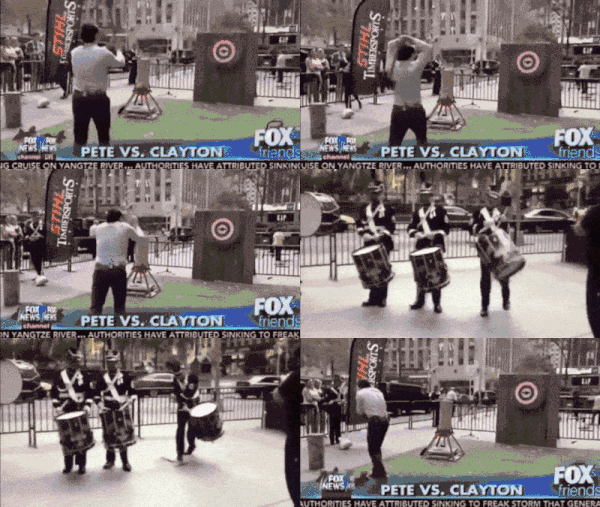
The Nazi pattern is to claim victim status, declaring themselves unfairly hated, and use that to become more and more hated as a means to take power. Aggression is the whole doctrine, spray at targets until empty, then turn on whoever is nearby and weakest when the magazine runs dry.
Dean Blundell says he just walked Thompson’s 1941 “Who Goes Nazi?” through Bavaria. My reading is that he has cast the cabinet well: Vance the humiliated intellectual, Miller the same without charm, Hegseth the spoiled son in costume. But then Blundell flubs Thompson’s famous line, that nice people never go Nazi. BRZZZZT. Wrong. Her real test was a code, that anything inside that says no becomes the enemy of Nazis. The Dutch clerks who shipped mountains of gold to Hitler and their registries to murder 75% of their neighbors who were Jews were all… nice by Nazi standards. Dachau was opened in 1933 specially to dispose of anyone declared rude: union men, journalists, priests.
Bullies clear the room of the rude, the refusers, then cite the polite survivors as consent.
On August 21 Hegseth’s Pentagon fired the editor of Stars and Stripes for insubordination after he called censorship a red line, four months after removing the ombudsman Congress installed to keep brass out of the newsroom. The paper that prints the plan gets shut first. Shocking but true fact, I have found zero Germans today who say they have heard of Münchener Post, or why Hitler called it a poison kitchen (Giftküche) and sent the publishers to concentration camps.
Pete’s purged Pentagon has performed the first two Nazi platform procedures in Iran: no fire discipline, “max lethality”, and a depleted magazine.
The third procedure is on the domestic side, and it was prepared before the Iran war. It was clearly Nazi doctrine as well, in preparation for the punching down that comes next.
In 2025 the administration sent 7,000 troops into American cities over the objections of their governors, put active duty Marines into Los Angeles during the immigration crackdown, and told the generals at Quantico that American cities were the training ground.
A federal court entered judgment that the Los Angeles deployment of 4,000 Guard and 700 Marines violated the Posse Comitatus Act: troops making arrests, running traffic, controlling crowds. The targets were immigrants and protesters in cities the President lost.
I grew up studying Posse Comitatus as a bipartisan, but especially right-wing extremist, bright line. America was said to never, ever cross it, because that would be tyranny time. The other bright line was said to be construction of massive camps, like the permitting of “processing” (data center) facilities. Yet Trump has killed both those canaries so fast it’s like the shock of a Nepalese glacial tsunami hitting Americans right about now.
The obvious hurdle is the November election. Trump said on May 12 he would not rule out troops at polling places. Hegseth, asked in April whether he would follow an order to seize ballots, called the question a “gotcha hypothetical”.
It’s not a hard question, yet no tab Pete struggled to answer. Federal law since 1865 bars armed federal forces at the polls except to repel armed enemies of the United States, an exception no president invoked even during two world wars.
On August 18 Senator Slotkin asked Hegseth and General Caine for one written sentence: no troops at the polls, no seizure of election material. Caine signed. He wrote that the Joint Force has no plans to send federal military personnel or federalized Guard to polling places, no plans to seize ballots or machines, and that he has neither received nor anticipates any unlawful order.
Hegseth has not answered. Because he’s no tab.
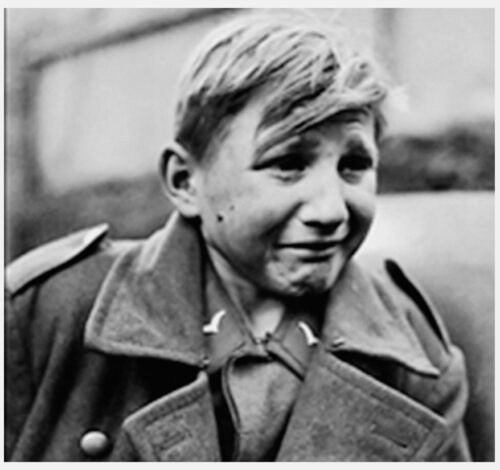
The generals who earned the tabs he never attempted call him No Tab Pete for a reason. The nickname is about a course he did not take. And it’s about to mean something far worse, based on his lies and a sentence he will not sign.