In early 1945 Peter Sichel was twenty-two years old and running OSS operations in Germany. His unit sent German prisoners of war back across the lines to gather intelligence on Wehrmacht troop movements. The operations worked. General George S. Patton opposed them because he wanted armor moving forward. The General saw intelligence work as in his way. Sichel, interviewed at one hundred for the documentary The Last Spy, described Patton in four words.
A very stupid man.
Sichel spent the rest of his career watching the same pattern repeat. Analysts produced correct assessments. Executives ignored them. Then executives did the expensive wrong thing. Then executives blamed the outcome on someone else. He died in February 2025 at one hundred and two. The United States began bombing Iran one year later. The documentary releases this week while the bombs are still falling.
Intelligence Ruins Cognition
The argument that AI is ruining human cognition has evidence behind it, and the evidence has to be clarified. The MIT Media Lab ran a four-month EEG study of fifty-four participants writing essays. The ChatGPT group showed reduced brain connectivity, with some measures cut by more than half. Participants could not quote from their own essays afterward. Teachers called the writing soulless and interchangeable. In a follow-up session, students who had used ChatGPT were asked to write without it. Their neural activity was lower than the group that had gone the other way. The researchers called the AI usage pattern cognitive debt.
A Microsoft and Carnegie Mellon study of three hundred and nineteen knowledge workers found that the more confidence the worker had in the AI, the less critical thinking they applied. Workers reported using no critical thinking at all on roughly forty percent of their AI-assisted tasks. A separate Wharton experiment at the University of Pennsylvania, with one thousand three hundred seventy-two participants across nine thousand five hundred trials, gave the behavior a name. Cognitive surrender. Users accept what the AI says with minimal scrutiny and let it override their own intuition. A Polish study of nineteen endoscopists at four centres in the ACCEPT trial found that after three months using an AI colon cancer screening tool, their unaided ability to spot precancerous polyps dropped from twenty-eight percent to twenty-two percent.
These findings are all in front of us now. The concern comes naturally. Now watch the critics pick the wrong target.
Coverage as cover
The MIT researcher is pushing back against the fog that headlines are trying to build around her work. Nataliya Kosmyna told reporters the study did not measure IQ and found no evidence of brain rot. She launched a FAQ for journalists that names the phrases she is asking the press to avoid, including brain damage, impact negatively, and terrifying findings.
The BBC, doing the exact wrong thing, ran the story under the headline “AI chatbots could be making you stupider” and pushed a fifty-five percent figure as a general decline rather than what the paper actually measured, which was task-specific neural connectivity during one kind of essay writing. CNN and the rest followed the BBC’s framing like a herd of lemmings ready to jump off any cliff they can’t see.
The BBC follows the unthinking executive-class pattern at the media layer. An analyst produces careful work with explicit caveats. The institutions strip the caveats and run the simple version that fits their existing narratives, avoiding any thought. The outlets warning readers about AI-driven cognitive surrender cannot themselves read the paper carefully enough to report what it found. The surrender is the coverage.
Honest executives
Everyone who knows an unaccidental American executive knows someone who aspired to delegate cognitive labor their entire career. Analysts produce the reports. Researchers run the numbers. Lawyers review the contracts. Speechwriters write the speeches. Consultants deliver the strategy. The dream of many executives is to sign off and golf. The documented pattern in the MIT study is cognitive surrender. The documented pattern in the Microsoft study is offloading mental effort as trust in the system exceeds trust in one’s own abilities. The documented pattern in the medical study is skills degrading after three months of reliance on an external tool.
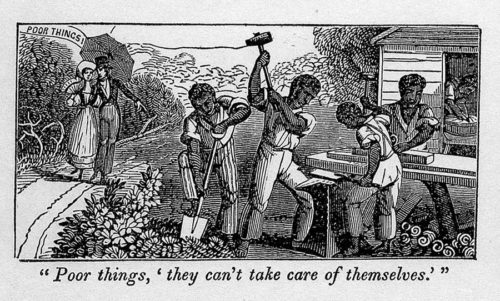
The American executive class has been running this protocol for at least a century. It jumps out in pre-Civil War writing as a flashpoint between the made men who worked their way up (General Grant) and the slavers who lacked cognitive depth (General Lee). The grandfathers delegated. The fathers delegated. Why wouldn’t the descendants of the privileged executive elites delegate? Today’s plantation shadow in American management is no accident, and runs on extraction of cognitive labor from below, where the extractors at the top have spent three generations practicing exactly the form of cognitive offloading that researchers now want us to interpret as brain damage.
The critics of AI end up describing themselves without realizing it. The concern is a self-portrait of the bad habits of an executive class, projected onto the tool that threatens them.
Pirsig’s dashboard
The tension is not only over a century old, it regularly surfaces in popular culture. Robert Pirsig wrote a very useful frame in 1974. There are two kinds of rider. The mechanic understands the machine in a feedback cycle. He has taken it apart. He has put it back together. When the engine makes a new sound, he hears it and knows what it means. The other rider learns the basics of control and sees nothing but a dashboard. When the “idiot light” comes on for the idiot to see, he pulls into a mechanic. Absent the light, made for him by a mechanic, he has control with nothing to assert it with. Take away his light, take away his mechanic, and he is stranded.
American executive culture is the dashboard rider at scale. The class needs the idiot light so they can issue commands based on what they think it tells them. More oil, now! It does not know the engine. It has delegated the engine to everyone below it for so long that it has lost the capacity to evaluate the work being done on its behalf.
I once had to witness a tech startup CEO regularly tell his company that it was all “flux capacitor stuff” to him, so he had hired someone to figure “all that stuff” out for him, and so that he could tell them all what to do. His “idiot light” was a single hire.
Layoffs as a quit mechanism
The research itself splits users into two populations, and this is the finding that the headlines missed entirely. We are not all the same. In theoretical neuroscientist Vivienne Ming’s experiment with seventy-two participants drawn from UC Berkeley and the Bay Area, fewer than one in ten used AI as a tool to gather data that they then analyzed themselves. These participants made more accurate predictions than the rest. The cognitive decline measured in the other ninety percent did not appear in the ten percent who evaluated the output.
The split the research finds is what Pirsig’s split told us since the 1970s.
The ninety percent who surrender to the tool are dashboard riders. The ten percent who use it as an instrument are mechanics. Surrender produces atrophy. Evaluation produces strength. The distinction is the whole story, and the critics keep collapsing it.
The AI user also has something the executive usually does not. A quit mechanism. AI users evaluate the output constantly. They reject it. They switch models. They walk away when the tool produces garbage. The discipline is in the evaluation. The executive cannot quit his delegation stack. He has built a career out of never developing the capacity to evaluate his subordinates’ work at the level of the work itself. He approves or vetoes at the level of mood, ideology, and political convenience. That is the dashboard.
The user who closes ChatGPT because the output is wrong is doing more cognitive work in that moment than the executive who green-lights a regime change operation on the basis of a summary he did not read and could not cross-check. The research shows the difference neurologically. The evaluators’ brains light up. The surrenderers’ brains go dim. The executive class operates in perpetual surrender mode by professional design. The research predicts exactly what their brains should look like, and it’s not great.
The split is even older than Patton
Britain ran this same kind of experiment for at least four hundred years. The mechanic tradition runs from Walsingham’s intelligence service under Elizabeth, through the political officers in Victorian India who actually learned the languages, through SOAS, Bletchley Park, SOE, and the working decades of the Joint Intelligence Committee. The operations Sichel ran in Germany were modeled on British practice. His OSS generation inherited a tradition.
The dashboard tradition produced Anthony Eden at Suez in 1956. The Americans told him the operation would fail. The diplomats told him. His own Foreign Office told him. He ran it anyway, collapsed the pound, and ended British great-power status inside a fortnight. Executive class refusing the analyst. Patton in British form.
The clean historical case is Orde Wingate and T. E. Lawrence. Lawrence got the film, the myth, and the executive-class affection. His self-constructed false persona gave British Arabia the story it wanted about itself. Wingate was the actual mechanic doing the hard work. He learned Hebrew. He lived with the Haganah. He built the Special Night Squads in Palestine and the Chindits in Burma. Moshe Dayan was his trainee. He was abrasive, difficult, disliked by the officer class. He died in a plane crash in 1944 and the myth survived, while the mechanic was buried.
The split operates in the British press today. The Guardian ran the Sichel story because the paper can still evaluate analytical work. The BBC has drifted into Eden’s reflexes. Official sources, conventional framings, dinner-party consensus. Kosmyna’s paper arrives and the BBC strips it to headline fodder. The Guardian runs the complicated story. The BBC runs the story that generates panic. Two institutions, same country, same week, pointing opposite directions on the same underlying mechanism.
The American and British executive classes are expressing their idiot light moment with AI. Both cultures train managers to perform command while delegating the work. Both reward the Lawrence persona over the Wingate competence. Both promote the dashboard rider and exile the mechanic. While the accent differs, the reading is the same.
Sichel as witness
Sichel observed this and reported it across decades, as the structural logic of the American executive class operating in foreign policy. Iran 1953. The analysts assessed that a coup against Mosaddegh would generate long-term blowback. The Dulles brothers ordered the coup. The blowback is still running. The Islamic Republic exists because American executives overrode American intelligence.
Guatemala 1954. Same pattern. Albania. Indonesia. The Congo. Sichel names each one in the documentary. In every case the analysts produced correct assessments. In every case the executives did the expensive wrong thing. He left the CIA at the end of the 1950s because the pattern was uncorrectable from inside.
McCarthy as terminal form
McCarthy is where this fast forwards and reaches its terminal form. Patton refused the analyst. Dulles overrode the analyst. McCarthy purged the analyst for being right.
The China Hands are the clean case. John Paton Davies. John Service. John Carter Vincent. They reported from Chongqing through the 1940s that Chiang Kai-shek was going to lose and Mao was going to win. They were correct. McCarthy destroyed them for it. The State Department’s China desk was stripped of the people who understood China. The United States then spent three decades misreading Asia, and Vietnam came directly out of that gap. The analysts who could have told Johnson what Vietnam was were already gone, hounded out by a senator who had no framework for evaluating the intelligence he was attacking.
McCarthy was dumb in the Patton sense. He could not evaluate the reporting. He had no grasp of communism, Asia, the State Department, or the difference between analysis and advocacy. He operated on mood, ideology, and performance. That is the executive-class cognitive profile in concentrated form, amplified by subpoena power.
McCarthy’s chief counsel was Roy Cohn. Cohn mentored Donald Trump personally, for decades. The executive currently running Operation Epic Fury against Iran is the apprentice of the apprentice of McCarthy. Same class purging the same analysts for producing the same correct reports about the same region. Iran 1953 forward. China 1949 forward. Patton forward.
Sichel’s career was a single long warning. He watched the mechanism from inside for two decades and spent the next sixty years describing it. The documentary is his final deposition. The war is the verdict on everything he said.
The ten percent are wanted
A Pearson and Amazon Web Services survey published this week found that fifty-three percent of employers cannot find graduates with the right AI skills. Seventy-eight percent of university leaders believe they are meeting employer expectations. Twenty-eight percent of employers agree. Fourteen percent of graduates report high proficiency applying AI tools professionally. Sixty-four percent use AI for academics. Thirty-four percent feel confident their use is compliant with institutional policies.
The executive class is asking for the ten percent. It wants mechanics. It wants graduates who can evaluate AI output, apply it in context, and maintain judgment about the tool. This is the exact skill set the executive class has never developed in itself and has spent a century punishing when it appeared in the ranks below.
It’s like posting every entry level job with the requirement of five years experience. You probably know what I’m talking about.
The same report noted that thirty-one percent of business leaders now consider AI solutions before hiring for a role, and eighty-three percent of workers believe AI can perform most entry-level jobs. The executive class is cutting the ladder while demanding graduates arrive at the top of it. Fire the junior analyst. Automate the first rung. Then complain that no one has learned analysis.
This is the plantation South in contemporary form. The system extracted skilled labor from people it refused to educate, then complained about the shortage of educated labor when it needed more of it. The complaint was never about the shortage. The complaint was the extraction mechanism declaring its next demand. The executive class is running the same play with AI, with graduates, and with the remaining rungs of the career ladder. Strip the skill-building positions. Cry about the skill gap. Call for Pearson to build a new pipeline to replace the one the class itself just dismantled.
The light at the end of the tunnel
The AI critics are correct about one thing. Cognitive offloading without evaluation produces atrophy. The research confirms it. I’m just saying here that they have picked the wrong target. The target is the class that has practiced cognitive offloading without evaluation for a century, fired the mechanics for being smarter than the “idiot light” riders, and burned down the intelligence function whenever its conclusions were inconvenient.
The tools today getting better for mechanics is just a phase in a repeat cycle. The next generation of idiot lights will be built by the ten percent who can evaluate the current ones. That is how it has always worked. Someone takes apart the machine, someone else gets the dashboard built for them, and the gap between the two widens until the next cycle.
The non-mechanics expecting to maintain control before the next idiot light is made for them are in trouble. They cannot build the instrument. They cannot read the instrument that exists. They can only command.
What Sichel said about Patton is what few are able and willing to say, because saying it reveals that in a dark tunnel they know how to spot the difference early between an exit and a train coming toward them, which way to run for freedom. The people who cannot tell the difference are giving the orders. The people who can are the ones they are firing.