The Guardian gets part of their history right in a new article about government use of political theory and economics:
British government’s fondness for minor behavioural modification tactics began in the David Cameron era…
Indeed, you may recall in 2014 we hosted a discussion on exactly that topic:
…interface between economics and political science in health care policy analysis… [for the] “Behavioural Public Policy“ an interdisciplinary and international peer-reviewed journal devoted to behavioural research and its relevance to public policy.
However, I find it interesting that the article doesn’t realize the London School of Economics itself was practically founded on the principles of nudge based on personal data to influence citizens.
And that was based on principles going back at least to the 1700s.
Source: flyingpenguin
Studying this in proper long-term history helps explain why so much of WWI and WWII has evidence of the British government’s fondness for minor behavior modification tactics, let alone during its colonial exploits — all frequent topics of this blog.
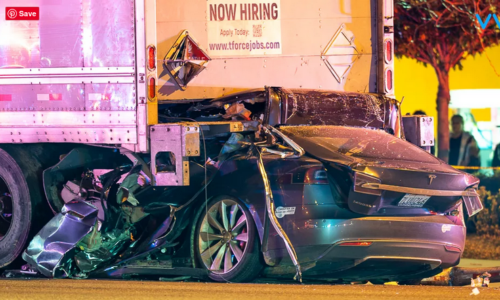
In May of this year Tesla bizarrely announced against common sense that it would remove radar from its “vision” system for autonomous driving.
It’s a dumb move by a car company that only will cause more crashes and deaths.
Safety is at the core of our design and engineering decisions. In 2021, we began our transition to Tesla Vision by removing radar…
Their announcement reads to me like disinformation, an intentional misrepresentation. When they say safety is at their core, they actually mean a lack of it.
…typical radar systems may struggle to properly identify objects passing under a bridge or overhead signage…
This needs to be seen in context of the Florida crash that killed Tesla driver Jeremy Brown. Remember the big news in 2016 for the second Tesla fatality due to its “autopilot”?
The engineers have two main theories, the people said. Either the car’s cameras and radar failed to spot a crossing tractor-trailer. Or the cameras didn’t see the rig and the car’s computer thought the radar signal was false, possibly from an overpass or sign.
Tesla officials disclosed these theories to U.S. Senate Commerce Committee staff members during an hour-long meeting…
It turns out Tesla safety “trained” mainly on roads around California where overhead signs look just like trailers crossing the road, and then baked that into a very rudimentary system.
They repeatedly crash into the side of trailers because they think it’s a stationary object above the road, instead of properly seeing a danger directly in the way.
Even more to that point, when a trailer starts moving left to right (perpendicular to oncoming Tesla path) the Tesla tracks the trailer and also shifts to the right to drive underneath as if a straight road ahead instead was suddenly curving to the right.
And now Tesla has admitted publicly its engineers do not use continuous learning, or really any field-learning because it makes their jobs harder, which explains why it keeps making that same basic fatal error over and over without improvement.
…we haven’t done too much continuous learning. We train the system once, fine tune it a few times and that sort of goes into the car. We need something stable that we can evaluate extensively and then we think that that is good and that goes into cars. So we don’t do too much learning on the spot or continuous learning…
Here’s even more context on that point, Tesla’s bombastic and serial liar CEO has gone 180 degrees from claiming to be the best at learning safety to being unable to learn, as I explained in my recent security conference presentation:
Carter was opposed to slavery among many others who felt the same. Virginia’s 1782 General Assembly passed “An act to authorize the manumission of slaves” and Carter did just that, as you can see here. Source: Virginia Encyclopedia
A man well known to Washington and Jefferson, Robert Carter III, freed all his own slaves while those two “great men” dithered and did nothing of the kind.
Chattel slavery was wrong, the men said, but they supposedly worried it was not practical to abolish the institution without societal and economic consequences. “As it is, we have the wolf by the ear, and we can neither hold him, nor safely let him go. Justice is in one scale, and self-preservation in the other,” Jefferson wrote a fellow politician almost 30 years after Carter’s deed of gift. Yet Carter had provided them a blueprint, not only for freeing their slaves but for ensuring the freedmen could sustain themselves, even prosper and integrate into society.
Again, this man was no stranger to the Americans expanding and preserving slavery; he showed them true leadership and removed their excuses for tyranny.
He counted Washington’s half-brother, Lawrence, James Madison and Thomas Jefferson as friends; he regularly dined with and loaned money to the latter. Washington himself was a neighbor, and Robert E. Lee’s mother was the great granddaughter of his grandfather, Robert “King” Carter.
And again, we’re talking about 1791, the year he decided to go all in on the abolition of slavery.
Carter also allowed the freedmen to choose their last names so they could keep families together and pass down wealth. He ensured they had salable skills, arranged for them to buy or lease land, and bought their wares. He also spent a great deal on transporting them from his plantations to the Northumberland courthouse, and on lawyers to guarantee his heirs — some none too happy he was paring their inheritance — didn’t undo his wishes.
“Carter’s plans look more like a pilot for mass emancipation,” Andrew Levy, a professor at Butler University, told CNN.
Technically it was 55 years after Britain had abolished slavery in their 1735 regulation for colonization of Georgia, and 15 years after the independent agrarian state of Vermont had declared its abolition.
Even more to the point it came after the Stono rebellion of 1739, where whites were ordered to carry guns while denying blacks the same right (to prevent blacks from achieving liberty). White colonials of South Carolina then wrote a law ordering blacks in America no longer “grow their own food, assemble in groups, earn their own money, or learn to read”.
Carter wasn’t early in abolition, he was late and among a large crowd growing to end slavery, but he stands out because his story proves the very high degree of hypocrisy of pro-slavery men like Washington and Jefferson.
Of all the reasons Americans do not teach about Carter in history classes, the following two are very compelling.
…the manumission was so deeply unpopular — neighbors complained, and one threatened to torch Carter’s home — it didn’t compel much documentation. A brief in a Richmond newspaper constitutes the bulk of the coverage.
Levy, whose books include a biography of Carter, “The First Emancipator,” has another suspicion: America doesn’t care — because it’s inconvenient.
“It blows an enormous hole in this legacy we’re trying to balance for these founders,” he said.
It does blow an enormous hole in the narratives told about Washington and Jefferson. As I often say, people like to say Washington died because of bad weather while he sat on his horse watching his slaves… yet nobody ever mentions what happened to those slaves he was keeping in that same weather.
Weird. An important BBC story about racist use of Zyklon-B on Mexicans by the Americans… doesn’t seem to be reported in English anywhere. Crucial quote:
No hay que comparar peras con manzanas, pero el Holocausto no fue un hecho aislado y la frontera entre EE.UU. y México sirvió como un centro de experimentación importante de esas ideas.
Basic translation: while the racist act of America spraying Mexicans with cyanide is not the same as genocide by the Nazis, one apparently served as an example for the other.
Let’s go back to 1924 to begin this story, because that was when America invented a gas chamber specifically to kill people using cyanide.
Washington, Arizona, and Oregon in 1919-20 reinstated the death penalty. In 1924, the first execution by cyanide gas took place in Nevada… a special ‘gas chamber’ was hastily built.
In other words a gas chamber for death already had been established as an American thing by the time widespread application of cyanide (Zyklon-B) became a racist story about Mexicans.
It all came about in the 1920s after Woodrow Wilson infamously set the stage for industrialized/systemic discrimination with his “America First” platform of 1915 that restarted the KKK and removed non-white races from government.
The documents show that beginning in the 1920s, U.S. officials at the Santa Fe Bridge deloused and sprayed the clothes of Mexicans crossing into the U.S. with Zyklon B. The fumigation was carried out in an area of the building that American officials called, ominously enough, “the gas chambers.”
To be clear here this was a federally funded system constructed using garbage theory (eugenics) and false pretense (Typhus was cited, even though not a risk) to poison and even burn to death people en masse, just based on race alone.
Source: Vox
No wonder Nazi Germany believed they could get away with doing the same things. A German scientific journal article was published in 1937, written by a Dr. Gerhard Peters that…
…specifically praised the El Paso method of fumigating Mexican immigrants with Zyklon B.
When you see the article, full of photos and drawings of American railroad cars pushing Mexicans into gas chambers, it’s hard not to think you are looking at images from Auschwitz two decades later.
Source: The Texas Observer
Indeed, Dr. Peters then became the managing director of Degesch, one of two firms that mass-produced Zyklon-B for Nazi genocide.
At least 25 tons of Zyklon B were delivered to Auschwitz in the years 1942–1944. According to postwar testimony by Rudolf Höss, it took from five to seven kilograms…to murder fifteen hundred people.
In case these clear connections to death chambers aren’t disturbing enough; Americans also held Mexicans at gunpoint and forced them to strip naked, then cover themselves in a highly flammable kerosene bath.
In retrospect it seems obvious a fire in a “holding cell” with closed doors would then burn everyone to death as if an oven. On March 5, 1916 such an event was literally reported in the papers as… wait for it… El Holocausto.
Source: “When Germs Travel: Six Major Epidemics That Have Invaded America and the Fears They Have Unleashed”, by Howard Markel, page 128
Dousing groups of Mexicans with kerosene and then burning them was also a topic of discussion for Americans on March 10, 1916 after the Battle of Columbus. Over 60 dead men were piled together, their bodies incinerated.
Keep in mind this all was in the context of Americans a year earlier calling for the “extermination” of non-whites, which led to killing thousands of Americans who were of Mexican descent:
While a mob’s stated reason [under Woodrow Wilson] for lynching black victims tended to be an accusation of sexual violence, for Mexicans in the United States, the reason given was often retaliation for murder or a crime against property: robbery, or what was sometimes called “banditry.” […] “The war of extermination will be carried on until every man known to have been involved with the uprising will have been wiped out.”
America was involved in a 1915 “war of extermination”, coupled with Zyklon-B gas chambers and even ovens burning groups of people in what was called a holocaust.
No wonder the BBC ran an article that reported plainly in Spanish…
México sirvió como un centro de experimentación importante de esas ideas.
Now, why can’t I find an English version of the story?
It reminds me of this old leaflet by extremist militant white insecurity groups in America informing their followers they can carry out atrocities of a Nazi (Villain) yet remain undetected simply by appearing like a Texas Ranger (Soldier).
Source: The W. Cleon Skousen manual for anti-American white militias, a precursor to Glenn Beck’s tea party dogma
Here’s a related video by Vox on the history of Carmelita Torres (the “Latina Rosa Parks“) who was murdered by American border officers in 1918 for protesting abuse by them:
For women there was also sexual humiliation. There were rumors that when they entered the plant and told to strip, officers were taking their photos and then posting them in bars.
a blog about the poetry of information security, since 1995