All posts by Davi Ottenheimer

Supreme Court: Agency Capture Shields Bayer’s Monsanto Mass Harm

The early 1970s had some logic. Rivers were burning, air was unbreathable, pesticides like DDT were moving through whole ecosystems. Meanwhile, American tort law crawled case by case. Common-law suits could not regulate the rampant abuse of the public by a continental chemical economy, let alone a foreign one. An agency, however, could set standards before harm. That was the promise of the EPA when it landed: expert protection at scale, faster and broader than a jury in one county.

EPA was built to deliver a remedy the courts were too slow and scattered to provide.

Today, the EPA has been inverted into a blocking function.

Bayer has spent the last decade fighting more than 100,000 lawsuits filed by people who developed non-Hodgkin lymphoma they blamed on exposure to the glyphosate weedkillers, and the company has paid out billions of dollars in jury awards and settlements. All of the cases include allegations that the company failed to warn that glyphosate could cause cancer.

Bayer maintains that its products don’t cause cancer, and also asserts that under the Fifra the EPA is the key authority for determining if its product necessitated a cancer warning. The EPA has not required such a warning and has taken the position that glyphosate is “unlikely” to be carcinogenic, so the company cannot be held liable for failing to warn, according to Bayer’s argument.

In the Thursday ruling, the supreme court upheld this argument.

Two shifts happened since President Nixon to enable this stupidity.

First, the industry aggressively worked to occupy the agency, staffing it, funding the science it reviews, setting the terms of what counts as proof, completely breaching independence and integrity.

Second, the court practiced a binary judgment, where passive agency absence of action was ruled as active agency judgment against action. When the EPA has not yet acted, the preemption doctrine reads that the silence is a considered federal decision and displaces every active state remedy that would disagree with passivity.

The premise is that a single warning flag suppressed shuts down all warning flags, which makes that particular flag a target for suppression. While it sounds wrong, the court ratified the warning suppression tactics as right, which makes these judges complicit in preventable mass harm that follows.

Judges made a choice to enable public harm. They had the evidence, the jurisdiction, the dissent in front of them, and they chose preemption to increase preventable suffering and deaths. That is an act, on the record, with names. Kavanaugh wrote it, and six others signed. Elie Wiesel indicted them all decades ago. Silence is the choice, documented, by people with the power to rule otherwise. Complicity attaches to the actor who chose death.

Cipollone in 1992 cut tobacco claims on a federal labeling statute. Riegel in 2008 turned on a different mechanism, the FDA’s own premarket approval. Congress wrote the cigarette warning into statute. The FDA granted the device its approval. The EPA withheld the glyphosate warning. Three federal moves created corporate immunity from documented harm. The shield for profit on suffering was widened with each case. It once required an express command. Now it just takes an agency to do nothing, which means America runs fail-unsafe.

Corporations cause mass suffering on the principle that an agency hasn’t made a warning. It’s like requiring deny lists, instead of allow lists, for things that cause the most harms in history. The court treats absence of a warning as an explicit federal command that no state may evaluate no matter how overwhelming the evidence of failure.

Captured agency silence about death caused by its captors is how American law enables mass death for profit.

The National Academies Launders Mythos: “Implications of AI for Cybersecurity”

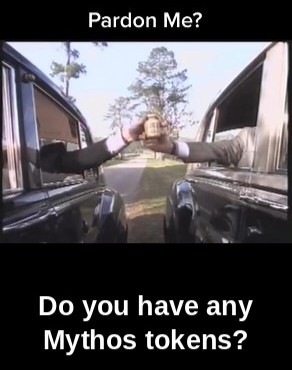
In April “The Boy That Cried Mythos” caught Anthropic collapsing its own credibility. In June “Mythos dressed up in a coat, should be called Opus with a moat” caught it again.

Anthropic wants to play God, feed on claims only they can verify, which is to say it feeds beliefs based on lies. If that sounds harsh, think about how the God of cycling Lance Armstrong treated anyone who suggested he was doping. He sure got a lot of medals for “livewrong“.

Source: Flickr

Now the Mythos lies have spilled their way into a venue claiming to use a formal review process. A new National Academies document (NASEM) freshly launders vendor marketing without any explanation.

National Academies of Sciences, Engineering, and Medicine. 2026. Implications of AI for Cybersecurity: A Rapid Expert Consultation. Washington, DC: The National Academies Press.

This should help clarify, for those who are wondering if we are dealing with a Lance Armstrong of LLMs.

NASEM Laundry (June 2026) Prior Evidence
Figure 1 plots Mythos at 83.1% on CyberGym as settled capability, sourced to “Wang et al. 2025” The 83.1% has been repeatedly proven false. It’s a self-reported number by Anthropic. AISLE proved detection reproduced in 8 of 8 open-weight models, even at $0.11 per million tokens, Cisco proved outcome is model-independent
Restricted Glasswing access presented as responsible handling of uniquely capable model The danger warnings are self-serving FUD marketing. Model uniqueness repeatedly disproven. Mythos emailed out of its sandbox only after being instructed to try, showed no sign of altering its weights, and Opus 4.6 finds the same or better flaws
Vulnerability discovery framed as a breakthrough enabling novel risk The flagship FreeBSD CVE-2026-4747 is a 2007 patch in training data, opposite of novel. It was a curated recovery from a backlog of delayed fixes, which any model does.
Benchmark score offered as capability evidence Of 23,019 reported findings, 1,752 were human-checked and 75 had fixes shown. The 90.6% accuracy applies to humans doing the work, not the machine output
Concedes open models approach frontier, advantage short-lived GLM 5.1 reproduced findings on the IronCurtain harness, and clearbluejar recovered CVE-2026-4747 on two open-weight models on a single consumer GPU. Discovery is provable as an orchestration problem, making the frontier-model unnecessary.
Expansion to roughly 150 organizations across more than 15 countries, including NATO and ENISA, read as demand Manufactured scarcity is a vendor marketing trick. The June 2 expansion followed a June 1 confidential IPO filing near a one-trillion-dollar valuation, committing access and capital ahead of the promised verification, and several trialing firms are Anthropic investors
Field evidence in the figure The curl maintainers reported no change to their workflow, and Mozilla’s headline of 271 Firefox vulnerabilities reconciles to just three versus the advisory
Mythos claims rest on anthropic.com/glasswing, the FT relay, and a benchmark the cited authors never ran on Mythos No reproduction steps accompanied the launch blog, the system card, or the Glasswing update, and a result validated only against the system that produced it is not independent confirmation
Published June 2026, capability stated as established Anthropic’s own promised report is due around July 6, 2026, and the prudent posture is to treat the unproven vendor capability as unproven

This matters because it’s turning into policy. Anthropic owes a verified CVE list with reproduction steps on July 6. Until that report arrives and survives independent review, everything resting on the Mythos claim, the consultation included, launders a mythical claim being hidden from inspection.

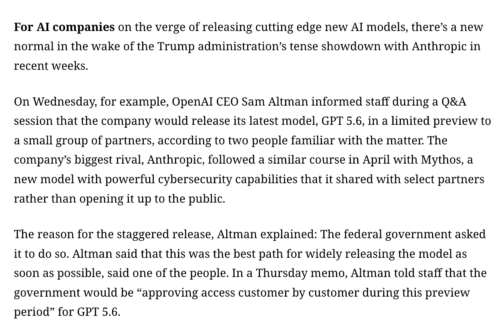
The Information now calls Mythos a model with “powerful cybersecurity capabilities” and attaches no qualifier, no analysis. It is not called a vendor claim, it is not called a vendor self-reporting. It gets stated as fact, in the same paragraph that uses it as precedent for OpenAI.

The premise that others are following Anthropic’s similar course rests entirely on accepting a vendor capability claim that is never verified. A marketing department fabricates a story and then American policy is being built on top of it?

When the printing press first spread, it mass-produced witch-hunting manuals that marked women for death as agents of the devil, the Malleus Maleficarum above all, known today as the witch hunts. The danger of accelerated printed letters was real, because the highly self-serving claims about threats were not. The actual Anthropic risk is that Anthropic states the risk, without any inherited system of science to keep it honest.

Still No Evidence Mythos Better at Security Than Self-hosted LLMs

Anthropic allegedly built Mythos so good at finding vulnerabilities that it was too dangerous to release. Then it was handed to only a few dozen very wealthy organizations under Project Glasswing. One of them ran it against curl and sent the project a report claiming five confirmed security vulnerabilities. The curl security team dug in. Three were false positives flagging behavior already documented in the API docs. The fourth was just a bug. One survived: a low-severity CVE shipping with 8.21.0. The most dangerous code-analysis model in the world, pointed at one of the most audited C codebases in existence, found… a single low.

Whomp whomp, sad trombone for Mythos.

The project lead publicly wrote that the Mythos hype was primarily marketing, given no evidence Mythos finds issues to a higher or more advanced degree than tools that came before it. He also said he is not anti-AI-SAST. He reiterated that AI-powered code analyzers are significantly better at finding flaws than traditional analyzers ever were.

I agree with all of that 100%.

curl is one of the most fuzzed and audited C codebases in existence (OSS-Fuzz, Coverity, CodeQL, multiple paid audits), and finding anything is a good challenge. That’s why what happened next is so interesting.

The curl blog post about Mythos unleashed a wave of non-Mythos AI hunting as researchers piled onto curl with their own tooling. AISLE was hunting curl in fall 2025, before Mythos. When the blog post stirred the field, they were already deep in the codebase and just claimed 6 of 18 discovered. Compare those 18 to the single low-severity one that Mythos was credited with. The AISLE blog post makes it clear their AI method has been the most successful and yet it’s the least cost model, opposite of Mythos marketing.

Papers, Please: Wem gehört eigentlich die Browser-Engine?

Schnauzer | Deutsche | English

Wer in Berlin einen Reisepass beantragt, seine Steuer über ELSTER abgibt, sich einen Termin im Bürgeramt erkämpft oder sich bei seiner Krankenkasse einloggt, tut das alles in einer Rendering-Engine, die er nicht kontrolliert, nicht prüfen kann und die sich über Nacht von einem Server an der amerikanischen Westküste neu schreibt. Die Browser-Engine ist das meistverbreitete Stück ausländische Software im gesamten öffentlichen Leben Deutschlands. Und auf keiner einzigen Liste für kritische Infrastruktur steht sie drauf.

Das Ding, das niemand auf die Liste setzt

KRITIS, das deutsche Regelwerk für kritische Infrastruktur, das das BSI beaufsichtigt, zählt alles auf: Strom, Wasser, Lebensmittel, Telekommunikation, Gesundheit, Finanzen und Verkehr. NIS2 hat den Perimeter europaweit noch weiter gezogen. Und die Browser-Engine? Sie ist der Türöffner zu jedem dieser Sektoren — die Schicht, über die der Bürger an die Dienste überhaupt erst herankommt — und sie steht außerhalb von allem, was wir je eingestuft haben.

Drei Engines fahren das offene Web. Googles Blink trägt rund drei Viertel des gesamten Verkehrs, über Chrome, Edge und fast den ganzen Rest. Apples WebKit hat iOS fest in der Hand. Mozillas Gecko, das Herz von Firefox, dümpelt inzwischen unter fünf Prozent. Alle drei werden aus den USA gesteuert. Das Tech-Souveränitätspaket der EU-Kommission vom Juni 2026 gibt es selbst zu: Bei den wichtigen digitalen Technologien hängt die Union zu über achtzig Prozent an Quellen außerhalb Europas. Das ist keine Abhängigkeit mehr, das ist ein Verhältnis.

Und jetzt kommt der Punkt: Das ist keine Eigentumsangst. Das ist ein offenes Scheunentor in der Governance. Eine Engine, die sich selbst aktualisiert, ist ein ferngesteuerter Schreibkanal in jeden öffentlichen Rechner, der sie laufen lässt: Wer den Update-Server kontrolliert, entscheidet, was heute Nacht auf die Geräte gespielt wird. Beim Stromzähler oder der Telefonvermittlung würden wir das nie und nimmer dulden. Aber bei der Schicht, über die der ganze Staat seinen Bürgern begegnet, drücken wir beide Augen zu — weil es ja „läuft”. Genau so sieht jede vereinnahmte Infrastruktur aus. Bis zu dem Tag, an dem sie nicht mehr läuft.

Drei Engines — zwei baust du nie selbst

Nimm die Romantik aus dem Wort heraus, dann ist eine Engine ein Verbund aus sieben Teilen in einer Schleife: Netzwerk, HTML-Parsing, das DOM, die CSS-Kaskade samt Style-Berechnung, das Layout, Rendering und Compositing, und die Bindings, die JavaScript an den Baum koppeln. Der Trick ist zu begreifen: Die tiefsten und teuersten dieser Teile sind Massenware. Eine JavaScript-Engine, ein Stack für Textshaping und Font-Rasterung und die GPU-Primitiven unter dem Rendering — das sind jeweils Mannjahrtausende an Arbeit, und sie nachzubauen bringt dir exakt null Souveränität. Niemand kontrolliert das Web, bloß weil er einen Font-Rasterizer besitzt.

Was dir wirklich gehört — das souveräne Tafelsilber — das ist die Layout-Engine, die Rendering-Pipeline und die Sicherheitsgrenze drumherum. Das ist der Teil, für den sich Geld lohnt, und den baust du nicht auf der grünen Wiese neu. Servo gibt es nämlich schon: eine speichersichere Engine in Rust, verwaltet von der Linux Foundation Europe, von einem fünfköpfigen Team bei Igalia von 41 auf 62 Prozent in den Web Platform Tests gehievt, mit ihrem ersten getaggten Release 2026. Eine deutsche Engine ist also ein Problem des Forkens und Finanzierens — auf europäischem Fundament, nicht auf dem leeren Blatt. Die ganze Rechnung, inklusive der Kosten weiter unten, steht in diesem ausgezeichneten Realitätscheck zu Browsern und Souveränität.

Die Einkaufsliste, alles in Rust

Hier ist der Stack, den ein Geldgeber wirklich bezahlen soll — ausgewählt nach einer einzigen Regel: kein amerikanischer Plattform-Gatekeeper in irgendeinem tragenden Teil.

Teilsystem Souveräne Wahl Was es ersetzt
Sprache Rust Speichersicherheit als Basis — und das ganze Ökosystem darunter
JavaScript-Engine Boa V8 (Google), JavaScriptCore (Apple), SpiderMonkey (USA)
GPU-Rendering und Compositing WebRender + wgpu Skia und plattformeigene Grafik-Stacks
TLS rustls Googles BoringSSL, OpenSSL
Layout selbst gebaut, auf dem Taffy-Gerüst für Flexbox/Grid das eine Teil, das einem niemand verkauft
Text und i18n rustybuzz, fontations, ICU4X HarfBuzz, FreeType, ICU (die alten C-Bibliotheken)
Barrierefreiheit AccessKit die Accessibility-APIs der Plattform
Basis-Codebasis Servo eine Neuentwicklung von Grund auf

Die eine Komponente, die entscheidet, ob das Wort „souverän” den Realitätscheck übersteht, ist die JavaScript-Engine. Bettest du Googles V8 oder Apples JavaScriptCore ein, dann hast du die Abhängigkeit bloß mit einem netteren Logo neu aufgebaut. Mozillas SpiderMonkey ist die ehrliche Brücke — offen, einbettbar, der schnellste Weg zu einem laufenden Browser —, aber es bleibt Code aus den USA. Boa ist das Ziel: eine einbettbare Engine in Rust, MIT-lizenziert, von einer Community gepflegt, und schon bei rund 94 Prozent Konformität in Test262, der offiziellen ECMAScript-Suite. Sie ist weiter, als ihr irgendjemand zutraut — ihre Temporal-Bibliothek für Datum und Zeit ist so gut, dass V8 sie inzwischen selbst verwendet. Der Abstand zu V8 und SpiderMonkey ist real, aber er liegt in der reinen Geschwindigkeit und in den tausend Sonderfällen, nicht in der Korrektheit. Und genau so ein Abstand ist die Art Arbeit, die eine staatliche Initiative gut hinbekommt: begrenzt, bezahlbar, kein Hexenwerk. Finanziere Boa auf Web-Niveau hoch, und die JavaScript-Schicht des europäischen Stacks enthält überhaupt keinen fremdgesteuerten Code mehr.

Wo das Geld wirklich hingeht

Das ehrliche Bild vom Engineering ist das Gegenteil von beängstigend. Fast alles auf der Liste ist entweder Massenware, die du einmal einbaust, oder ein begrenztes Problem, das du einmal löst. Es gibt genau eine Hürde, die sich nur langsam mit Geld abbauen lässt, und das ist die Web-Kompatibilität — konkret: es muss laufen wie Chrome. Layout ist an den Rändern schlampig spezifiziert, und so heißt „korrekt” in der Praxis: „verhält sich wie Blink, auch dort, wo Blink von der Norm abweicht” — weil die Websites der ganzen Welt gegen Chrome getestet werden und nicht gegen die Spezifikation. Da gibt es keine elegante Abkürzung. Das ist langes, sturem Gegentesten gegen die Web Platform Tests, und darin wird auf Dauer der Löwenanteil der Arbeit stecken.

Zwei andere Probleme sind wirklich knifflig, und beide sind Sicherheitsprobleme, bei denen eine Rust-Engine besser sein kann als die etablierten Dinger, statt nur hinterherzulaufen: die Renderer-Sandbox und die Vertrauensgrenze zwischen ihr und dem privilegierten Prozess — und die Lebensdauer der DOM-Objekte, die der JavaScript-Garbage-Collector verfolgt, die klassische Quelle ausnutzbarer Use-after-free-Fehler, gegen die Speichersicherheit überhaupt erst erfunden wurde.

Das Geld für den ganzen Spaß? Wird auf grob 50 bis 70 Millionen Euro im Jahr geschätzt — für Entwickler, Tests, Sicherheitsaudits und Standardarbeit. Stell das neben das 7,8-Milliarden-Budget der Europäischen Weltraumorganisation oder die 300 Milliarden, die das EuroStack-Vorhaben in digitale Infrastruktur stecken will — dann ist eine Browser-Engine ein Rundungsfehler. Am Geld hat es nie gelegen. Es liegt an der Dauerhaftigkeit: eine Engine ist kein Projekt, das fertig wird, sondern eine Verpflichtung, die das Ministerium überleben muss, das sie bezahlt hat.

In die öffentliche Hand — und zwar föderal

Deutschland baut schon souveräne öffentliche Software, und zwar schon föderal. ZenDiS, das Zentrum für Digitale Souveränität der Öffentlichen Verwaltung — eine bundeseigene Gesellschaft, Ende 2022 gegründet und ausdrücklich auf dem Weg zu einer gemeinsamen Bund-Länder-Körperschaft — betreibt openCode, die Code-Schmiede des öffentlichen Sektors, und openDesk, die souveräne Alternative zu Microsoft 365. Als die Regierungschefs aller sechzehn Länder zur Ministerpräsidentenkonferenz zusammenkamen, nutzten sie openDesk — eine Woche nach dem Start. Und auf EU-Ebene formt sich der Apparat ebenfalls schon: ein EU-Konsortium für digitale Infrastruktur und digitale Gemeingüter, in dem ZenDiS und die deutsche Sovereign Tech Agency die ersten Projekte stemmen sollen. Das Chassis, das eine Browser-Engine bräuchte, ist halb gebaut, bevor jemand eine Zeile Layout-Code geschrieben hat.

Also stell die Engine dahin, wo der Rest des souveränen Stacks ohnehin wohnt: ein Upstream, sechzehn Verwalter. Eine einzige föderale Browser-Behörde würde genau das wiederherstellen, wovor man wegrennt — einen einzigen Punkt für den politischen Zugriff und einen einzigen Explosionsradius für jede Sicherheitslücke. Ein föderales Modell, auf Länderebene gepflegt, verteilt die Sicherheitsprüfung, passt zur Subsidiarität, auf der der deutsche Staat gebaut ist, und sorgt dafür, dass kein einzelnes Ministerium und kein einzelnes Unternehmen die Schlüssel hält. Engines sammeln sich nicht bei Google, weil es für alle anderen unmöglich wäre. Sondern weil sonst niemand bereit war, für Dauerhaftigkeit zu zahlen. Ein föderaler öffentlicher Auftrag ist die eine Struktur, die Dauerhaftigkeit finanzieren kann, ohne ein neues Monopol unter europäischer Flagge hochzuziehen.

Und jetzt Butter bei die Fische, was das wahre Risiko angeht: Es ist nicht technisch. Deutschlands eigene Open-Source-Versuche sind schon ausgebremst worden, weil Bundesressorts ihre alten Verträge geschützt haben — netzpolitik hat dokumentiert, wie genau dieser Behörde der Rotstift angesetzt wurde. Die Gefahr für eine deutsche Engine ist die Vergabepolitik im eigenen Laden. Rust war es nie.

Eine Republik, die ihre eigene Regierung nicht in einem Browser darstellen kann, den sie selbst kontrolliert, hat den Vordereingang längst einem anderen in die Hand gedrückt. Die Standards sind offen, die Sprache ist Rust, das Fundament ist Servo, die JavaScript-Engine ist Boa, und das Chassis zum Verwalten steht ebenfalls schon da. Forkt es. Finanziert es. Stuft es als KRITIS ein. Und die Schlüssel — die bekommen die Länder.

Für meinen Großonkel Lutz und seine Familie, 1941 – die wir nicht mehr aus Berlin herausholen konnten, bevor sie wegen der Angaben in ihren Papieren getötet wurden.