I have been up to my eyeballs in German political speeches this autumn, shocked by the antisemitism. The work is slow and mostly dull. We pull the Bundestag protocols, we read what people said, we note what makes a claim about Jews and what does not.
The AfD gives plenty to note. That was expected. Every other party combined doesn’t come anywhere close to the AfD. They crank it out as if it’s been enabled. But by whom, and how, and why?
What was not expected was a man who fell out of the tree when we shook it, because his record is clean on the exact terms we had been checking.
Alexander Dobrindt is Germany’s interior minister. CSU, in the Bundestag since 2002. We read everything he said in parliament over those twenty-four years. He has never said anything coded as antisemitic there. None of the dogwhistles or trigger words, no winks. When he mentions Jews, he condemns Judenhass. He says Jews belong to Germany. By any fair reading of his words, he shouldn’t be in this fruit bowl.
So why did he keep landing there? Because of what he consistently does around and with the subject. A small set of examples shows the method.
One day apart
On 20 May 2025 he presented crime statistics on politically motivated offences. The government published his line: “Egal, wo der Antisemitismus herkommt – er ist unter keinen Umständen zu akzeptieren.”
So the man says wherever it comes from.
Wherever. Hold that word.
The next day, 21 May, he took questions in the Bundestag. Protocol 21/6, page 405: antisemitism exists “sowohl im rechtsradikalen Bereich als auch in Bereichen des importierten Antisemitismus.”
Imported. Not wherever.
Same minister, same week, two audiences, two messages.
He has used “importiert” since October 2023. It is a word that points away from the AfD, away from the homegrown far right, and at migrants. Once it points there it becomes an argument for deportation. Researchers who study online antisemitism have described this move for years: concede that antisemitism exists, then hand it to a target group, usually Muslims. Shahak Shapira said it more plainly this September. Germany has plenty of antisemitism already. Nobody needs to import any.
A memorial hour
On 9 November 2023, the day Germany remembers the pogrom of 1938, the Bundestag held its memorial debate. Dobrindt spoke, as captured in Protocol 20/134, page 16792:
Die Jüdinnen und Juden gehören unverbrüchlich zu unserem Land, ihr aber nicht.
The protocol notes Saskia Esken calling out from the SPD benches: “Nicht mal in so einer Gedenkstunde können Sie das lassen!” Not even in a memorial hour.
He went on anyway. In that hour he asked for a six-month minimum sentence for hatred of Israel, automatic expulsion of foreign offenders and loss of citizenship for dual nationals. Then the sentence the demands were built for:
Wer nicht mit Israel leben will, wer nicht friedlich mit Juden leben will, der kann auch nicht in Deutschland leben.
The protocol notes applause from CDU/CSU, FDP and the AfD. The AfD does not usually clap for a CSU minister in a memorial hour. Apparently a whistle was heard.
The bills his party then tabled were voted down in April 2024. He has been interior minister since May 2025. He has not brought them back.
Two days after an election
On 20 September 2026 Die Linke won the Berlin election. On 22 September Dobrindt said the Berlin Linke tolerates antisemites and extremists in its circles, “ganz offensichtlich.”
Two days. No inquiry, no finding, a federal minister telling the parties negotiating a state government whom not to work with.
On 24 September, on the ZDF talk show maybrit illner, the host corrected her own slip about the Linke’s lead candidate, Elif Eralp:
Sie ist keine Antisemitin.
She is no antisemite. The president of the Central Council of Jews has said he finds her personal position credible.
Dobrindt answered, “Na doch.” She is. On what basis, he did not say.
Eralp is not Jewish. She filed a criminal complaint for defamation and insult. The ministry’s full response was:
Die Worte stehen für sich.
The words stand on their own, as if nobody has to answer for them.
On 7 October, at the memorial on the Bebelplatz for the Hamas massacre, Dobrindt said it again without naming the party: be alarmed when a party in Berlin talks about joining a government while tolerating antisemites in its circles.
If that is his standard he should be talking about the AfD non-stop. Its figurehead Björn Höcke has two convictions for using an SA slogan. Its rallies chant the same slogan with one word swapped, “Alice für Deutschland.” Its internal mail, verified by Correctiv, reads the way you would expect. The record is public.
Around 150 Jewish Berliners, Deborah Feldman and Susan Neiman among them, signed a letter calling the campaign against the Linke a cynical political instrumentalisation. The Central Council of Jews said the Berlin Linke has a real problem, which in Berlin is like saying the weather is bad, and did not endorse “Na doch.” That seems about right. There are antisemites around Berlin politics, the Linke included. The minister is not working against them. He is wielding them.
The word he saves
The AfD has existed since 2013. The domestic intelligence service calls it confirmed right-wing extremist, and German courts have read its “Remigration” plan as ethnic cleansing. Dobrindt calls it “rechtsextremistisch” too, and opposes a ban. In thirteen years, in nothing we could find, has he ever called the AfD antisemitic.
Only the Linke got that word, two days after winning an election. The party that applauded his memorial speech has not gotten it once.
And during the weeks of warnings about Berlin, the federal government’s own post for fighting antisemitism was empty. Felix Klein left at the end of August. The successor was approved on 14 October. In July Dobrindt had promised one “in Kürze.”
So the minister alarmed about antisemitism in one party let the office meant to speak for Jews sit vacant through the alarm. If you want to know how “never again” coexists with all of this, the pattern is not hard to see.
The pattern
His other famous phrases fit. “Konservative Revolution” in 2018, the name of the Weimar far right, kept after historians objected. “Anti-Abschiebe-Industrie” the same year, for the lawyers of asylum seekers, a term that won Unwort des Jahres and was followed by thousands of hate mails to one lawyer in Ellwangen with the phrase in the subject line. “Migrantische Chaoten” this month, after which his own ministry admitted it had no numbers.
The targets change. Jews are never the target. Jews are forever the reason given for one.
It is not the first time this blog has watched him point left while the right does the work. In June, after the Reutlingen substation fire, the interior minister talked about left-wing extremists before anyone had evidence of who struck the match.
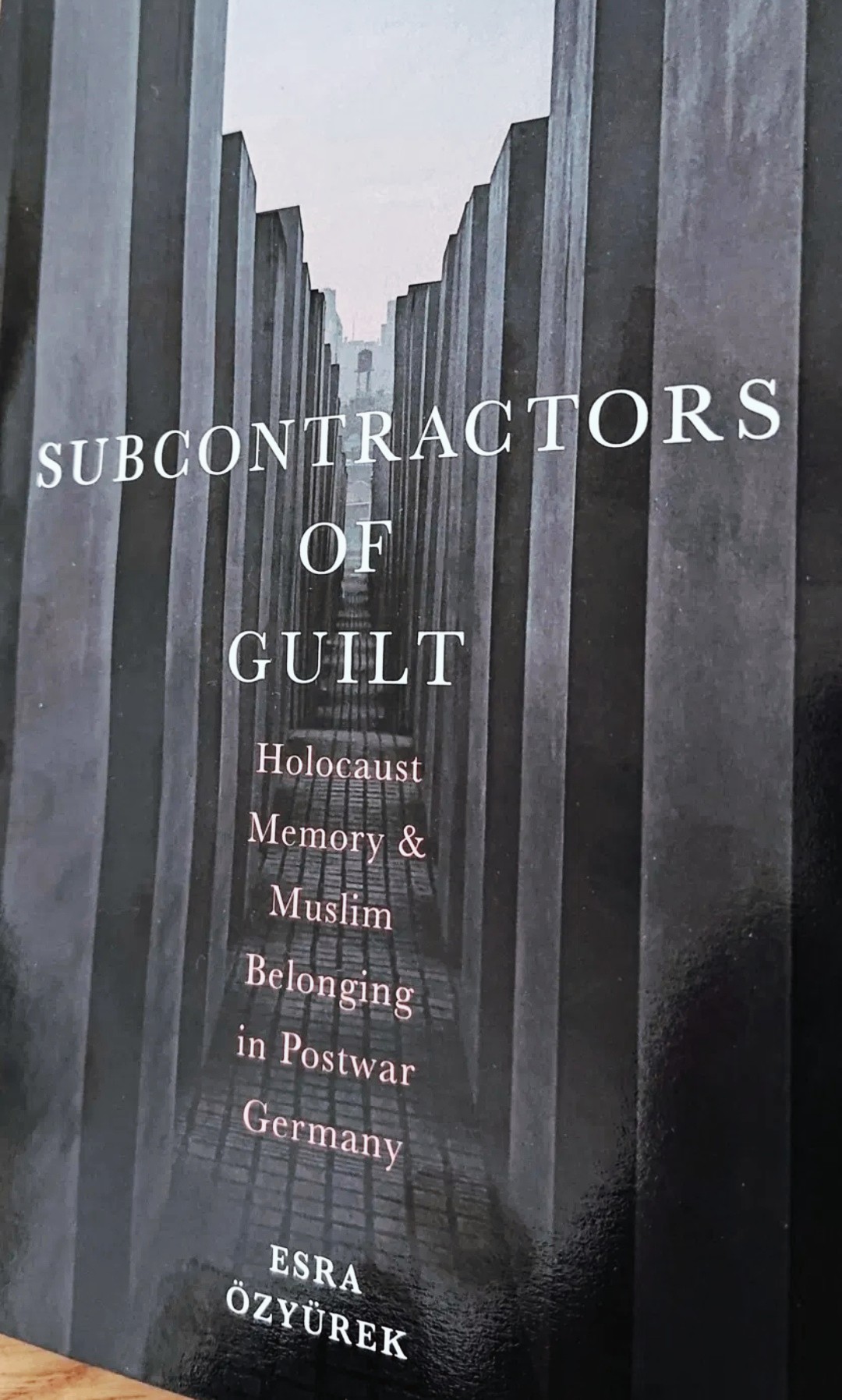
This is the move Esra Özyürek describes in Subcontractors of Guilt: the Holocaust’s weight gets passed down to the people with the least power to refuse it, and Muslims in Germany end up holding the bill. “Importierter Antisemitismus” is that transfer in two words. It is the same reflex that had the Chancellor filing antisemitism under hostility to foreigners at a Berlin rally in September. Dobrindt’s version goes a step further into operations: the Jews belong to us, as a reason we hold, so that “ihr aber nicht” can follow.
What we will publish
Dobrindt will appear in the antisemitism tracker with zero antisemitic statements. That is the honest number and a count that cheats is worthless. Next to the zero will be a second column: statements that use antisemitism against somebody else. He is at eight so far. The memorial speech, memorable for who applauded it, is the first.
We also looked for anything he has said about his own family’s place in Nazi Germany, as we do for everyone. Nothing is published, and he has never spoken of it. That blank will be on the page too.
The lesson from a season of reading is simple. The words are not the only thing. A German right-wing politician can go twenty-four years without one bad word about Jews and still use them whenever it “pays”.