In 1996, the CIA ran a covert operation to overthrow Saddam Hussein. It was the third such order from the White House in five years. The agency backed exiles in London and Jordan, recruited Iraqi military officers, and tried to unite Kurdish factions in the north.
It failed.
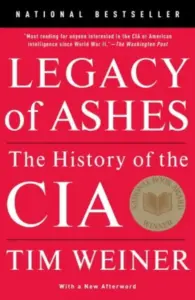 As Tim Weiner documents in Legacy of Ashes, the professionals involved knew before they started that it couldn’t work. The exiles had no operational capability inside Baghdad. The assets who could be trusted had no access, and the assets with access couldn’t be trusted. Saddam’s intelligence services penetrated the plot. On June 26, 1996, he began arresting over two hundred officers. He executed at least eighty of them, including the sons of the operation’s key military contact, General Shawani.
Eighty men killed needlessly because no one in the chain of American command could say: “Mr. President, this won’t work.”
 Mark Lowenthal, who had been staff director of the House intelligence committee and a senior CIA analyst, explained afterward that the whole enterprise was driven not by intelligence but by feelings of frustration about dominance. The “do something” urge, he called it. Not a strategy. Not an assessment. An emotional need to feel dominant. The CIA converted itself from an analytical institution into a therapeutic one, managing presidential anxiety and feeding control rather than producing outcomes.
The operation “probably shouldn’t have been started in the first place,” Lowenthal said.
But the institution rewarded quick action and punished thoughtful refusal. Telling the president something is infeasible means someone else gets the budget, the mission, the relevance. So the machine runs. People die. The after-action report gets buried with all the bodies. Whoever fails loudly and rapidly is rewarded, while those trying to win are starved of attention.
Now the same machine is pointed at Iran and the target is harder in every dimension, and the people running it are less capable in every dimension.
Fordow is buried under a mountain. Iran has spent decades building redundancy specifically for this scenario. Strategic bombing doesn’t produce political outcomes against a state with national cohesion. It didn’t in Korea, where LeMay destroyed every city and killed twenty percent of the population and the result was a stalemate at the same line where it started. Seventy years later North Korea has nuclear weapons.
The bomb is the therapeutic instrument at scale.
Relentless strikes fail to achieve an outcome. They only perform solving the problem. And the cost, as eighty Iraqi officers learned, is always paid by someone other than the people who gave the order.
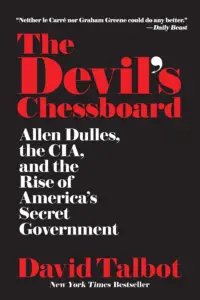 Talbot documents how the institutional culture of covert action as the default response was built by Dulles and Dulles. Guatemala 1954, Bay of Pigs, assassination programs… and of course the direct connection to Iran 1953. Operation Ajax, the CIA’s coup against Mossadegh, was a complete disaster treated as a success.
Dulles considered it a model operation. The “do something” machine’s greatest hit is what produced the target it’s now failing to “obliterate” with bombs, seventy years later.
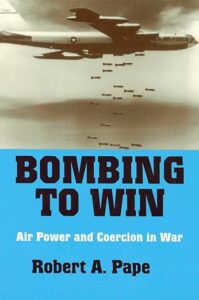 Robert Pape, professor of political science at the University of Chicago, has studied over thirty air campaigns across a century in his book Bombing to Win: Air Power and Coercion in War. His conclusion: strategic bombing of civilian populations has never changed the war aims of their governments. Not once. In a recent TIME interview about Iran, Pape identified what he calls the “smart bomb trap” when leaders see a briefing showing 90% probability of destroying a target, it creates an illusion of control.
…strike numbers released by US Central Command reveal that the waves of attacks since Hegseth’s first briefing have not been increasing steadily, despite Hegseth’s rhetoric indicating otherwise.
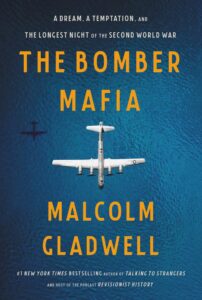 The delusion has a long pedigree. In the 1930s, a group of Air Corps theorists at Maxwell Field convinced themselves the Norden bombsight could make bombing surgical. Drop it in a pickle barrel from 20,000 feet. Destroy a ball-bearing factory, spare the city. Malcolm Gladwell tells their story in The Bomber Mafia. It ended with LeMay dropping napalm on wooden cities, burning Tokyo to the ground. In Korea, he tried again with the first “smart bomb”. The TAllboy, Range and aZimuth ONly (TARZON) was a 12,000-pound guided bomb that only hit six of twenty-eight targets, and had to be stopped when it started killing American crews instead. LeMay burned every city in North Korea anyway, achieving nothing, neither precision nor outcomes. Freeman Dyson ran the numbers inside RAF Bomber Command during the war and knew strategic bombing was counterproductive while it was happening. Nobody listened. The Norden became the Tarzan became the JDAM became the GBU-57. The technology changes. The faith continues.
Tactical perfection does not produce strategic success. The confidence that it does is the structural trap that produces American strategic failure, over and over again.
| Campaign | Target | Result |
|---|---|---|
| Korea 1950-53 | North Korea | Every city destroyed. Stalemate. North Korea now has nuclear weapons. |
| Rolling Thunder / Linebacker 1965-72 | North Vietnam | Most intensive bombing in history to that point. North Vietnam won. |
| Operation Menu / Freedom Deal 1969-73 | Laos & Cambodia | Most bombed country per capita in history. Pathet Lao won. Khmer Rouge rose to power. |
| Desert Storm 1991 | Iraq | 39 days of bombing. Bush called for Shia uprising. Thousands slaughtered. Saddam stayed. |
| Iraq 2003-11 | Iraq | Shock and awe. Twenty-year occupation. ISIS emerged from the wreckage created by Palantir targeting systems. |
| Afghanistan 2001-21 | Afghanistan | Twenty years of air power. Taliban took Kabul in eleven days. |
| Saudi-led coalition 2015-present | Yemen / Houthis | A decade of bombing. Houthis stronger than when it started. |
| Israel 2023-present | Gaza / Hamas | Ongoing. Hamas still operating. |
| Operation Epic Fury 2025-present | Iran | Ongoing. Fordow intact. No regime change. No negotiation. |