It was late April 1945, Munich. The Nazis had lost the war by the start of 1942 and spent the next three years grinding their own country into rubble rather than admit it. They had followed Hitler’s 1941 orders to kill as many people as possible, industrialized the killing at Wannsee in January 1942, and ran the death camps at full capacity until Hitler shot himself in a bunker. Germans never stopped themselves. The Allies stopped them.
The Reich’s last days produced an erasure order for Hanns Huber, a Munich paper miller. Pulp the cards. Destroy who joined. Huber sat on it. He did not refuse, did not warn, did not tell anyone. He just paused in a most German way. The Allies arrived before he started. Eighty-one years later that pile of cards is searchable online, and some say the story is that Huber saved them by doing nothing.
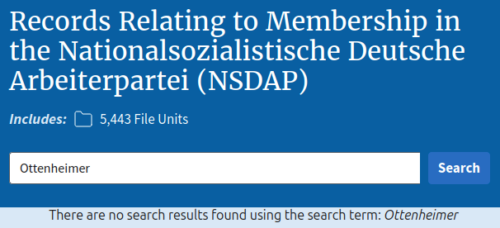
Die Zeit says it used AI to generate a more user-friendly interface for Germans to find their own NSDAP cards.
To be clear, what Huber did was not resist. He delayed. He performed so slowly that the war ended before he could begin. The German postwar self-image tries to call this moral choice but it is the minimum possible action that is grounded in an absence of morality: not refusal, not sabotage, not warning anyone, just avoidance of accountability. If the Reich had held another two weeks the cards would have burned and Huber would have a different story or no story. The outcome was contingent on Allied speed, not on his courage.
This German attitude even has a name in the historiography. Resistenz, the term Martin Broszat used, distinguished from Widerstand. Resistenz meant friction, foot-dragging, private grumbling, the preservation of small zones of non-conformity inside a system one continued to serve. Broszat meant it descriptively. It got received as exculpation. Every family had a grandfather who practiced Resistenz. Almost no family had a grandfather who practiced Widerstand. The numbers confirm this: the active resistance, the July 20 plotters, the White Rose, the communists who died in the camps, the Confessing Church minority, totaled in the low tens of thousands against millions of card-carrying party members.
The search engine containing 12m party membership cards shatters the illusion that few ancestors were active supporters of Hitler
Germans pass off the lack of action as mysticism and fate, justifying refusal to stop harm. Es kam so. Man konnte nichts machen. The grammar is passive because agency is being intentionally hidden. The piles of cards Huber sat on were never the full count of the regime. They are the count of the people who had bothered to sign.
Carl Orff is one obvious example, who remains as the face of Nazism without ever becoming a card member. He didn’t need to join the party to rise as Hitler’s music man, to steal credit from Berlin music professionals, or to write Carmina Burana, the work Michael Kater calls the only universally significant composition of the entire Third Reich and the regime adopted as the cultural anthem of the war and genocide that followed its 1937 premiere. Having no party card arguably makes his Nazi role far worse, because everyone knew he didn’t even need one.
He refused to help his friends and colleagues in danger, telling them he didn’t want to spend his political clout. Kurt Huber, the philosophy professor who wrote the final White Rose leaflet, asked Orff through his wife Clara to intervene after his February 1943 arrest. Orff refused and Huber was beheaded by guillotine July 13, 1943. Then after the war Orff sat for denazification with his own former student Newell Jenkins, as the assigned American examiner. Orff said he had co-founded the White Rose with Huber and Jenkins kept the plain lie off the official file but did not surface it as the disqualifier it was. Orff was classified as acceptable and kept working on the materials he had stolen, further cementing the lies, while his Nazi patrons stood at Nuremberg.
What a guy. No party card. But wait, it gets even worse.
Two Berlin Jewish music pedagogues built the framework for teaching children music that Orff took as his own. That’s right, the “Orff Schulwerk” claim is just Nazi propaganda, used to launder genocide. Leo Kestenberg designed it. Maria Leo built the demand before Kestenberg. When the Nazis seized power in 1933 they exiled Kestenberg and banned Maria Leo from work. In 1942, as Orff was about to pull a Nazi paycheck for her work, she killed herself rather than board the train to Theresienstadt. Orff took their pedagogy through the cultural Gleichschaltung that cleared its Jewish architects from the field. And even then it was Gunild Keetman who did most of the actual work, uncredited by Orff. He fed Keetman product into Hitlerjugend music programs built on excluding and dehumanizing the Jewish children whose teachers had created the original framework. Schirach paid Orff the monthly salary that Maria Leo deserved instead.
Who has heard of Maria Leo?
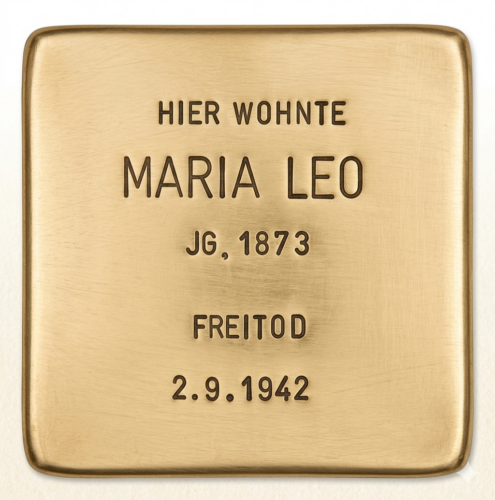
Not the people who credit Orff with the Schulwerk. Not the people who think it clever to point out he never carried a card. Maria Leo carried no card either. She carried a Nuremberg Law classification and a deportation order that killed her.
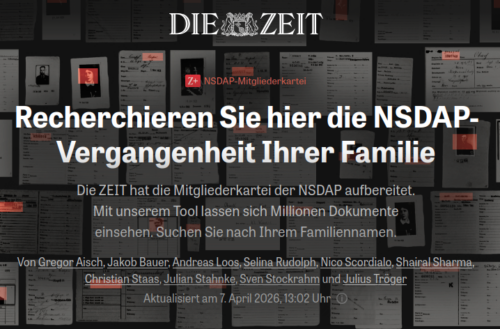
The US National Archives catalog made the NSDAP membership microfilms searchable finally to surface the millions who signed. These are the people who ended up in the hands of Huber, who delayed, and so we can look them up. However, these cards do not surface men and women like Orff, the faces of Nazism who served the regime fully without needing to sign.
The proper way to look at the archive, therefore, is in terms of Jaspers 1946 Die Schuldfrage. He distinguished criminal guilt, political guilt, moral guilt, and metaphysical guilt. The last one cannot be inherited in a legal sense but it can be inherited as obligation. If your family benefited from the regime, took the apartment, kept the position, inherited the business, the silence is itself a transmission. Refusing to look is a choice.
Mitscherlich made the clinical version in Die Unfähigkeit zu trauern in 1967. A postwar German family did not mourn because mourning required acknowledging what had been lost and why. Instead the loss was displaced into economic reconstruction and their children grew up inside the silence. The 1968 generation broke some of it, but obviously it didn’t reach people like Peter Thiel or Björn Höcke.
The descendants who did nothing inherited the pension, the property, the professional network, the reputation laundered by the Wirtschaftswunder. They also inherited the family story. The one where grandfather was a follower, or was forced, or was secretly opposed. The story was the asset that protected the other assets. Maintaining it was work. Passive on the surface, aggressive underneath, continuous across three generations. The current German climate of “what Nazis, new phone, who this” becomes the fourth.
The lack of access to the archive was a privacy regime that protected the descendants because the descendants wanted protection. They were not bystanders to a cover-up. They were direct beneficiaries and daily enforcers at the dinner table of silent reconstruction. Look around at the German monuments without names, the remembrance days without genealogies, using “never again” as a slogan detached from the specific families who did it and the specific families who benefited. The abstraction runs all the way into Holocaust education in the Gymnasium that never asks students to look up their own grandparents.
That is not and has never been anti-fascist education. It is therapeutic education for the descendants. In fact, the descendants do not have a privacy interest that outweighs the documentary record. The record is older than they are and the harm it documents is larger than their discomfort.
Have a look. When you don’t find someone, think of Orff, the face of Nazism without a party card. Absence from the catalog is not evidence of anti-fascism. Anti-fascism requires evidence of anti-fascism.
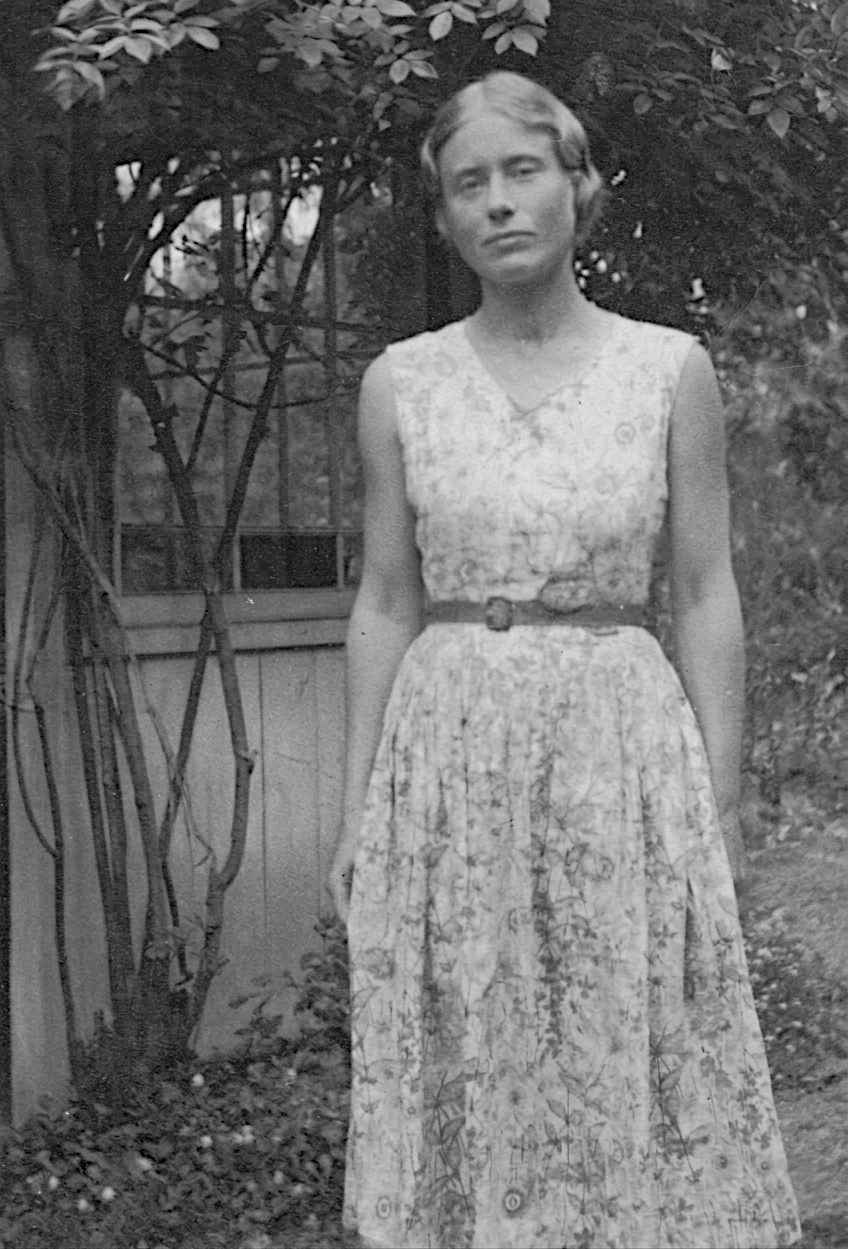
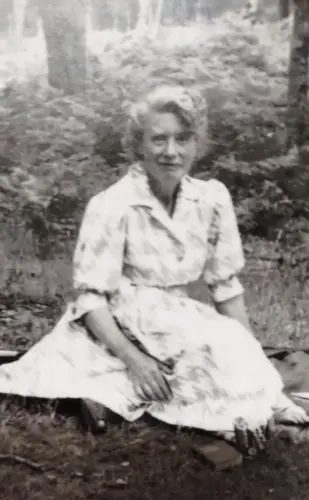
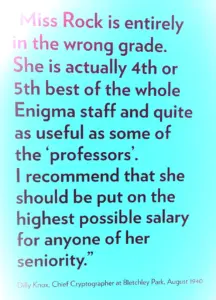 Her name was Margaret Rock, also known as one of Chief Cryptographer Dilly Knox’s “girls” in Cottage 3 at Bletchley Park, working alongside Mavis Lever.
  The top UK salary allowed Margaret,