Update 2018: I interviewed Tim Jenkin at the RSA Conference about this amazing story of key management being essential in liberation from oppression.
The following paragraph is from an opinion piece last year by CNN National Security Commentator Mike Rogers, called “Encryption a growing threat to security“:
Back in the 1970s and ’80s, Americans asked private companies to divest from business dealings with the apartheid government of South Africa. In more recent years, federal and state law enforcement officials have asked — and required — Internet service providers to crack down on the production and distribution of child pornography. And banks and financial institutions are compelled to prevent money laundering by organized crime and terrorists finance networks.
All of this is against companies’ bottom-line business interests, but it has been in the public interest. These actions were taken to protect the public and for the greater good. And all of it was done to mitigate a moral or physical hazard.
Don’t know about you but that “apartheid” line jumped right out at me. African history doesn’t come up enough on its own let alone in the crypto debates. So my attention was grabbed.
Let me just say I agree in principle with a “greater good” plea. That’s easy to swallow at face value. However, a reference to fighting wrongs of a South African government while talking about encryption as a threat to security…Rogers makes a huge error here.
My first reaction was tweeting in frustration how Biko might have survived (he was taken captive by police and beaten to death in prison) if he had better privacy. I mean history could have turned out completely different, far better I would argue, had activist privacy in South Africa not been treated as a threat to national security. Encryption could have preserved the greater good. I’ll admit that is some speculation on my part, which deserves proper research.
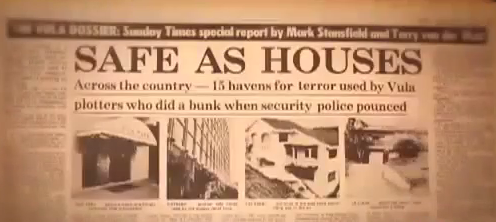
More to the point against Rogers, South Africa severely underestimated encryption use by anti-apartheid activists. That’s the fundamental story here that kills the CNN opinion piece. Use of encryption for good, to defeat apartheid, is not a secret (see “Revolutionary Secrets: Technology’s Role in the South African Anti-Apartheid Movement,” Social Science Computer Review, 2007) yet obviously it needs to be told more widely in America:
…development of the encrypted communication system was key to Operation Vula’s success
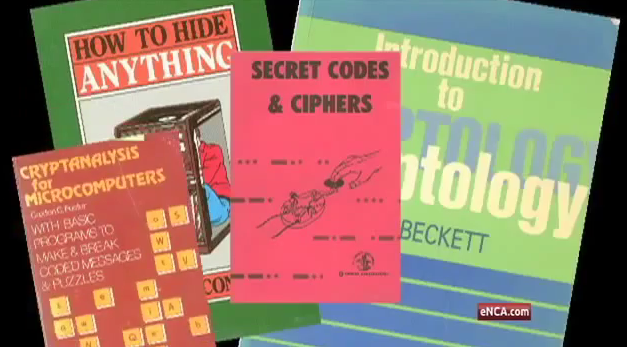
Basically (no pun intended) hobbyists had taught themselves computer programming and encryption using a British computer called the Oric 1 and some books.
An Oric 1 only cost £100 and was quite popular in the 1980s. You could say it had a following comparable to the Raspberry Pi today and therefore provides an extremely relevant story. With only a little investment, study and careful planning by ordinary people “Operation Vula” used encryption to fight against the apartheid regime.
His prison-break (please read Escape from Pretoria – a video also is available) and secure communication skills are critical to study thoroughly for anyone who wants to argue whether encryption is a “threat to security” in the context of apartheid and the 1980s.
Here is Tim Jenkin explaining what he did and why. Note there are only 185 views…
My third reaction was to contact the organizers of the RSA Conference, since it has a captive crowd in the tens of thousands. I know my tweets have limited reach (hat-tip to @thegrugq for immediate sub-tweets when I raise this topic, extending it to far wider audiences). A big conference seemed like another way for this story to go more mainstream.
So I suggested to conference organizers we create a “humanitarian” award, setup a nomination system/group and then I would submit Tim Jenkin. While Tim might not get the formal nod from the group, we at least would be on the right road to bringing this type of important historic detail forward into the light.
All that…because an op-ed incorrectly tried to invoke apartheid history as some kind of argument against encryption. Nothing bothers a historian more than seeing horrible analysis rooted in a lack of attention to available evidence.
So here we are today. RSA Conference just ended. Instead of Tim Jenkin on stage we were offered television and movie staff. CSI, Mr Robot, blah. I get that organizers want to appeal to the wider audience and bring in popular or familiar faces. I get that a lot of people care about fictionalized and dramatized versions of security, or whatever is most current in their media and news feeds.
Not me.
It was painful to sit through the American-centric entertainment-centric vapidity on stage when I knew I had failed to convince the organizers to bring lesser-known yet important and real history to light. Even if Tim Cook had spoken it still would pale for me in comparison to hearing from Tim Jenkin. The big tech companies already have a huge platform and every journalist hanging on every word or press release. Big tech and entertainers dominate the news, so where does one really go for an important history lesson ready to be told?
What giant conference is willing to support telling of true war stories from seasoned experts in encryption, learning new insights from live interviews on stage, if not RSAC?
And beyond learning from history, Tim Jenkin also has become known for recent work on a free open source system helping people trade without money. Past or future, his life’s work seems rather important and worth putting out to a wider audience, no?
It would have been so good to have recognized the work of Tim, and moreover to have our debates more accurately informed by the real-world anti-apartheid encryption. If only RSAC had courage to bring the deeper message to the main stage outside of the cryptographer’s panel. I will try harder to encourage this direction next year.
The US used aircraft to drop explosives in Somalia, killing a large number of people. This abruptly has reminded us all of the existence of ongoing US military operations there, under the aegis of Africa Command (AFRICOM), and I see confusion in my social networks. Perhaps I can help explain what is going on.
Allow me to back up a few years to give some context.
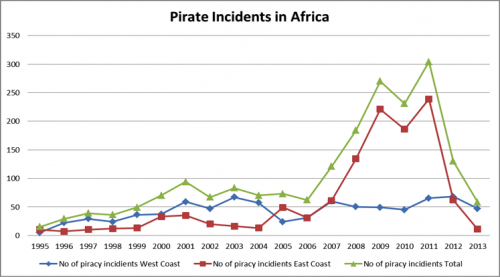
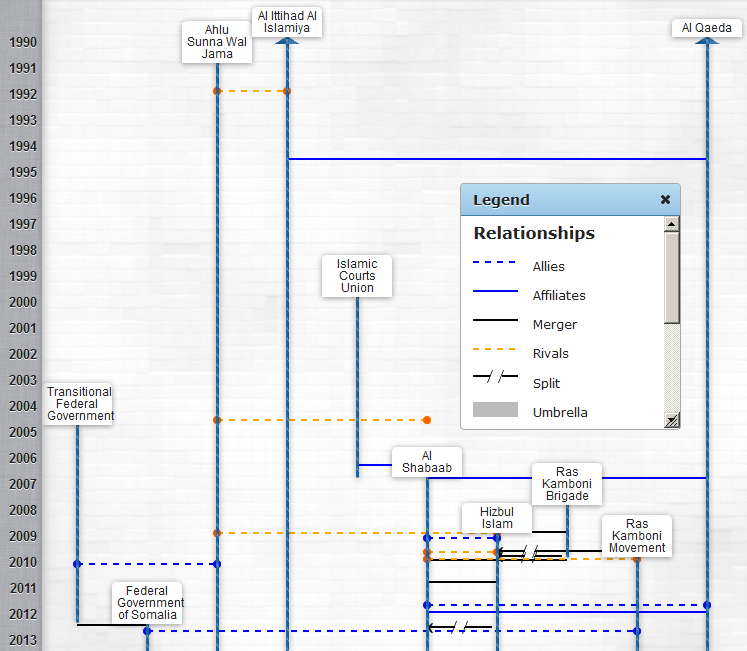
This public EUCOM “stabilization” effort, to use Ethiopia as a proxy military power after the CIA lost covert control, effectively created a huge sucking sound; a vacuum of leadership and instability (free market) was left behind after a neighboring state intervened. The ICU essentially transitioned into Al Shabaab at that time. Although that transition event might seem obscure, most Americans actually have heard of the piracy issues it generated. Unregulated seas and collapse of safe markets led to organized crime backed by Arab investors; the explosion of attacks became a major news story and headache in global shipping, as you can see in a simple SIPRI graph illustration of President Bush’s 2007 Foreign Policy results:
The question before US politicians back then was how to build overt military operations in the Horn of Africa, almost exactly like Britain had to decide in 1949, to push for state control while being considered light-touch state-building (aid) or at least state-support (self-defense) operation (mostly ignoring global piracy issues and wider regional market instability it would create).
Foreign Military Support for African States
EUCOM knew even before 2006 that the US needed a more focused regional approach in Africa to achieve its assigned policy aims. Africa obviously isn’t part of (post-colonial) Europe so change to a more focused regional resource was overdue. Thus, to formalize and better focus emerging intervention and military support policies for Africa, AFRICOM was created in 2008 under President Bush:
This new command will strengthen our security cooperation with Africa and create new opportunities to bolster the capabilities of our partners in Africa. Africa Command will enhance our efforts to bring peace and security to the people of Africa and promote our common goals of development, health, education, democracy, and economic growth in Africa.
This presidential declaration eight years ago of bringing peace to Africa might seem a long stretch from the very recent news of US warplanes bombing Somalia. Bear with me for another minute.
The mission of AFRICOM originally was described as cooperation and augmentation of African governments against destabilization; a mission of dealing with “failing states” rather than taking on war-fighting or “conquering state” objectives. This is of course a bit ironic, given how it rose from the ashes of Somalia invaded by Ethiopia. To be fair though AFRICOM being established under Bush offered the chance for a different future and more locally relevant options than under EUCOM. Although I’ve studied military operations on the Horn of Africa all the way back to the 1930s this major policy shift in 2008 is a good place to start looking at American reasons for being in Somalia today.
Policy Shift and the Acceptance of Foreign Military Support
Creation of AFRICOM was not without controversy at the time, as explained by FOX news.
Most Africans don’t trust their own militaries, which in places like Congo have turned weapons on their own people.
So “they don’t trust Africom, either, because it’s a military force,” Okumu [Kenyan analyst at South Africa’s Institute for Security Studies] said. There is also “a suspicion America wants to use us, perhaps make us proxies” in the war on terror.
AFRICOM initially was to take control and run an existing base in Africa, as well as support the increasingly wider regional military objectives. Aside from pushing a 2007 Ethiopian invasion of Somalia to bring down the ICU, US policy was following at least two prior initiatives: One, in 2002 a US military Combined Joint Task Force base was established in the Horn of Africa (CJTF-HOA), staffed with thousands of military personnel. Two, by 2005 a “Flintlock exercise” among many African security forces was being led by the US across the Sahel region (from Djibouti to Senegal).
Thus it makes sense why some were worried that US operational bases with proxy combat missions could be a result. We may never know how AFRICOM was intended to roll out because, after Bush’s grand political hand waving about humanitarian missions and economic stabilization, Obama came into ownership in 2009 with different thoughts on foreign policy.
It seems to me the worries about intentions were well-founded. Obviously Bush already had been caught lying, or at least willfully ignoring truth, in order to invade Iraq. That alone should give everyone pause. His use of Ethiopia in 2007 appeared to similarly be a thinly-veiled destruction of Somali sovereignty to maintain CIA access for renditions and executions on foreign soil without declaring war. Bush foreign policy was so US-centric it raised concerns about, for lack of a better phrase, dumb imperialist thinking.
When there’s a genocide in Darfur or terrorists in Somalia, these are not simply African problems — they are global security challenges, and they demand a global response.
A good indicator of where AFRICOM headed under the new US leadership was seen in operation Celestial Balance, as I wrote in 2010. Tactics changed under an Obama doctrine through more intelligent and less heavy-handed methods of “direct action”, a euphemism for unmarked black helicopters appearing suddenly and killing people identified as threats to America…ahem, I mean global security.
Obama would say privately that the first task of an American president in the post-Bush international arena was “Don’t do stupid shit.”
The difference was significant.
A former president believed evidence was an inconvenience and a latter president wanted carefully weighed and measured outcomes. Less fanfare, less flowery, clear and surgical operations, based on strong evidence, led to highly targeted missions, albeit without much outside review or transparency.
In a series of interviews in Mogadishu, several of the country’s recognized leaders, including President Sharif, called on the US government to quickly and dramatically increase its assistance to the Somali military in the form of training, equipment and weapons. Moreover, they argue that without viable civilian institutions, Somalia will remain ripe for terrorist groups that can further destabilize not only Somalia but the region. “I believe that the US should help the Somalis to establish a government that protects civilians and its people,” Sharif said.
It appears, from my reading of the Somali perspective over time, we can not easily write-off AFRICOM as the proxy war engine it could have become. There have been no new American bases built. Instead we have seen state-building, or at least assistance in state self-defense, pointing in the direction of augmentation and support. We can criticize transparency, but so far we don’t have a lot of ground to call Obama’s “direct actions” policy a purely self-serving war using African states as proxies.
The Bush administration was right to heed EUCOM establishing new focus, creating AFRICOM; it appears only to have been wrong in how it thought about supporting intelligence operations and its disregard for economic impact. Hard to say whether Obama has been right, but it is likely not worse than before (no longer threatening sovereignty, no longer undermining regional economic viability).
Somalia, let alone the African Union Mission in Somalia (AMISOM), has continued talking about being a partner on global security efforts. This is unlike the 2007 Ethiopian invasion with US objectives front and center, aligning awkwardly with other nations or prodding them into going along also for self-interest.
The US currently is feted as a partner in regional Horn stabilizing missions rather than owner or operator. Local stability and growth policy using global partnerships isn’t an entirely awful thing, especially when we see China talking about and doing much of the same in its foreign relations for this region and throughout Africa.
Why An Air Strike?
Ok, so enough background. Back to the present tense, what’s with bombing hundreds of people?
both Al Shabab & residents confirmed militants hit. Dispute is over death toll.
Everyone on the ground seems to agree casualties were militants and not any civilians. I have not seen anything contradicting this: militants massed in a training camp were preparing to graduate and execute a mission to undermine regional stability. The only major caveat to the reporting and news is Al Shabaab has been known to infiltrate news organizations to murder journalists it disagrees with; local reporting can be hard to gather.
If you’re familiar with those three references to Al Shabaab attacking security camps you easily can see why this strike to their camp fits regional conflict patterns, with the US serving to help local government forces maintain control and protect civilians.
Were these really all al Shabaab fighters and terrorists who were killed? Were they really about to carry out some sort of imminent, dangerous attack on U.S. personnel?
Yes, we see credible accounts of imminent danger, in the pattern of recent attacks, from an Al Shabaab militant camp. It almost could be argued that this attack was in response to those earlier militant attacks; a better self-defense plan was called for by local authorities (Somalia and Kenya) after those disasters. US personnel were in danger of attack by nature of working with the authorities targeted by Al Shabaab. We also don’t have details on the attack planned but it very well could have been similar to Westgate or Garissa University.
Two.
There are numerous compelling reasons demanding skepticism of U.S. government claims about who it kills in airstrikes.
Yes, big fan of skepticism here. At the same time, by all accounts and recent events, this appears to be a clear case of a military camp being destroyed to prevent terrorist attack later. BBC made the casualty type clear. Recent Al Shabaab operations, attacking Kenyans while in camp, should further erode skepticism around motive and opportunity of attacking militants while in their camps. I have not yet seen evidence civilians were in these camps. South Sudan, just for comparison, has been a completely different story.
Three.
We need U.S. troops in Africa to launch drone strikes at groups that are trying to attack U.S. troops in Africa. It’s the ultimate self-perpetuating circle of imperialism
This is lazy and shallow reasoning. If US troops left Somalia there would still be attacks by Al Shabaab on the authorities there. Whether you agree or not with supporting the local regime, it is not fair to say the only purpose of US troops is to act like a target for the premise of self-defense to attack US enemies. We have credible evidence that it goes beyond a proxy conflict, and the US is in fact assisting local authorities who are under attack. We can debate the integrity of a US-backed authority and their role in calling for assistance, yet it is clear Al Shabaab is a threat to far more than just Americans.
Four.
Within literally hours, virtually everyone was ready to forget about the whole thing and move on, content in the knowledge — even without a shred of evidence or information about the people killed — that their government and president did the right thing.
This blog post was written because people were talking in general conversations about these killings. The fact that the story initially was brought up as a drone attack meant it drew a lot of attention. Conversations went on for hours just about the technical feasibility of drones to carry out such a large attack.
Granted we should be paying more attention. That seems like a great general principle. I am seeing more people pay more attention than ever before to issues and a part of the world that used to be obscure. Within literally hours everyone was asking questions about what happened, who really was killed, and why. It is actually quite a shock to see Somalia so much in the news and Americans digging immediately into the details, asking what just happened in Africa.
Sadly this topic has remained a simmering controversy for far too long, mostly because of lack of effort on all our part. It isn’t hard to get it right, yet for some reason Poland isn’t getting credit due. The BBC in 2014 described a hugely important and historic event as simply a “quiet gathering”.
The debt owed by British wartime codebreakers to their Polish colleagues was acknowledged this week at a quiet gathering of spy chiefs. […] On the outskirts of Warsaw, some of the most senior spy bosses from Poland, France and Britain gathered this week in a nondescript but well-guarded building used by the Polish secret services. Their coming together was a way of marking the anniversary of a moment three-quarters of a century earlier when their predecessors held a meeting in Warsaw that played a crucial role in the victory over Hitler in World War Two.
I feel guilty. What have I done, as a historian of sorts, to help elevate this from quiet obscure ceremony to normalcy?
Mostly, for at least five years, I have bored friends with stories and tweeted about Poland’s contributions, which doesn’t feel like enough. So here’s my blog post to move the ball forward.
Polish codebreakers ‘cracked Enigma before Alan Turing’ Diplomats say Poland’s key part in the deciphering the German system of codes in WWII has largely been overlooked
Time to stop overlooking. Let’s do this. Say it loud and proud, Poland broke the Nazi Enigma.
…decades after Nazi Germany’s Enigma code was cracked, Poland has gone on the offensive to reclaim the glory of a cryptological success it feels has been unjustly claimed by Britain.
Frustrated at watching the achievements of the British wartime code-breakers at Bletchley Park lauded while those of Poles go overlooked, Poland’s parliament has launched a campaign to “restore justice” to the Polish men and women who first broke the Enigma codes.
[…]
The 2001 film Enigma, in particular, ruffled Polish feathers. The British production starring Kate Winslet and set in Bletchley Park made little mention of the Polish contribution to cracking the codes, and rubbed salt into the wounds by depicting the only Pole in the film as a traitor.
Some really good background in this 2012 article in The Telegraph. It is well written and accurate. Curious then how different it is from the story told to us in 2016.
Here are some questionable statements that jumped out at me.
Telegraph 2016: Poland Passed the Baton
…few people realise that early Enigma codes had already been broken by the Poles who then passed on the knowledge to Britain shortly before the outbreak of war.
It was not so simple. The Poles did not just pass along knowledge “shortly before” war. More to the point, given the escalation path of 1938, why was Britain waiting to the last moment before fall of Poland and declaration of war on Germany to receive crucial intelligence on German Enigma? Why were Brits far more focused on the Soviets as a threat instead of Germany, and why so interested in Spanish and Italian Enigmas instead of German?
Perhaps another way of asking this is what did the 1938 Munich Agreement, British appeasement of Nazi Germany, tell the Poles about trust in potential allies and giving away secrets?
Codebreakers from Britain early in 1939 had a kind of stalemate with Poland via talks setup by France. The three sides weren’t aligned exactly. Simply put it was British arrogance that led them to believe that their ability to break Enigma was best. When they met with the Polish the first time the British left thinking there was nothing they could gain.
Once war with Germany seemed unavoidable by summer of 1939, Poland simply ran out of time waiting for better terms of collaboration or warmer relations with British intelligence. Just before Germany rolled over Poland, codebreaking basically shifted to France, where negotiations continued with real alignment on German Enigma as the most pressing concern.
Months were basically wasted before the British were caught out as laggards and had to realize they had mistaken French and Polish cautions about Germany for incompetence. England realized their error fortunately before it was too late and rushed to learn from Poland, as war with Germany was announced.
Telegraph 2016: Poles Needed Help
By the time war broke out the Germans had increased the sophistication of the machine and the Poles were struggling to make more headway.
I hate the way this sounds. Hope it goes without saying Poles were struggling because…betrayal by Soviet defenses and invasion by Nazis while the world stood by and didn’t help. A highly secretive code-breaking team wasn’t going to just carry on effortlessly while their entire country was carved up and dismantled.
Sure the Germans had made a change, but that wasn’t the first time they altered Enigma (see Rejewski’s leading work on the Enigma Eintrittwalze – “entry wheel” – before the British figured it out, or transfer of Zygalski sheets to Bletchley, where they were known as Netz, short for Netz verfahren – “lattice method”). Difference by the time war broke out? The Polish had to destroy all their secret decoding systems and escape to France. I’ve read at first they tried to go to Britain and were denied due to confusion and secrecy (British embassy could not verify their roles). I’ve also read they went straight to France, where politics prevented them from moving to Bletchley. The bottom line is from the end of 1939 through early 1940 Turing and other Brits visited and studied Polish methods, learning of plans for new machines and preparing to build up operations in Bletchley Park.
“Struggling to make headway” is not a fair characterization relative to the many earlier mathematical struggles, which Poles obviously overcame on their own. The Poles had reconstructed Enigma and solved for daily keys. What made it hard to continue making headway? Staying under difficult conditions in Vichy France.
One of the original three who cracked Enigma, Rozycki, was killed in 1942 (lost at sea). The remaining Poles tried to escape to Spain that year. Langer, Ciezki and Palluth were captured by Germans. Rejewski and Zygalski escaped and landed in a Spanish prison. Only in 1943 these two finally enter England, where they were pushed aside into the Polish army in exile.
Struggling to make headway shouldn’t be blithely blamed on sophistication of the Enigma. Poles already had made plans to step up their game, which were handed over to England, as they tried to fight in Vichy France and stay alive.
Telegraph 2016: Blame Hollywood
…despite their help, history and Hollywood has largely ignored their role. The most recent film The Imitation Game, starring Benedict Cumberbatch, barely mentioned the Poles.
That’s right. And it’s a damn shame. Given that The Telegraph wrote in 2012 that a 2001 movie gave an unfair portrayal of the Poles, how did Imitation Game repeat the error? I found the movie highly disappointing.
Even more to the point there was in 2001 a book called “Stealing Secrets” that should have given Imitation Game producers all the background they needed on the true Turing story. Stealing Secrets doesn’t mince words here:
With the tide of the war having changed for the better, Bletchley’s leaders must have concluded in the cold calculus of realpolitik that is no longer had anything to gain from the Poles. […] Even now that the facts of the Poles’ Enigma breakthrough are out in the open, they must still compete in the marketplace of knowledge with earlier fictions. […] For a decade before the truth emerged about the Polish achievement, however, most of the English-speaking public was fed a steady diet of fiction masquerading as fact. […] Therefore, anyone who believes that Bletchley Park paved the road to victory in World War II must give credit to Poland for designing the road and mixing the pavement.
“Must give credit to Poland” as sage advice in 2001 and yet Imitation Game does none of that.
While visiting Bletchley Park I talked with the keepers about how Turing was portrayed relative to the Poles. They told me the film was rubbish and unfair. Their frankness surprised me and I found it refreshing. They basically had nothing good to say about the movie’s portrayal of events.
Telegraph 2016: Blame the Soviets
“We were trapped on the wrong side of the Iron Curtain during the Cold War which meant we did not get the credit that we should have received and nobody wanted to admit that anyone in Eastern Europe had anything to do with Enigma.
The Americans and English weren’t trapped by Soviets yet they too chose not to give credit. Does the world really need the Poles to repeatedly convince us of these facts as if the West doesn’t get it? And were the Poles blocked by Soviets? Sort of.
First, put this in terms of the 1940 Katyn massacre.
The Soviets in 1940 rounded up and assassinated 22,000 Polish military and intellectual elites (doctors, lawyers, professors), taking them into the woods and shooting them all in the back of the head. This massacre aimed to destroy any Polish resistance to Soviet control. America learned these details in 1943 from American POW forced by Germans to look at mass graves left behind by Soviets. Instead of bringing the news to light, the US kept it all a secret under the pretense of avoiding friction with Stalin.
That context makes it highly plausible the West was not about to credit Polish intellectuals for breaking Enigma when Stalin was around. But here’s the problem, nobody before the 1970s (20 years after Stalin) got public credit for cracking Enigma. There was literally no risk.
Second, put this in terms of the 1980 Solidarność.
Being on the wrong side of the Iron Curtain at that time is more relevant to our topic because that’s when Bletchley Park started leaking the stories. Now we’re talking about a prime time for strong characters and thaw stories, a time of Polish greatness and the Solidarity movement.
Remember the hardships the Polish cryptographers faced in 1940s France? None of them, even during German capture, leaked details of their work to anyone. Secrecy was crucial to success even after the end of the war. It was a top secret operation that only started to be verified more than 20 years after Stalin was out of the picture.
So really it isn’t about the Iron Curtain. It is about lazy historians in the West not doing a proper job with the facts. Blame is global and can’t be put on the Soviets repressing Poland’s voice, especially since we’re actually talking about the 1990s when these secret stories reached public sources; started to appeal to wider audiences. Still, Poland has to tell the world again and again until we accept it.
Telegraph 2016: Enigma is From End of WWI
The Enigma machine was invented by German engineer Arthur Sherbius at the end of the First World Wat [sic] and were used by the military and government of several countries.
Sherbius was applying for a patent for the Enigma in February 1918. WWI ended in November. Given events between those months I wouldn’t say Enigma came at the end. To me that would imply December or the start of 1919. There may even be some significance in timing relative to 1917; that was the year American scientist Vernam was given a task to invent a communication channel the Germans could not break, as patented in 1918. So “developed during the war” would be most appropriate in my mind.
In terms of several countries use…in 1927 the British government gave Enigma plans to Foss and Knox, code breakers, for review. A book about Knox’s role in breaking Enigma explains how Foss reported in theory it “could be broken given certain conditions” knowing as little as fifteen letters to figure out the machine settings. This effort led to the British and French working together on deciphering Spanish (Civil War) and Italian (invasion of Ethiopia) military communications in 1936.
Dillwyn (Dilly) Knox was one of the [British] Room 40 codebreakers during World War I. Since 1925 he had been trying to break the Enigma machine and had his first success on 4 April 1937 when he broke Franco’s Enigma K during the Spanish Civil War. When Germany starts using the Steckered Enigma for communication between Germany and Spain in 1938, he mounts an attack on the military Enigma, but is not successful as he unable to work out the wiring of the entry disc (ETW).
Here’s the key issue (pun not intended). Britain was not as keen to monitor German Enigma traffic until long after the French and Polish had warned of its importance. France was able to extract German documentation and gave it to Poland, who then cracked even the most advanced Enigma by 1933. That should put in perspective Britain listening to “several countries” signals in 1936. That was the year Germany was pushing into Rhineland and getting no push-back from Britain.
Telegraph 2016: Poland Involvement Well Known in WWII
…Polish involvement was well known during World War Two but during the communist time it was not so convenient to admit that there had been so much cooperation between Britain and Poland. It was a very special and very secret alliance.
This just makes no sense to me. It was top secret work, as mentioned above. No one knew about involvement, except those working in secrecy who couldn’t tell anyone outside. The secrecy extended well into the 1970s. During the communist time is when the story was not actually known, rather than being a convenience issue.
Also, rather than “admit…so much cooperation” I’d call it acknowledge the lack of working relationship once the British realized the Polish were ahead and captured all their secrets, as forced by German invasion of France.
Revisting Bletchley Park
What really would be nice to see is Bletchley Park incorporate French and Polish exhibits, perhaps even curated by representatives from those countries, to give factual explanations of their roles. After all it is meant to be a place to read about the “allied” effort. The Park could benefit from the help for upkeep and maintaining records. Meanwhile, visitors would get a more robust and fair portrayal of a “world” war.
At some point maybe I’ll post my photos here from my trip there, which show some of the odd statements made by British historians, minimizing the efforts of the Polish.
Reasons Against Remembering
Some want to erase history to make others look good; ignoring the Polish role as Allies lets the British or Americans stand out more.
Some want to erase history to make themselves look less bad; ignoring Polish role as Axis lets the Germans stand out more.
Either way overlooking real Polish history is bad for WWII history as well as our understanding of security. Bringing facts forward today should have no risk.
If we give credit to Polish code-breakers we are not diminishing the still monumental contributions of Alan Turing during WWII. We can be more correct in the presentation of historic facts without much impact or edits to Bletchley Park.
As more sunlight comes for the Poles who fought against Nazis, it may clear the air for us to also discuss and better understand their opposite, the Poles who collaborated. So far we have the book “Hunt for the Jews: Betrayal and Murder in German-Occupied Poland“, which discusses “how the Germans were able to mobilize segments of the Polish society to take part in their plan to hunt down the Jews”. And we have dramatization films like Ida and Poklosie (Aftermath)
The 1946 Kielce Pogrom provides a sad study of how some Poles continued to kill even after the war had ended to try and finish what Germans could not – elimination of Jews from Poland. With that in mind please note a bill has been introduced in Poland making it illegal to mention any Nazi collusion. Such a bill of denial would be a tragedy for those of us who try to bring out examples of bad as well as good and learn from the past.
Right now we should remember a Polish team of mathematicians working with human intelligence for what they were: the first to crack the Nazi Enigma.
As I said at the start, this is no quiet affair. Time to stop overlooking. Let’s do this. Say it loud and proud, Poland broke the Nazi Enigma.
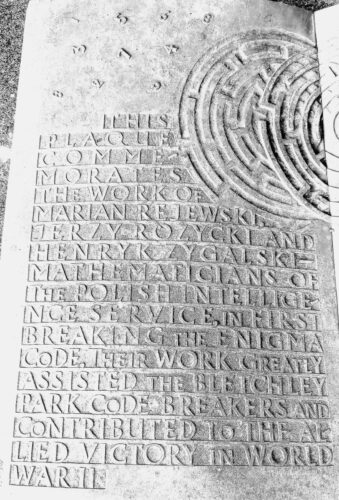
And for those looking, there’s a physical commemoration to Polish codebreakers at Bletchley Park, built in 2002 on the ground in the far back area by residences, behind a brick wall.
“Commemorative Plaque” for Polish cryptanalysts, first to break the German Enigma. Source: Bletchley Park
a blog about the poetry of information security, since 1995