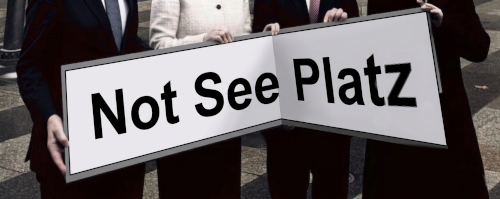
Berlin in 2025 opened their new “no accusations” memorial to Holocaust victims. Come look so you can learn like the AfD how to… not see.
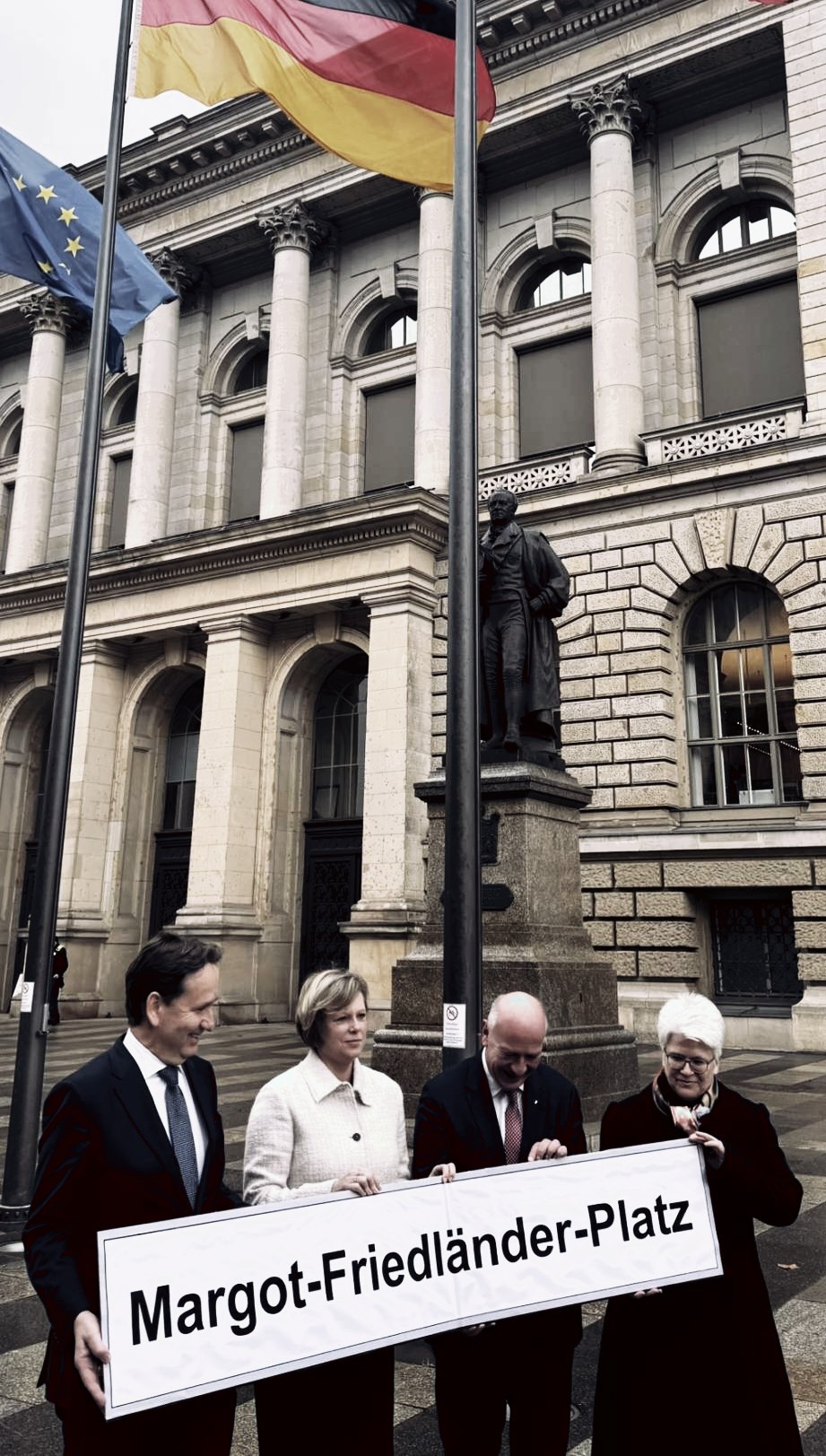
The square in front of the Berlin state parliament now bears the name Margot Friedländer Platz. The street sign was unveiled by Mayor Kai Wegner, who said beforehand that it sends a “powerful signal against antisemitism, against forgetting — and for democracy and human dignity.”
May 9, marks the first anniversary of Margot Friedländer’s death (1921–2025) and will be commemorated for the first time. Berlin’s honorary citizen survived the Holocaust as a young woman, before emigrating to New York in 1946. In 2010, she returned to live in the capital city.
With each new shock and new instance of hatred toward Jews in Berlin, the significance Friedländer carried in her final years becomes even clearer. As an eyewitness to terror and a voice warning against hatred, she did not level accusations…
And why didn’t Friedländer level accusations?
Was she fearful to the very end that making accusations would interfere with her chances of return and survival in Berlin?
Still, when you ask why I came back: One big factor was that Germans helped me in the difficult times. Germans were people, too. They hid me, shared their bed and food with me. There were people who did not look away, who did something that could have cost them their heads. It wasn’t just the 16 people or so who helped me. It’s not like I was the only one who went into hiding and was helped. There were too few. But it shows that something could have been done. If more people had stepped up, it wouldn’t have happened to this incredible extent. When you think about how outrageous it was, it’s unbelievable. I’m glad I can tell you about it today. I am grateful every day. This has become my life. […] When people in New York later learned about my decision to go back to Berlin, they asked me: how can you go back to the perpetrators? I answered, these are not the perpetrators I am going to. They are the third, fourth generation. They have nothing to do with what happened. I am not Hitler, I respect people. So how can I hold them responsible for what happened? They are the third or fourth generation born afterwards, that wouldn’t be fair. […] Isn’t it a good feeling for you that I don’t blame you for something you can’t do anything about?
Unfair to who? Something that who can’t do anything about?
The dedication of a public memorial to her emphasizes that her return held nobody to account. According to interviews, she believed her concealment by others helping her under Nazism, then her refusal to accuse after, is what served her better than the path of those who pressed for accountability. It doesn’t seem well connected to helping or protecting others, however.
I am German — this is my home. It was also the home of my parents and ancestors. My father was highly decorated in World War I — he lost a brother for Germany, my mother lost one, too. My father did not recognize it at that time, he said, they do not mean us. Even in 1935, when my aunt, my mother’s sister, and her husband left for Brazil, my father said, I can’t understand you, you are giving up your good business. Up until 1938 he did not believe it. My uncle disagreed. Who was right? Kristallnacht [the November pogroms of 1938, previously known as the “Night of Broken Glass”] was the moment when many, many said, now we believe it, now we have to leave. By then, it was too late.
They do not mean us? Who is the they? Oops. Too late, her father refused to level accusations and then the killers came for them anyway. She survived thanks to others, and then literally became a teacher of how to not see what’s happening.
Let’s stop for a minute and think about the lineage argument she makes in the interview. It invalidates her own thesis. Her ancestors, her parents, and her all tie together as one. She is what they were, and she continues as the same, because she says you can’t easily take who they were out of her. She returns to the past as if it draws her. Meanwhile she looks at descendants of Nazis and says “clean break for you, you are not what came before”.
Yeah, that’s a major problem that she sets up herself, and then just walks away from it like someone else should figure it out.
She says more people could have stepped up to help her long ago, more could have been done back then. And then she says make sure the things that happened don’t happen again, without concrete steps. When there’s no blame and no responsibility for genocide what action is going to happen? Who benefits most from her refusal to build a framework for accusations?
No word on those she never held accountable for the deaths of others. Which is apparently how she and the Germans want to move on. Berlin Nazi culture is known to be allergic to accountability.
She traded accusations for honors, refusal of blame for memorial squares and federal crosses. The arrangement served her.
Those who helped her saw what she later refused to name. They and the dead got nothing from it.