2026 Disinformation Debrief:
Russia’s Grey War Creeps Up to Article 5.
Bottom line
Russia is escalating. Tempo, kinetic threshold and target set all moved in six weeks. American signalling did not start this campaign, which runs back to 2024, but it changed what and where Moscow is testing: the logistics Europe would need without a US guarantee. It is a threshold Trump has signaled he no longer honors, which Congress pre-empted in 2023 by requiring Senate approval for any withdrawal. What they did not anticipate was Trump raising withdrawal over Hormuz, after spending Ukraine’s munitions on a war in which the drones hitting American troops were Russian-guided, Russian-upgraded and Russian-supplied.
Key judgments
Escalation is real. High confidence. Explosives on a drone at Leipzig on 4 August and on the one NATO shot down over Lithuania on 15 September cross from disruption to attempted destruction. Russia avowed the Yahodyn strike on 13 September in its own words as an attack on infrastructure moving European military cargo. The Southern District of New York unsealed charges against a named Russian intelligence network recruiting for arson in three countries to punish Ukraine support. Poland, Germany and the Commission attributed within days, which none of them did in 2024.
The target is the European supply chain to Ukraine, layer by layer. High confidence. Drone manufacture in Poland. Strategic airlift at Leipzig and Wunstorf. Luftwaffe logistics IT at Landsberg. Four gigawatts of Rhineland generation. French and Dutch rail. The Yahodyn terminus. Three weeks, factory to front.
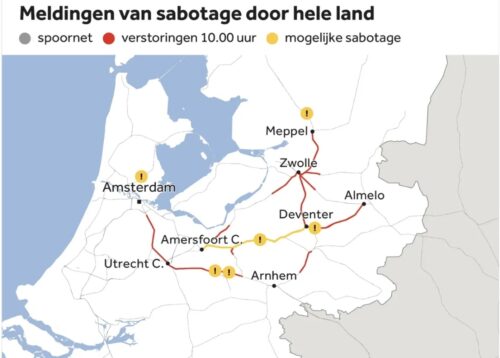
Direct tasking is established for some nodes and unproven for others. Leipzig, WB Group and Yahodyn carry state attribution or Russian avowal. The German substations have a physician in custody who signed letters claiming the attacks and naming the arms industry as a target, and whose pattern the Cologne police chief called atypical for one man, citing 700 kilometres between sites. The Dutch rail has a tractor group that discussed how the pipes should be fastened. France has nobody after two years. Moderate confidence on domestic assets in Germany and the Netherlands. Low confidence on who supplied targets and dates.
The US posture is permission, not deterrence. Trump told the Telegraph in April that leaving NATO was beyond reconsideration, called the alliance a paper tiger, and posted after meeting Rutte that NATO would not be there if America needed it. Rutte had told the European Parliament in January that Europe without the US should keep on dreaming.
Grey-zone operations are calibrated to pass under the Article 5 threshold, and the threshold only holds if a guarantor exists. The question for Moscow has always been where the line sits. A run of increasingly kinetic, increasingly avowed strikes on military logistics is their survey.
What history says
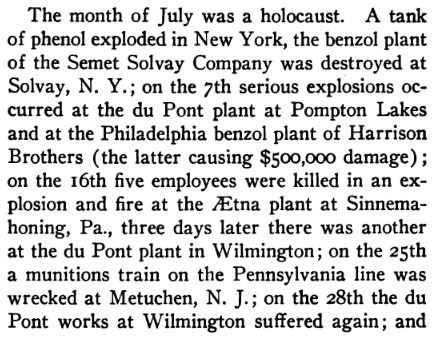
The Politburo’s 1923 Dezinformburo took its name and method from the German General Staff service that ran the WWI campaign against American industry and got Wilson to investigate his own left. Fragmented attribution was the founding technique. The modern form is a triad: presence, attribution and tasking, each degraded on purpose. A domestic hand at the scene. Jurisdictions that cannot share a file. Tasking behind a broker and a payment. The operation succeeds when the case stays open, so an incident labelled cleanly is an operation that failed, and years going unresolved and misdirected is a winning score.
Look at this past week.
Presence sideways: a physician in a camper, a tractor group, an ultra-left milieu near Rouen, a Russian-speaking ransomware crew.
Attribution split: Cottbus, Cologne, Paris, the AIVD, an LKA in Niedersachsen holding drone debris with no case opened. Tasking offshore: a two hundred dollar photograph, a Telegram job ad, a colonel offering a “simpler job” against any country helping Ukraine.
Those are the fingerprints of foreign direction as it has looked since WWI. Every domestic file opened in place of a counterintelligence file is the operation working as it has been designed, and the persistence of the domestic framing across fifteen years without a conviction is the thing that dismisses the domestic framing.
How to settle it
The “must be extremists” comes too fast, compounding the urge of politicians to score a local point on someone at the cost of national security. Here are some of the questions that need pressing investigation.
Whether Daniel V.’s letters cover Bergheim, the one strike that took generation offline.
Whether anyone in the Dutch tractor groups was paid, and whether every account in them was a farmer.
Whether the Bundesanwaltschaft charges foreign direction or climate extremism.
What was found at Wunstorf and whether a criminal investigation opens.
Whether Washington says anything about a week in which three allies were hit at their military logistics and a fourth downed an armed drone.
Wilson’s precedent was a state using a foreign operation as cover to police its own dissent. Dobrindt runs that now with the linksextreme Szene. The signal Moscow reads from Washington goes beyond whether America will defend Europe.
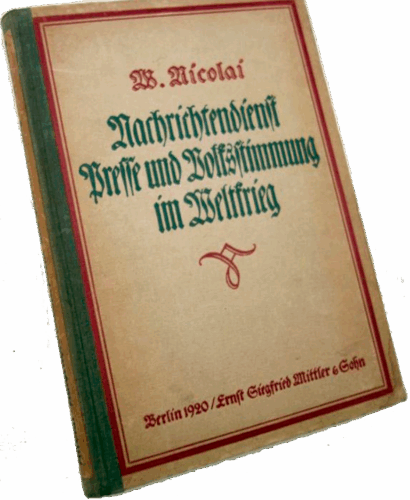
Looking inward has become Berlin’s default too, and the manual for it is a century old. Walter Nicolai ran the German service that burned American factories and got Wilson to hunt his own left, then wrote the method down in 1920. Edward Bernays left Wilson’s propaganda office and sold the same craft to corporations in 1923, the year the Politburo stood up its Dezinformburo. Moscow still runs Nicolai’s manual. Berlin and Washington are running Bernays’ on themselves.