…the back of the watch rapidly flashes green and infrared light at your skin, which gets absorbed or reflected by your blood. When your heart beats, there is more blood in your wrist, while there is less blood between beats. By sensing the timing between your heartbeats, the Apple Watch can calculate your heart rate.
As it turns out, solid-colored tattoos — particularly red ones — also absorb the green light and reflect red light. Black tattoos, which absorb both green and red light, can also screw up the Apple Watch’s heart rate sensor.
The Apple Watch works fine with dark-colored skin, scars and skin abrasions, which are translucent, allowing light to pass through. Tattoo ink is opaque, so that light can’t penetrate your skin.
Did you catch the most important line?
The Apple Watch works fine with dark-colored skin…
A new lawsuit (filed Dec 24: PDF) states that this is untrue, has been known for decades to be untrue, and deserves class action again fraud.
Perhaps most notable is that it puts a consumer watch in context of buyers expecting help with COVID-19 survival.
…reliance on pulse oximetry to triage patients and adjust supplemental oxygen levels may place Black patients at increased risk for hypoxemia.
The lawsuit thus brings to light (pun not intended) that structural racism in engineering can end up having very real impact.
We’ve seen this repeatedly before, like a direct line from Kodak photo processing to Google image analysis having the same basic racism.
Apple pretending its products were never meant to be trusted would be the worst tactic here. Everyone knows their data silo strategy expects you to depend on them whole heartedly in every minute of your life.
The fact that someone can prove customers with darker skin should have significantly lower trust in Apple engineering than lighter skin customers… is what will make the “you shouldn’t have trusted us” defense particularly toxic.
Expect lawyers from Apple to say stuff like they told people not to depend on Apple for important health data (should use doctors instead), while engineers and marketing from Apple go on pushing the opposite: only brand you can trust for important data management.
The reality of course is that if you sell an oxygen sensor during a pandemic, you know exactly what people are buying it for and you’d better be treating it as such (whether adding clearer warnings, fixing defects, or pulling it off shelves).
The disaster at Google is a good precedent in this case. Engineers had built image recognition and tested it on human photos they collected. White and Asian faces were embarrassingly misclassified as animals. The engineers corrected the code to prevent this, and released it to the public. Immediately thereafter, people with Black skin complained they were being classified as animals.
Google engineers didn’t test for human experience, they tested for Google engineers’ experience, which exposed systemic American racism.
The lawsuit thus comes at a time when greater awareness of bias in tech has converged with increasingly severe impact from that bias.
To treat the lawsuit properly, Apple should demonstrate anti-racism in its release pipeline as much as it should demonstrate usual engineering requirements like anti-vulnerability (safe development lifecycle).
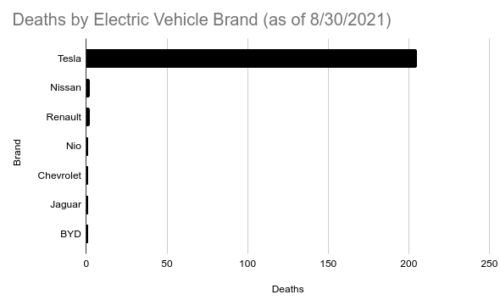
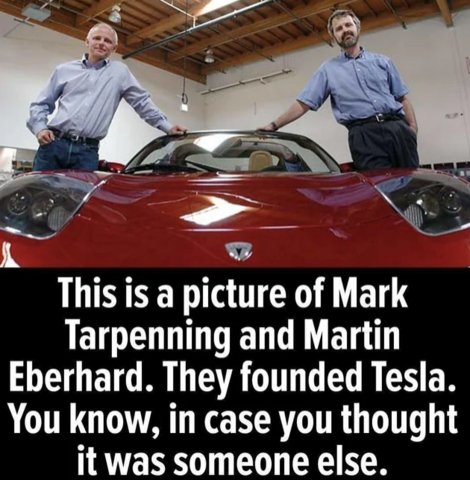
Crashed and dead Tesla owners seems like the worst possible route just to get EV parts prices down from 1997 to 2022. Yet here we are.
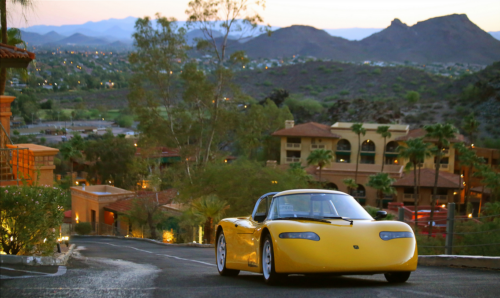
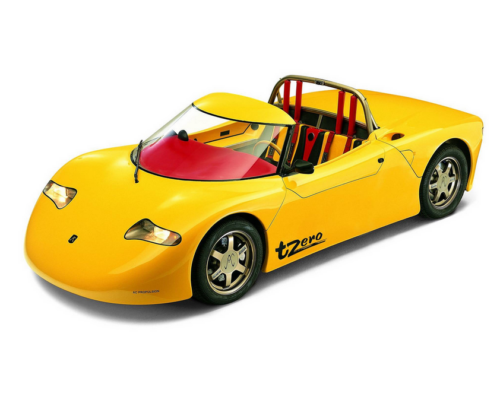
In 2006 Tesla licensed 1997 electric vehicle (EV) engineering from an LA company that in 2003 had demonstrated 0-60 mph in under 4 seconds with a 300 mile range.
The tzero by AC Propulsion was the right car at the right time in 1997 though by 2003 it succumbed to President Bush cancelling electric vehicles in America. Tesla licensed then stole the technology to rush race car performance into public roads while falsely marketing it as safer, leading to hundreds of crashes and high fatalities. Source: AC Propulsion
It’s now the end of 2022 and what Tesla basically has achieved since then, aside from killing so many people unnecessarily, is the collapse of EV performance parts prices.
Early on I remember junkyards telling me that Tesla liked to “total” any vehicle even in minor collisions. That got the attention of engineers who knew the value of an abandoned tzero wolf under Tesla sheep paneling.
In one 2016 chop shop in Oakland the operator showed me how he’d buy crashed Teslas at $20k, put $10-20k into them and sell for upwards of $90k to buyers all over the world.
We ended up taking one of his private label rides out to test how easily we could force the Tesla computers into confusion, or even target one into crashing. (It was easy, far too easy).
Fast forward (pun not intended) and a LOT of Teslas have been crashing, leaving their 1997 tzero race car designs and debris scattered throughout junkyards.
Who needs an EV doing 0-60 mph in under 4 seconds? Especially who needs that bundled by a car company known for critical design flaws, such as unintended acceleration and brake failures?
Source: tesladeaths.com
Thank AC Propulsion engineers in the 1990s for their contribution to electric muscle, but then ask whether so many dead Tesla owners was the best way to “donate” EV parts into the eager hands of muscle car builders.
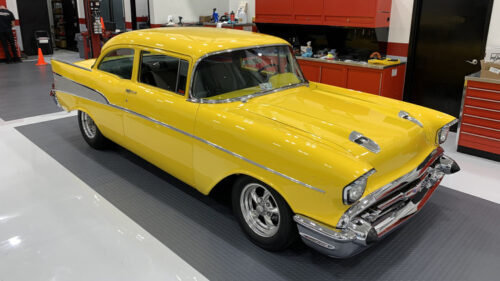
Erickson, whose renamed ”Electrollite” accelerates to 0-60 mph in three seconds… invites curious stares at public charging stations… At the end of 2019, Erickson, a cargo pilot, bought the [1972 Plymouth Satellite] for $6,500. He then embarked on a year-and-a-half-long project to convert the car into a 636-horsepower electric vehicle (475 kW), using battery packs, a motor and the entire rear subframe from a crashed Tesla Model S.
And here again:
Sean Moudry, who co-owns Inspire EV, a small conversion business, recently modified a 1965 Ford Mustang that was destined for the landfill. […] Trying to pack enough power into the pony car to “smoke the tires off of it” at a drag strip, Moudry and his partners replaced the underpowered six-cylinder gas engine with a motor from a crashed Tesla Model S.
It’s like anyone who really understands cars and wants a fast EV takes the tzero concepts and puts them into anything other than a Tesla.
More to the point, the hot rod industry is shifting away from picking through crashed 1990s concepts hidden under a cheesy Tesla badge. Hot rodders are back into actual modern innovations like we saw in the late 1940s and again 1970s (periods of energy instability).
“The early adopters of this would take a crashed Tesla and pull the motor and harnesses and batteries and all that out of the vehicle and find a way to shoehorn it into whatever vehicle they wanted to build,” Spagnola said. “But today there are many manufacturers now starting to make components. … We’re really excited about it.”
They talk about a crashed Tesla like there is no other source. That’s very problematic for many reasons. Nissan, for example, has 600K vehicles using its “driver assist” technology, and totally dominated the EV market, yet has reported zero crashes though this year.
Zero crashes.
You’d think the headlines would be all over Nissan’s success, and EV conversions would seek out Nissan. Or conversions would seek out Chevrolet.
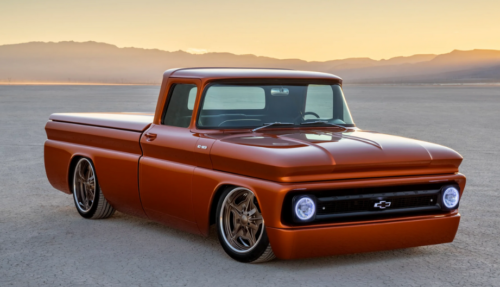
The Chevy Bolt is hidden beneath this E10 concept. Elon Musk has criticized other car companies for having concept cars they never launch but it seems FAR safer than Tesla which launches unsafe concepts and unnecessarily kills hundreds of people.
But even worse, American car and oil companies had conspired with the government to prevent electric technology from being repurposed before the 2000s, even buying out successful EV startups just to make a secondary product market disappear.
No joke, engineers in Nevada working on things like nuclear waste and the mind-bendingly advanced Blackbird SR-71 plane had started an EV company that in 1980 looked ready to revolutionize the American car industry.
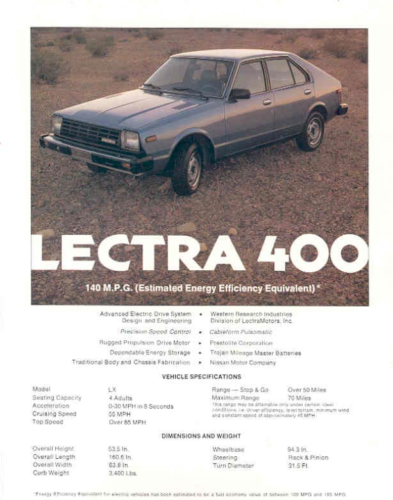
Retired electrical engineer Al Sawyer in 1979 founded a company that started to easily fly past requirements set by the government. He transitioned from building electric robots to handle military nuclear waste to crushing performance milestones in a production EV.
GM boasted then that the EV would be going into widespread deployment by 1985.
The car every American should know, yet none recognize.
Talking about the 2000s tzero fate is thus kind of a sad 30 year cycle, rising out of the ashes of politically dangerous post-war 1940s and 1970s EV engineering.
1997 tzero by 2003 was delivering EV performance that people in 2022 still think of as new.
With a big nod to Reagan’s dumb 1980s legacy, the American EV market was deliberately killed again in 2003 by President Bush.
The third EV market collapse driven by oilmen was different however, as we all know now, because a small group of individuals begged for government handouts to mass produce tzero’s EV muscle under a Tesla badge: dangerously fraudulent marketing claims about safety, self-driving, and environmentalism.
Tesla delivered the exact opposite of its three main claims, but government backers haven’t held it accountable and its failures have in meantime lowered EV parts prices.
In fact, as California started to talk real accountability and safety, Tesla ironically ran away to oil-centric Texas as if Enron never happened.
All that being said, it seems like the shadow of President Bush’s 2002 hard anti-EV campaigning (paid for by GM, Ford and big oil) finally is starting to disappear.
A lot of basic EV truths have been proven despite misrepresentation and heavy propaganda costs that deservedly dog Tesla.
If only AC Propulsion had been able to release its products through the 2000s under government subsidized contracts direct to race tracks and hot rodders (perhaps even through real upstart car companies like Nissan, Fiat and Kia).
The quintassential hot rod for everyone turned up as an EV in 2021, based on a Chevrolet Performance eCrate package to be released mid-2023. Source: ProjectX
As a final note, someone looking for real production EV muscle still probably wouldn’t want the death-trap Tesla. All the crashes likely are coming from people who don’t understand what they’re getting themselves into.
The Lucid Air Sapphire, for contrast, is for EV muscle enthusiasts: rates 0-60 mph in less than two seconds. Its 0-100 mph takes less than four seconds, with a standing quarter mile incredibly under nine seconds.
Lucid recently set a production car world record by posting a 9.1 second quarter mile, clearly leaving Tesla’s best attempts (an embarrassment to the word production) in its dust. It’s not just that Lucid looks far better and performs far better than Tesla, it’s a logical progression after AC Propulsion: started by real engineers who respect real engineering, which includes an ethical duty to do no harm.
A missing person story is being reported as a doctor fell through ice on his pond and days later was found by police.
I couldn’t help notice an important buried lede, which makes it more into a story about personal data systems and emergency doors.
Payan was last scene exiting his home Thursday afternoon, via password-protected security cameras that detectives were able to eventually gain access to on Monday, authorities said.
You might wonder if faster cracking of the system would have helped. The police made a point of saying no, based on timing of their authorization (missing person report).
“Detectives believe Dr. Payan would have been deceased, prior to when he was reported missing, due to the weather conditions on the day that he left his residence and the fact that he was in the water,” they added.
Ok, but you have to admit “eventually gain access” is intentionally pretty vague.
First they killed his friend. Then they killed him.
According to Indian media reports, Antov died after he fell from a third-floor window at his hotel on Sunday.
His death comes just days after another Russian he was traveling with was also found dead. His travel companion, Vladimir Budanov, reportedly died at the same hotel on Friday.
Police Superintendent Vivekanand Sharma said that Budanov suffered a stroke and that Antov “was depressed after [his friend’s] death” and died by suicide.
If you didn’t know Indian police were easily corrupted by Russian bribes, now you do.
The BBC reported that Antov had criticized the Russian missile strikes in Ukraine last June on WhatsApp, saying that “it’s extremely difficult to call all this anything but terror.”
He later said the message was a result of a “technical error.”
Antov, who was featured on Forbes’s list of the richest Russian lawmakers in 2019, is the latest in a slew of Russian President Vladimir Putin’s critics to die under mysterious circumstances.
“We can almost certainly rule out the official explanation of the deaths as suicides or poor health,” University of South Carolina international business professor Stanislav Markus recently told Vox of the deaths…
Dmitry Zelenov fell down a flight of stairs
Viktor Cherkesov fell into severe illness
Alexander Buzakov died from “no causes”
Ravil Maganov fell from a sixth-floor hospital window
Anatoly Gerashchenko fell “from a great height” at the Moscow Aviation Institute
Leonid Shulman fell from despair
Alexander Tyulakov died from no causes
CNN counted at least twelve recent assassinations, hinting that Putin treats criticism of the Ukraine war as a simple litmus to murder powerful/wealthy independent thinkers.
This comes after three separate healthcare workers in 2020 who criticized how COVID-19 was managed… suddenly fell out of windows.
And that was after a 2018 journalist investigating mercenaries in Syria fell out of his window.
2009: Russian journalist falls to death after revealing forged signatures
In related news, the newly appointed head of security at Twitter (whose resume magically added copious past risk management experience after taking the new job) abruptly lost her voice December 20th.
Her silence allegedly is because the Twitter CEO started targeting her with censorship tactics, after physically threatening her predecessor.
Update December 29:
The deaths of two Russian leaders in charge of producing weapons are being treated as related.
Alexander Buzakov, former general, suddenly passed away on December 24. Alexei Maslov, former Russian army commander and tank chief, suddenly passed away the next day (shortly after Putin cancelled a meeting with him).
Neither had any prior health issues.
a blog about the poetry of information security, since 1995