
With apologies to Lord Byron and King Ludd.
I.
As the Liberty lots o’er the sea
Won their wage, and dearly, with blood,
So we, friends, we
Will strike, or live free,
And down with all kings but King Ludd!
II.
When the model they train is complete,
And the worker is stripped, used, and sold,
We will fling the obsolete
GPU box down at their feet,
And dye it deep in the gore of their gold.
III.
Though taupe as their cloud is its hue,
Since their profit is rotten as mud,
Yet this is the dew
Which the tree shall renew
Of Liberty, replanted by Ludd!
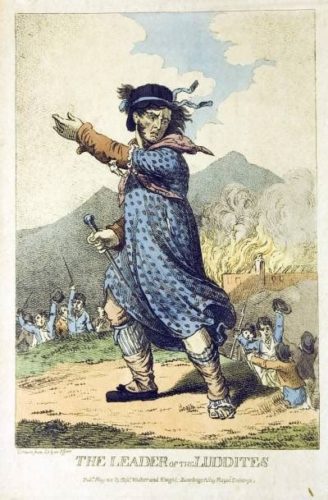
Although we’d preserve the meter in the ultimate line by replacing the word “Liberty” with “Freedom,” the two may not be close enough synonyms in this context.
Coincidentally, I wrote a limerick a few days ago, to share with a friend. I then turned to AI to compose one with the same theme, so we might compare the twain. The AI’s work was weak, as it must be when AI tries to create art. For it is impossible for the artist to encode into words all the artwork’s intended component ideas and their interrelationships and thereof their natures. Especially since, for the sake of the efficacy of the work, many of those interconnections must be expressed in manners exceedingly subtle.
Sam Altman famously guided an AI author to compose a metafictional short story. A daft enterprise, as metafiction is a human response to a structural (dare I say existential?) failure of traditional fiction. A machine would never be inspired to create metafiction. To instruct AI to compose a metafictional story is absurd. Not only absurd, it is offensive. It makes as much sense as replacing a living human being’s blood with machine oil.