Category Archives: History

MIT Study: RoboTaxis Ruin Cities

From the outset, it was evident to anyone with basic knowledge of urban dynamics that Uber would have negative effects on cities. It’s not a matter of complex calculations; it’s a fundamental principle of urban transportation. Increasing the number of cars on the road leads to more problems.

The same common sense reasoning suggests that RoboTaxis will likely exacerbate these issues.

Even MIT has acknowledged its mistake in endorsing Uber, as they were so juiced on Utopia they failed to recognize the glaring warning signs.

This utopian vision was not only compelling but within reach. After publishing our results, we started the first collaboration between MIT and Uber to research a then-new product: Uber Pool (now rebranded UberX Share), a service that allows riders to share cars when heading to similar destinations for a lower cost.

One thing that really bothers me is when people discuss Utopia like this as if they are working on a tangible reality. The term itself, derived from Latin, essentially means to go nowhere. The term was coined by Sir Thomas More in 1516 in his book of the same name. It is a combination of two Greek words, “ou” (meaning “not”) and “topos” (meaning “place”), which roughly translates to “no place” or “nowhere.” MIT’s “utopian vision” of cars was going nowhere, by definition!

Considering this, MIT might want to consider reimbursing students’ tuition fees if they’re teaching that achieving utopian vision is feasible, and the end is neigh. Honestly, one might as well attend church for free instead of paying stupid money to MIT, if it’s just study of compelling unattainable beliefs.

MIT’s fixation on the dogma of revolution through detached-STEM thinking (pun intended) totally neglected the intricate, real-world dynamics of human behavior within complex systems. This classic mistake is exactly what prompted formation of a Fabian Society in London in 1884, an anti-upheaval (gradualism of social reform) organization that successfully has handled such issues for a significant stretch of time.

In an article brimming with STEM remorse about falling for the false profits of Uber (pun intended), MIT emphatically cautions now against getting involved with RoboTaxis.

Our research was technically right, but we had not taken into account changes in human behavior. Cars are more convenient and comfortable than walking, buses and subways — and that is why they are so popular. Make them even cheaper through ride-sharing and people are coaxed away from those other forms of transit. This dynamic became clear in the data a few years later: On average, ride-hailing trips generated far more traffic and 69% more carbon dioxide than the trips they displaced. We were proud of our contribution to ride-sharing but dismayed to see the results of a 2018 study that found that Uber Pool was so cheap it increased overall city travel: For every mile of personal driving it removed, it added 2.6 miles of people who otherwise would have taken another mode of transportation. As robotaxis are on the cusp of proliferating across the world, we are about to repeat the same mistake, but at a far greater scale.

Ah, the sweet taste of pride. Often followed by a not-so-graceful tumble, right? But seriously, why was MIT “proud of our contribution to ride-sharing”?

The correlation between an increase in subsidized cars and heightened traffic congestion seems like an obvious observation. Individuals from places as distant as Davis (a three-hour journey) were opting to “commute” to San Francisco, not for conventional employment but to essentially circle the city, nap in their vehicles, and contribute to the issue of public defecation while serving as “drivers” for those unwilling to walk. The city’s functionality came to a standstill because Uber failed to consider the overall capacity of people on the streets, which was significantly dwindling.

The issue at hand? Once more, it’s the age-old equation: more cars equals more headaches.

This is wisdom older than your grandma’s secret apple pie recipe. It’s not brain surgery; it’s not even “hey, we’re on the brink of utopia” snake-oil salesmanship as ancient as steam engines.

Taxis, or cars in general, really shine when it comes to serving folks who can’t sprint or comfortably hop onto a bus. But when you attempt to cram everyone into a car, you’re basically signing up for a masterclass in waste and inefficiency.

Hold onto your cabriolet hats, folks! The Uber saga was a spectacular display of wastefulness and inefficiency, a saga foreshadowed by centuries of shared transportation history.

  • Hacker? England 1625 from Hackney (although some claim French haquenee)
  • Cab (Cabriolet)? England 1820 from French cabrioler
  • Taxi? Germany 1895 from French taxe

This is not new stuff. Yet in the 2010s instead of taking a leisurely stroll for a few blocks, people decided to gather on bustling street corners, waiting to congest the roads in colossal, empty, self-centered metal boxes, leaving behind a trail of pollution and traffic snarls that could rival a spaghetti monster convention.

I think it’s pretty amazing that these people without scientific backgrounds — or really any education at all — think they have the right to decide the [transit systems]. And it blows my mind that they are getting away with it.

Picture this: an entire city street, maybe even a whole neighborhood, held hostage by the one guy who’s treating his latte frappuccino like it’s a cauldron of magic potion. Meanwhile, his Uber, just a stone’s throw away, has decided to throw a temper tantrum in the middle of the road, blocking all traffic while screaming at the top of its metallic lungs, “CHAD! Anyone, anywhere, please tell me if you’ve seen a CHAD! I’m here, waiting for CHAD!”

It’s like a scene from a sitcom where the latte-sipping wizard and the rogue Uber car team up to create a traffic jam worthy of a Shakespearean tragedy. “To honk or not to honk, that is the question!” No five-star ratings allowed by the thousands of people inconvenienced by the stupid “ride-hailing app” performances they have to witness.

Source: Twitter, 1 Sep 2022 “Пишут «Яндекс.Такси» хакнули и заставили многих водил ехать на один и тот же адрес в Москве – как итог образовалась огромнейшая пробка на Кутузовском проспекте”

Ah, the history lesson of the ages! People were grappling with this conundrum for centuries, especially when those old-timey hackney cabs were turning city streets into chaos. Then, like a dazzling revelation from the 1800s, we discovered that buses, streetcars, and subways were the real MVPs. We all have places to be, so you hop on board, take a seat, and zip your lip. It works wonders because we’re all in this together, not stuck in that backward world of cutthroat competition like Uber.

For god’s sake they even named the stupid company Uber. How could the disaster of callous capitalist nihilism be any less obvious?

The whole ride-share “explosion” felt like a group of overconfident, privileged guys who missed the memo on history, thinking they could throw billions at reinventing the wheel and somehow make it less, well, wheel-like. I was there, both inside and outside those companies, shaking my head in disbelief.

Around 2012, it seemed like I was a lone tech warrior resisting the awful siren call of Uber, amidst meetings with dozens of big-shot executives running billion-dollar empires. They were all in, betting our fortunes on Uber, while I stood my engineering ground armed with the simple wisdom of human behavior studies. I’d show up with train tickets and bus receipts, each sporting single-digit price tags, and they laughed at my “lesser” status while they casually tossed around hundreds and more for an Uber ride.

At one point I found myself in an exclusive invitation to Uber’s HQ, where they rolled out the red carpet and asked me to help lead their security team. I decided to go out of courtesy and a dash of curiosity. But as soon as they started pitching their grand plan — “We want to be as indispensable as water, so people can’t survive without paying us…” — I felt like I was in a bad sci-fi Dystopia (lesser Utopia) and made a hasty exit, practically diving for the door.

“Let them ride in cake,” did you say?!

Approximately ten years later, while strolling through the streets of San Francisco, one of the original developers of Uber made a startling confession to me. They admitted that their early product design was shockingly naive. In their detached-STEM enthusiasm, they believed that constantly harvesting sensitive personal data through various sensors (such as geolocation, motion, video, and microphones) during every car ride, essentially engaging in covert surveillance of customers without their knowledge, would somehow benefit society. However, they acknowledged that they eventually had to leave the project when they came to the stark realization that this approach was a grave ethical error: creating an app pretending to be essential for survival while relentlessly spying on users for profit.

So here we are, MIT advising us to study human behavior to predict, well… known human behavior. Makes perfect sense to me. What took them so long? I guess they had to stop believing.

Now, if you’re dealing with a disability, a robotaxi might make as much sense as a luxurious, oversized wheelchair or, heck, even an elevator (vertical subway car) instead of stairs. But for the rest of us, it’s time to put on those walking shoes, head to the train, and stop being the roadblock to progress!

A train to a remote office in Connecticut was no joke, for example, a logistical maze in America’s shameless suburban planning system. I arrived early using a $18 train from NYC and finding a local bus that cost me $3 for the last mile, walking a sidewalk from the stop to the door. The other executive pulled up behind, sweaty, late and barking “no problem, it was only $200 for my Uber but we got some bad traffic”. He should have been fired on the spot.

Despite decades of working in Silicon Valley, working inside the largest and most successful tech companies, to this day I’ve taken only one Uber ride. As soon I as I stepped in it, I knew it was wrong. The Fabians probably would have just said: “no shit Sherlock”.

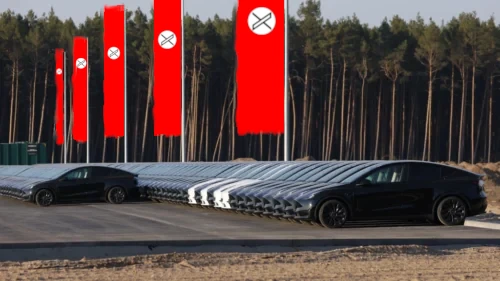
Tesla 10x Worse Than OceanGate Disaster

Over 40 people have been killed by Tesla, according to the latest data.

Tesla Deaths Total as of 9/4/2023: 449 | Tesla Autopilot Deaths Count: 41

The primary difference of Tesla versus OceanGate, aside from 10X the fatalities, is only one CEO has not been killed yet by his own fraud.

To put it another way, a Tesla Model X weighs 5000 lbs (as much as a truck) and is priced for high-cost engineering, yet even a sub-compact Honda has far safer lower control arms.

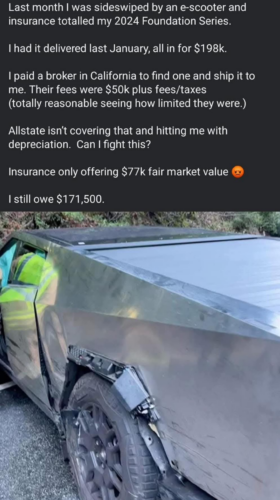
“Nice $80k black hole for money that almost got us killed. Thanks a lot Elon.” Complaint filed for safety failure on brand new Tesla. Source: Jalopnik, which also includes a flurry of bizarre Twitter attacks on this complaint as context of “…you really have to hand it to Tesla for inspiring this degree of crazy, evidence-denying loyalty among their fans. […] It’s a strange part to fail, though, really. It is a part subject to intense stresses, but it’s not like it’s particularly complex or poorly understood—this is some Cars 101 shit right here. It’s a control arm. No need to call SpaceX to consult, because this is absolutely not rocket science. This is also the kind of failure, that, were it to happen at speed, could potentially cause a wreck that could result in, potentially, people getting hurt. A week-old car should not have problems like this. Hell, a car a decade or more old shouldn’t have control arms just snapping. This is ridiculous. and the idea that a car with no evidence of a major accident shouldn’t have this covered by warranty is absurd as well.”

The plastic Tesla accelerator pedal design snaps off like a twig… and on and on, it’s a brand riddled with known and unnecessary safety failures.

Musk was willing to let some quality issues slide…. Tesla was building the airplane as Musk was heading down the runway for takeoff.

A new Vanity Fair article details the management culture that caused OceanGate tragedy under sea, but really it is about the absurdity of Elon Musk.

Carbon fiber is great under tension (stretching) but not compression (squeezing), he told me, offering an example: “You can use a rope to pull a car. But try pushing a car with a rope.”

The entire premise of OceanGate was false. Just like the completely backwards Tesla AI “vision” for driverless has always been a fraud.

The Vanity Fair writer calls this an “avoidable inevitable” disaster, which is a disturbing oxymoronic phrase. It sounds like something that should not be set into motion that is set into motion, and kills people.

There is evidence these CEOs want failures, want to see deaths, and do it to prove life doesn’t matter to them (e.g. the way a slave owner used to torture someone to death as a spectacle, or the Edison used to cruelly murder animals in public).

Why? It seems that in America, there is a tendency to overlook clear failures in ensuring safety, all while allowing unchecked experimentation under the guise of anti-regulation, with individuals who lack expertise defending this approach by claiming false certainty about the future.

In 1776, America rejected scientific reasoning, rejected adherence to established rules, and actively resisted safety precautions in its pursuit of creating a new nation for perpetuating slavery, even as the rest of the world was moving towards abolition. This decision was driven by a small group of white men who fancied themselves as pioneers, disruptors, and rule-breakers, and were willing to disregard the value of human life to expand slavery. It is the kind of men highlighted again by this Vanity Fair article.

As the world now knows, Stockton Rush touted himself as a maverick, a disrupter, a breaker of rules. So far out on the visionary curve that, for him, safety regulations were mere suggestions. “If you’re not breaking things, you’re not innovating,” he declared at the 2022 GeekWire Summit. “If you’re operating within a known environment, as most submersible manufacturers do, they don’t break things. To me, the more stuff you’ve broken, the more innovative you’ve been.” In a culture that has adopted the ridiculous mantra “move fast and break things,” that type of arrogance can get a person far. But in the deep ocean, the price of admission is humility — and it’s nonnegotiable…

In December 2015, two years before the Titan was built, Rush had lowered a one third scale model of his 4,000-meter-sub-to-be into a pressure chamber and watched it implode at 4,000 psi, a pressure equivalent to only 2,740 meters. The test’s stated goal was to “validate that the pressure vessel design is capable of withstanding an external pressure of 6,000 psi — corresponding to…a depth of about 4,200 meters.” He might have changed course then, stood back for a moment and reconsidered. But he didn’t. Instead, OceanGate issued a press release stating that the test had been a resounding success because it “demonstrates that the benefits of carbon fiber are real.”

This is the “I could stand in the middle of Fifth Avenue and shoot somebody and I wouldn’t lose any voters” brag applied to science, as if it’s just a coin-operated popularity contest. Gravity doesn’t bother tinpot dictators who buy media companies to peddle anti-gravity snake-oil. Henry Ford purchased the Dearborn Independent newspaper with the intent of promoting harmful racist ideologies and a callous disregard for human life. This effort succeeded in persuading fervent supporters, including Adolf Hitler, with a web of egregious falsehoods that led to genocide.

In this situation, it’s essential to identify who possesses clear authority to prevent a dangerous plan that rejects science, disregards regulations, and poses a significant threat to human lives. When an individual in America claims that they are merely joking or experimenting, similar to how a toddler might behave, it raises questions about accountability. Such “inevitable but avoidable” plans to cause harm disregard the rights protected by any recognized authority and instead assert the unilateral power to define truth, often arguing that experiments with almost certain fatal outcomes should not be held accountable.

Across the annals of history, a stark and recurring theme emerges: the dramatic elevation of the right to unjustly put people into harms way, frequently accompanied by an unwavering commitment to ignorance (akin to the abusive nativist “Know Nothing” movement), often taking precedence over any fundamental right to life.

When the OceanGate’s marine operations director issued an internal audit (Quality Control Inspection Report) filled with expert risk warnings, the CEO applied huge amounts of bogus legal pressure to kill it.

These included missing bolts and improperly secured batteries, components zip-tied to the outside of the sub. O-ring grooves were machined incorrectly (which could allow water ingress), seals were loose, a highly flammable, petroleum-based material lined the Titan’s interior… Yet even those deficiencies paled in comparison to what Lochridge observed on the hull. The carbon fiber filament was visibly coming apart, riddled with air gaps, delaminations, and Swiss cheese holes — and there was no way to fix that short of tossing the hull in a dumpster…

Rush’s response was to fire Lochridge immediately, serve him and his wife with a lawsuit (although Carole Lochridge didn’t work at OceanGate or even in the submersible industry) for breach of contract, fraud, unjust enrichment, and misappropriation of trade secrets; threaten their immigration status; and seek to have them pay OceanGate’s legal fees.

Excellent reporting from Vanity Fair.

Regrettably, as many are aware, the unfortunate sequence of events that followed involved the CEO taking his own life, along with the lives of his customers, in a tragedy that seemed preventable but sadly unfolded in a cult-like Kool-Aid disaster.

Safety experts, responsible for establishing explicit guidelines and regulations, could only watch in dismay as both OceanGate and Tesla customers ended their lives unnecessarily. Henry Ford surely would be impressed, probably in the same way he allegedly inspired Hitler and contributed to millions of deaths.

American autoworkers and their children in 1941 protest Ford’s relationship with Hitler. Source: Wayne State

The best phrase to describe both OceanGate and Tesla comes from 2018, when Vanity Fair says a science expert was asked for advice on the design:

Do not get in…. He is going to have a major accident.

More like hundreds or more accidents. If the OceanGate CEO hadn’t been killed so early, his death chart likely would have looked like the tragedy of Tesla (which infamously stoked wildly large investments by claiming their unique vision would eliminate all deaths):

Tesla attracted investors by promising it would revolutionize car safety. Immediately the reverse happened as it started killing more people than other brands. Today it is an outlier with its extremely high death tolls; one out of every ten “Autopilot” crashes being fatal. Source: Tesladeaths.com

Paris Overwhelmingly Votes to Ban ALL e-scooters

The concept of e-scooters is as old as electric cars, with clear evidence going back to the early 1900s.

Source: Smithsonian. “Autoped Girl by Everett Shinn, in Puck, 1916”

It’s worth pointing history out because if anyone ever really thought e-scooters were a good idea, there would have been evidence of them in Paris for 100 years already surviving tests, like the metro lines.

Alas, no e-scooters are associated with Paris history because… they are a bad idea.

…the problem may have had to do with the need for the device, which was more expensive than a bicycle but didn’t offer the seated comfort of a motorcycle.

Cost, comfort and safety.

Short stop momentum and falling off a stand-up scooter makes sense only when you are 12 or younger.

There’s a tendency of young men (and increasingly women) in America to raise hundreds of millions of dollars for a really, awful bad idea and think this alone makes it turn into a good one.

It’s the Wall Street “if people pay, it must be ok” moral code.

Fortunately the world isn’t as shallow and coin operated. And if more Americans studied history, they would have quite easily predicted how Uber, Lyft, Lime, Tier, Bolt, Bird… and all these ignorant new companies expensively rehashing very, very old concepts would not suddenly have a different outcome.

So here we are looking at 90% of people in Paris voting to ban the annoyingly ill-concieved and pathetically implemented e-scooters.

From September 1, e-scooters will be banned in Paris. As a result, 15,000 vehicles will need to be collected from the streets and squares of the French capital.

Other cities in Europe are now afraid that the heavy sidewalk-blocking garbage e-scooters removed from Paris could end up fouling their environments instead.

Bottom line, e-scooters failed to account for even basic transit design/risks and never should have been so aggressively funded.

Lime clearly operated as a crime,
while Bird landed like a turd.
No cheer was given to Tier in time,
but Bolt ended up in revolt.

or

In Lime’s transgressions, ugly shadows apace,
Bird’s descending, a tarnished grace,
Tier’s sucking, a silent space,
Bolt’s revolting, a lack of embrace.

or

In Lime’s transgressions, shadows near,
Bird descends, grace marred, I fear,
Tier’s absence, silence draws its lace,
Bolt’s revolt, devoid of love’s embrace.

Scientific Discovery Forces Historians to Rethink 1933 Reichstag Fire

Nobody really, truly believed a “severely impaired” (couldn’t see in right or left eye) and basically ignorant loner such as the Dutch Van der Lubbe could have burned an entire German government building down quickly and single-handedly.

The Communists had thrown him out of the party and denied even a basic role. He was fired from his jobs. He quarreled with police and was jailed. Not the sort of guy who could put any kind of plan together, let alone represent others, yet also a guy who wouldn’t give up trying.

He became attractive to historians for decades in probably the same way he became attractive to the Nazis in 1933 thinking it would be easy to game historians.

People have subscribed to an easy scapegoat theory about Van der Lubbe simply because he carried all the hallmarks of a crime mule; someone who would fall easily into dangerously dumb situations and in no way be able to defend himself against even the most outlandish accusations.

Those subscriptions apparently are changing, finally.

“I used to subscribe to the consensus view that Van der Lubbe was the sole actor behind the arson attack, even if some of the scientific evidence made me a little uneasy,” said Sir Ian Kershaw, whose two-volume Hitler biography established him as one of the leading authorities on the Nazi party.

“In recent years I have become more open-minded about the authorship of the fire, though the alternative scenario has yet to be established,” he said, voicing scepticism that even a toxicological examination of Van der Lubbe’s remains could settle the debate once and for all.

The exhumation’s organiser, Alfred Otto Paul, is more optimistic. While he could not comment on the finding until the completion of the pathology report, he said, he promised that the findings would be momentous. “History as we know it will have to be rewritten.”

Scientific evidence is like kryptonite to Nazis. The article also tries to raise a question:

Carter Hett said the “balance of probability” pointed to the fire having been set by a squad of men from the Nazi’s paramilitary Sturmabteilung (SA) wing…. How exactly these men would have managed to recruit a committed communist for their cause, however, remains unclear. “It is true that we are lacking any evidence as to how a link-up between Van der Lubbe and the SA could have come about,” Carter Hett said. “It does still seem insane that they would have picked this unstable, almost blind young man as the fall guy.”

Insane? Not at all. The SA lied to him and about him, as if he were just an unwitting gullible pawn. Journalists cautiously wrote in 1934 of exactly such probabilities.

…[it’s just a theory that] Nazis employed penniless van der Lubbe to help them set the fire, promising to save his neck by a Presidential reprieve and to reward him handsomely for hiding their identity and taking the whole blame in court [increasingly detached from reality].

A mostly blind, desperate and easily fooled guy had been failing miserably several times at lighting government buildings in Berlin on fire. He surely was noticed and opportunistically used by Nazis if not completely owned by them, in the same way any sloppy brazen arsonist raises attention in a police state.

A more real question is how he moved from being the guy so blind and incompetent he couldn’t successfully light anything on fire to… completely alone generating such a huge blaze of unparalleled widespread acceleration (exactly the kind of arson plans the Nazis became infamous for later) that he wasn’t in any way part of someone else’s work?

Of particular note is how Van der Lubbe abruptly was transformed from a random and loudmouthed incompetent loner seeking social entry — saying he would never accept suicide and wouldn’t stop jumping at dumb ideas with low chance of success — into the exact opposite person.

Van der Lubbe was said to have gone [in the hands of German police] from being healthy and energetic to being apathetic and unable to wipe his own nose. Journalists at the time of his trial suggested he could have been given scopolamine, which has been dubbed a ‘truth serum’ for its alleged ability to get those who are given it to reveal information.

Previously after police handled him in jail he had come out even more energized and ready to fight. This time? Something very, very different happened in the process of being interrogated and incarcerated for the very thing he went into so vigorously.

If he was so proud of resisting before, so full of independent energy and ready to act alone on personal crazy plots, why would an unbelievable success of his attack then collapse him into a lifeless, empty soul unable to function at all, sleeping or laughing away his trial begging for certainty in a quick death?

Most likely his sad hung head, his lethargy and inability to recognize reality, was from an intentional effort to abuse him into presenting the face of a “defeated working class“.

And also notable was Hitler’s pronouncements at this time:

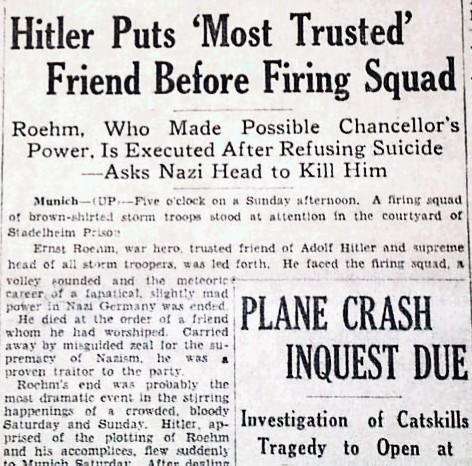
‘At least we have not set up a guillotine,’ Hitler said in a news-paper interview at the end of 1933. ‘Even the worst elements have only needed to have been separated from the nation.’

Van der Lubbe then was sent on Hitler’s orders straight to a guillotine in January 1934.

During the night a guillotine was hastily knocked together in the prison courtyard. […] Commented a high Nazi official in Berlin, “It was a concession that he was not hanged. The [retroactive] law specifies hanging for political arson but hanging is a shameful death. Van der Lubbe was spared that.”

How lucky to not use the guillotine. How lucky to use the guillotine. Whatever is convenient for Nazis.

Surprised? The thing Hitler said in 1933 was “at least” not set up was quickly set up, to be known as the 1934 preferred and standard Nazi execution method. Then guillotines were ordered by Hitler to scale into every Nazi prison, killing over 16,000 people in the following years.

In many ways you have to read whatever the Nazis said as intentional inversions of what they knew and believed — calculated destruction that erased trust in anything said or written, in order force everyone to go to Hitler and only Hitler for the latest version of his twists and turns. As the infamous Nazi saying went…

If you cannot recognise the will of the Fuhrer as a source of law, then you cannot remain a judge

Historians seemingly are standing by for what comes next, as they begin to withdraw from low cost subscriptions to the forever flimsy Van der Lubbe story.