It was a pleasure and an honor to present “Disinformation history and what it means for the future of AI” at the Tech Discovery Conference this month. Here are the slides again (PDF) for your reading convenience.
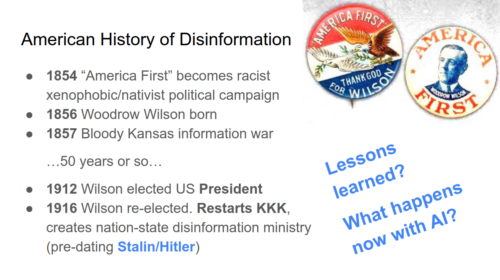

It was a pleasure and an honor to present “Disinformation history and what it means for the future of AI” at the Tech Discovery Conference this month. Here are the slides again (PDF) for your reading convenience.
Where does the popular phrase “no taxation without representation” really come from? John Hampden, who ignited a resistance against the King of England, is arguably the source. The modern belief — a government should not tax its populace unless represented — was developed in the years leading to English Civil War, following Hampden’s very public and political refusal to pay “ship money”.
Queen Elizabeth I (1558-1603) had reintroduced an uncontroversial and old tax called “ship money” to fund England’s navy during a perceived need of defense. Then, under King Charles I, this tax was revived for very controversial and widely distrusted reasons. Charles aimed to finance expensive attacks and build a large navy, but high-profile military blunders and unpopular decisions led to resistance from Parliament and the public. John Hampden challenged his King’s authority to impose “ship money”, leading to a legal case and explosive discontent. Ultimately, “ship money” was banned in 1641, and the tax became a symbolic breaking point for opposition to unregulated monarchy. The tensions surrounding “ship money” contributed to the outbreak of the English Civil War.
Queen Elizabeth I had used a tax on “maritime places” to provide “ship money” in times of war to fund a navy for defense. The Spanish Armada in 1588, for example, posed a huge challenge forcing her to expand England’s naval defense. Elizabeth also sent ships to attack the Spanish, such as her 1596 raid on Cadiz, but overall the tax fit within an obvious emergency framework.
Either ships had to be leased from a vulnerable seaport or they had to give money so a navy could sail. Elizabeth expanded the request for money to the entire county of a seaport town as matter of defense. And it kind of made sense when you think about it. The crown said they needed ships if they were going to protect a town on the water from destruction.
Fast forward then to King Charles I (1625-1649). His attempt to restart the same tax became his undoing. The reasons behind his decision are intriguing due to their evident flaws.
He had come to power simply as a result of his father James I dying and leaving nobody better to rule. That was the usual monarchical nonsense, but it was accentuated by him throwing the crown’s army and navy at the Thirty Year’s War of religion, a particularly destructive conflict in European history.
Prince Charles in 1624 pressured Parliament to fund a ruthless campaign meant to plunder Spanish ships and towns. Why? Mainly he wanted revenge for his sister “Elizabeth of Bohemia” being pushed out of “Palatinate” by Spain, and also because his hand had been denied by the sister of King Philip IV of Spain. Charles married instead the daughter of French King Henri IV and soon after inherited the throne when his father died.
Charles basically was trying to insist Parliament approve expensive attacks meant to enrich England with stolen Spanish loot, when instead in 1625 he delivered humiliating defeats on sea and land. Cadiz, Spain was such a rout that the new King of England came to decide he would throw the old concept of “ship money” at an ill-conceived offensive campaign of revenge and plunder.
Parliament in the face of the disaster levied objections, resisting funds for any war or large navy projects. By 1628 Charles wasn’t interested in objections and moved to a model where he simply dissolved Parliament.
There were many obvious problems with this “personal rule” initiating a ship tax.
First, the idea that England was in danger was backwards. It had debts from a flexing into an ill-conceived attack on a Spanish port. Even more cynically, Charles drummed up tales of protecting trade routes and defeating piracy, while planning to generate piracy and attack Spanish trade routes.
Second, Charles didn’t really prefer leasing ships at all, saying he was looking for money. Third, perhaps cementing the first and second points above that his idea of “emergency defense” taxation was something very different, by 1635 Charles said he needed every county to pay him “ship money” and not only the maritime ones. Fourth, again cementing the lack of connection to any threat, the “ship money” would not be for a fixed time but instead a permanent national tax recurring annually.
The King wanted more money for more ships, a “naval defense” fund paid by all towns even the inland ones, enforced by a county sheriff. Whereas Queen Elizabeth hadn’t amassed much “ship money”, Charles was en route in the 1630s to generate huge money from it (although not enough to pay for his ambitions). And he wasn’t messing around, claiming he would build a massive navy. If people refused to pay, Sheriffs were ordered to break into homes and seize assets to sell for “ship money”.
Order in Council, reciting that the Recorder, some of the Aldermen, and the Sheriffs of the City, had attended the Board, with an account of their proceedings in levying and collecting the moneys assessed for the setting out of shipping, and had also stated that divers persons not only gave dilatory answers, but refused to make payments, and that, as the King would not suffer such undutiful courses to be practised by any, he had commanded the Sheriffs and Officers of the City to enter the houses of such persons, take their goods in distress, and sell them for satisfying the sums assessed upon them.
Whitehall, 21st February, 1635.
Such for-profit policing sounds like something right out of modern day America, but I digress.
It all came crashing back to reality when, in 1637, a notable politician and tax expert named John Hampden dared to challenge his King in a court case, arguing Parliament could be the only true authority allowed to reinstate “ship money” and only when in a naval emergency.
Had John Hampden wished he could have purchased advancement in the court, but he chose instead to resist Charles I’s arbitrary government. As a result he earned the title, ‘Patriae Pater‘ – the Father of the People.
Charles’ unpopular decision to dissolve Parliament was biting him. He was not effective as a leader asking for the money necessary to run the monarchy and the country, because he refused to accept any obligations or even make a compromise when taking the money.
The King officially countered these accusations with lawyers who argued it takes his kingdom so long to build a ship, his constant taxes were necessary far in advance of any naval emergency, such that even peace time qualified as naval emergency tax time; and also if he called something a naval emergency (e.g. an obvious land war with the Scots) nobody should be allowed to disagree. He was the King, after all (not good at compromise).
His lawyers remind me of Tesla, but I digress.
The King technically won this initial legal challenge, he was the King after all, yet he also foolishly allowed Hampdon’s political proceedings to grow into a campaign. And he didn’t win in a decisive way, with some decisions even going against him. Morale plummeted more, Sheriffs no longer were as brutal to levy the tax, some even gave up trying.
‘I do not care a fart for this warrant’, he declared when the high sheriff’s man pressed him with his authority to collect King Charles’s latest revenue-raiser, Ship Money. With his boot, Napper pointed to a straw lying in the filth-strewn market place. ‘I care no more for the high sheriff [Henry Hodge] and his warrant than for that straw!’
The tax came to represent so much discontent it exploded into a metaphor for everything everyone had ever disliked about an unpopualr Charles I… his newly funded fleets never saw battle, despite their rushed development during a huge continental war. Finally “ship money” was banned by 1641.
Perhaps even more to the point, Charles’ abuse of the public trust came into a phrase that even today opposes the concept of monarchy: “no taxation without representation”.
What happened to Hampden, given he lit the fuse that grew into an abrupt end to the taxation? He became legendary, larger than life. Civil War broke out at the end of 1642 and in June 1643 Colonel John Hampden was mortally wounded by two bullets to his shoulder at the Battle of Chalgrove. His body and grave were kept a secret, to deny the King any sense of victory. This had the effect of expanding him to heroic proportions, someone that everyone for 100s of years would learn about… until the Americans copied him and tried to steal credit.
All food for thought when you realize why British Parliament in the 1700s thought the American colonists should start to pay taxes to cover the cost of local defense.
…the single most important reason for the British government’s unprecedented decision to leave ten thousand troops in North America after the Seven Years’ War was not to guard the colonists against Indian incursions. Just the opposite. It was to protect the Indians from the colonists. […] So it made practical and financial sense to send the bill for the ten thousand troops not to British taxpayers but to the colonists.
When it’s put like that, of course the colonists didn’t want to pay a tax that would help Britain defend Native Americans from the colonists. In that sense the American complaint wasn’t about monarchy or liberty at all, it was purely about rapid profit in deregulated markets for ruthless exploitation. The American colonists were set to go to war to prevent the Native Americans from gaining British representation.
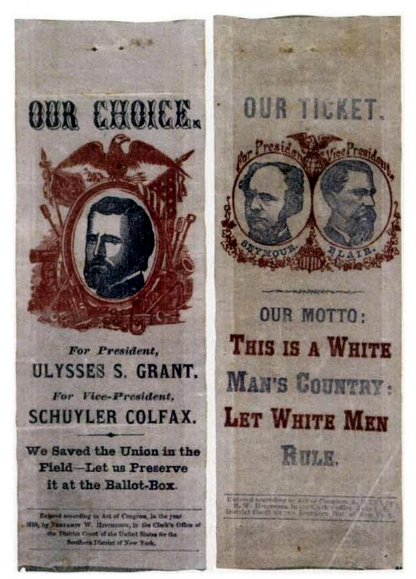
It’s a problem that the KKK in America fraudulently campaign on an underdog ticket.
According to historians Ed Ayers and Brian Balogh, Americans have long rooted for the underdog.
It’s truly problematic that the oppressors can somehow twist logic into appearing as if they’re victims.
Our country and the very fabric of our existence as the United States of America come from our ability to rise up and excel during improbable circumstances, dating all the way back to the Revolutionary War.
Being a horrible “loser” in fact motivates support.
The phenomenon has also been documented outside sports. In one 1980 study — conducted during the presidential election — participants disproportionately rooted for Ronald Reagan when told that Jimmy Carter had a lead in the polls, and rooted for Carter when told that Reagan did.
A lot of it links to the KKK fraudulently claiming it is somehow unfair that white men don’t get to rule the country judged only by their gender and race.
…when someone has been disadvantaged unfairly, being the underdog can actually make that person appear significantly more physically attractive.
So you can see the problem, hopefully, when The Economist writes that an American politician is disadvantaged from being “politically inept, morally barren and temperamentally unfit for office.”
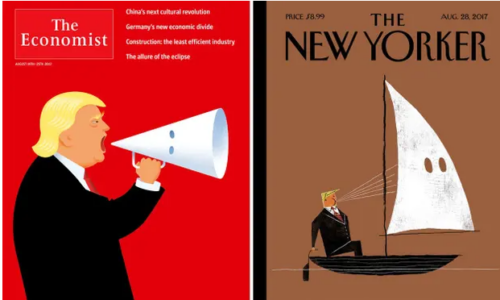
I’m surprised the presidential ticket didn’t become a deplorable candidate calling themselves “morally barren” as if a badge of honor. Imagine posters saying “vote for me, I’ve been called politically inept”.
Thus, an oppositional politician who tried calling Americans “deplorables” was like pouring gasoline on a burning cross that only makes Americans fight harder… for the wrong side.
After all, George Washington leveraged horribly racist propaganda to amass a violent rebellion for the purposes of profit from war and preventing abolition of slavery. His take on starting a revolution against Britain was to save the poor colonial white man, stop American Blacks from being free, to stop Native Americans from gaining prosperity.
He reminds me of another famous American, a guy who gets his name put on sweatshirts and ballcaps all the time as if he wasn’t a horrible genocidal megalomaniac.
Was Leland Stanford a ‘Magnanimous’ Philanthropist or a ‘Thief, Liar, and Bigot?’
In that sense, actual underdogs had their identity appropriated by a white man and his militia who set a tone that repeatedly resurfaces in American political theater. Watching election campaigns today seems not that different from the past methods of racist propaganda. The KKK doesn’t go away because they never get effectively portrayed as the elitist, power-hungry oppressors they truly are.
During WWI, black soldiers boarding trains to leave Oklahoma City held banners that read, DO NOT LYNCH OUR RELATIVES WHILE WE ARE GONE.
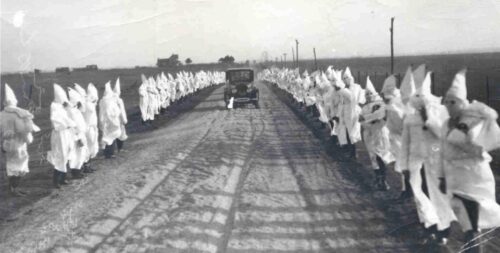
And of course we all know that after WWI these black veterans and their relatives were firebombed, murdered and buried in mass graves by the KKK.
Some even argue the KKK aren’t the KKK, embedding a comical “no true Scotsman” fallacy into their defense against accountability. The oppressors are presented as some kind of fiction, allowing false underdog status to be stolen by them more casually.
June 6th.
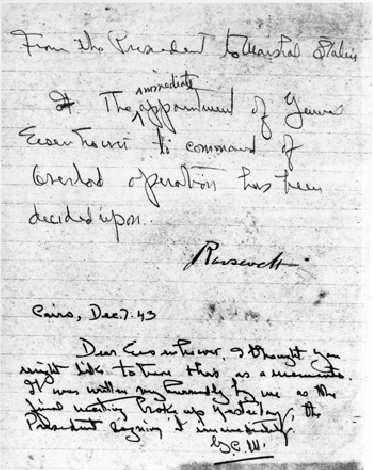
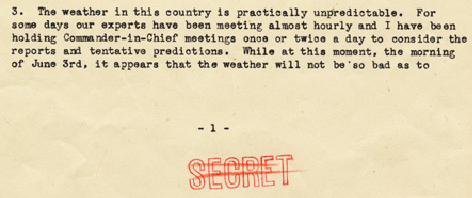
The Eisenhower library has a wealth of resources about D-Day, and I dare say much better historical treatment of the subject than the UK Imperial War Museum.
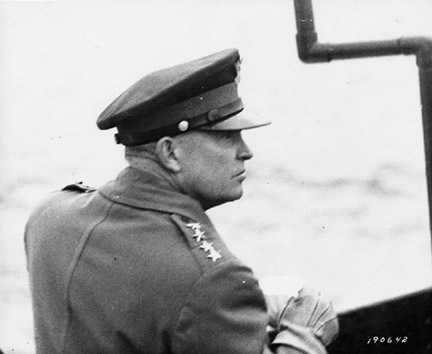
Here’s the famous radio broadcast by Ike about the strength of the United Nations:
Audio of General Eisenhower reading his D-Day “Order of the Day” for radio broadcast, accompanied by a slideshow of still photographs from the Department of the Navy, the Army Signal Corps, and the Department of the Coast Guard.
Three days later.
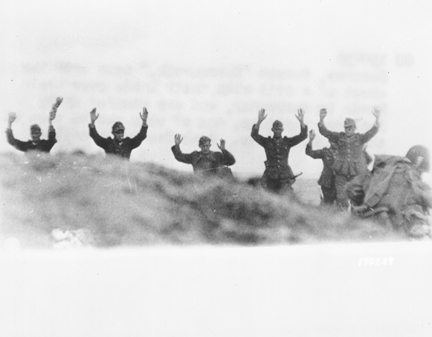
One of the things I like best about the Eisenhower Library collection is fair yet brutal honesty about pathetic contradictions of the enemy. The Nazis professed to be a “master race” yet were just a bunch of angry men in endless internal squabbling. Detached, unstable and making terrible decisions revealed the meek followers of fascism as organized very poorly and demoralized.
The UK Imperial War Museum however carries a saccharin apologetic tone, emphasizing how Nazis really did try hard and put on a very good show despite repeatedly doing the wrong things, making it seem as the British did the hardest work of anyone (Canadians being weakest) and just lucky to have defeated such a fine and worthy adversary. Barf. I wouldn’t bother even visiting it.