Category Archives: Energy

Datacenters Are America’s National Security Blunder Vulnerable to Small Drones

On March 1, 2026, Iranian drones directly struck two AWS data centers in the UAE and damaged a third facility in Bahrain, the first time a major US tech company’s data center was disrupted by military action. The IRGC claimed it, citing the centers’ role supporting US military and intelligence networks. Then on March 31 Iran formally labeled 18 US technology companies as legitimate military targets, including Amazon, Microsoft, Nvidia, Google, Apple, Meta, Oracle, Cisco, and IBM.

The AWS strikes took down two of the three availability zones in the UAE region and one in Bahrain, and because multiple zones failed at once, standard redundancy models failed. Cloud redundancy is engineered against independent failures: a transformer dies, a switch fails, a zone floods. The company has designed resilience to failures as uncorrelated, so the odds of two at once are the product of two small numbers.

That’s not how warfare works.

BBC Verify analysis found Iranian strikes have damaged somewhere between 20 and 28 American military sites across eight countries since Trump launched Operation Epic Fury on February 28…
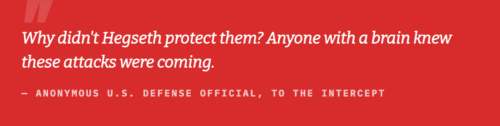
Hegseth’s legacy: “no defense department”.

A wartime adversary creates a correlated failure on purpose. It hits the redundancy in the same cycles, and the independence assumption that the whole design rests on is gone. Availability zones sit tens of kilometers apart so synchronous replication can balance being fast and inexpensive. That proximity is a feature against random failure and a target package against an area weapon. American resilience, despite the lessons of 9/11, designs fit inside a single firing range.

As many of us know first-hand from working in the trenches of the early 2000s datacenter build-outs, cross-region failover exists. Yet when Iran attacked, AWS told customers to back up and migrate to other regions manually, and data-residency law pins much government and regional data to the region it lives in. The outage took down Abu Dhabi Commercial Bank, Emirates NBD, First Abu Dhabi Bank, Snowflake, and Careem.

Manual migration in 2026 isn’t on anyone’s plan.

Now consider the exposure of the current centralized “giga” strategy of American AI data build-outs. In particular, the Anthropic deal with xAI is a national security disaster on multiple levels. Training is worse than serving, and xAI (literally named Colossus) is the world’s largest single-site vulnerable AI training installation, near 2 GW with about 555,000 GPUs on one Memphis site running on on-site gas generation.

Have you seen those videos of the Russian gas sites burning after drone strikes? In the fog of war, xAI is building the largest fully operational single-coherent cluster, which means it is one synchronous fabric with no failover at all.

None. Nothing.

Lose even a tiny piece of the site, lose an entire run. The “Tesla Mad Max” mentality to make it the fastest and most polluting trainer on earth makes it the most concentrated single point of failure on the earth.

One site. One power source.

Anthropic is inherently vulnerable as it runs on this over-concentration of power. It has contracted up to 5 GW from Amazon, with the first gigawatt expected by the end of 2026, and just took all of xAI’s Colossus 1 in Memphis to serve Claude capacity. That suggests all of Anthropic data has no privacy protection from Elon Musk and Trump. But that’s privacy. In terms of availability and integrity, it’s extremely exposed to catastrophic failure.

The Amazon infrastructure that was struck in the Gulf and the single Memphis cluster are both how Claude gets served, vulnerably and controversially. The Elon Musk rushed plant design in particular has been firing huge, deadly plumes of pollution at the neighborhood, which makes the controversial datacenter strategy stand out even more.

Source: Brockovich Data Center

We’ve been talking about rising asymmetric threats on critical infrastructure for years, although subtle, around the world. From a drone in the Gulf, blackmail by Russian hackers, bomb on a pipeline, Volt Typhoon on the grid, disgruntled Russian developer, or contractors in San Francisco and Berlin.

When Elon Musk cosplays being a ruthless Emperor, think about why Napoleon Bonaparte was such an inhumane and incompetent disaster (killing his own troops faster than the enemy could). When someone says the Pentagon is relying on the biggest and most concentrated compute ever for identification and targeting, feel free to say it’s time we talk about why “Mr. Blownapart” ships went to the bottom of the sea.

Perhaps France’s infamously aggressive “move fast, break things” dictator should be referenced today more often as Mr. Napoleon Blownapart? The gargantuan French warship L’Orient explodes at 10PM. Source: National Maritime Museum, Greenwich, London

Or if you prefer more modern military lessons, Mussolini marched into north Africa with no go plans and several hundred thousands of his best Italian soldiers. Then the Allied Operation Compass in February 1941 used only around 30K troops to wreck the entire fascist army and take 130,000 prisoners in Libya and Egypt. Wingate’s tiny Gideon Force, using just a few thousand men, punched even harder and took the surrender of tens of thousands of Italian troops in Ethiopia.

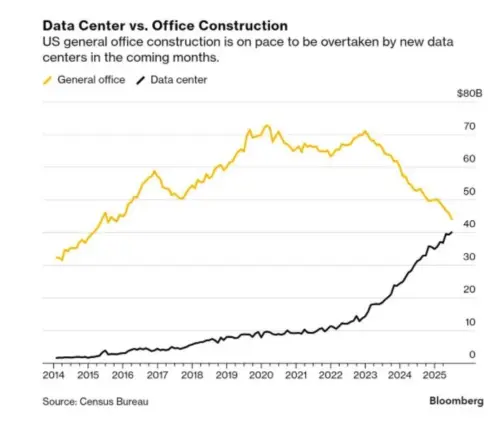
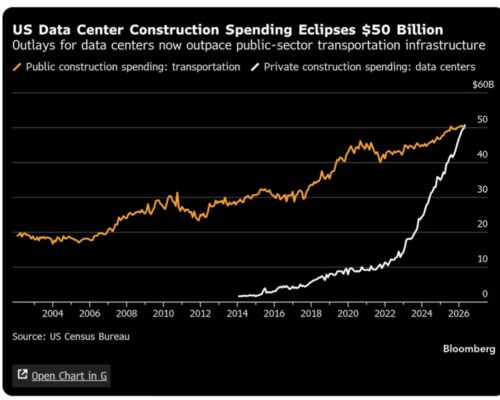
One element I haven’t discussed here, which would significantly shift the threat model, is whether these “datacenters” of empty space waiting for power are meant to be pivoted into human incarceration as fascism has done in the past. Massive concentration camps of political prisoners certainly would make more sense for the rushed build-out economics, and remove all the worry about supplying them with infrastructure like water and power (scarcity being the point). US datacenter construction has been on pace to overtake what the country spends building offices, whether these massive concentration halls are filled with computers or anyone Trump points his finger at.
Brockovich Data Center Map: xAI a Toxic Dumpster of Racism

What xAI is doing to American Blacks is specific and intentional. It built de facto power plants with no permits, no public input, no notice, and when caught at Colossus 1 it told regulators it planned to copy and paste the same unlawful turbine strategy straight into Colossus 2. It says Black lives don’t matter.

This is not a zoning fight.

The company declared intent, on the record, to find Black neighborhoods to pollute into. They knew the law, named the workaround, and ran it again across the state line in Southaven to power Colossus 2. The pollution from both sites lands on the majority Black communities of the Memphis metro.

The scale of pollution is unbelievable. Over 400 MW of unpermitted gas generation to run the facility, turbines emitting NOx, fine particulate, and formaldehyde into a corridor already graded “F” for ozone, in a neighborhood with four times the national cancer risk.

That is xAI dumping measured harms, not modeled, measured into a neighborhood. You can see it all with the latest Brockovich Data Center map, where the damage is a forecast.

Source: Brockovich Data Center

With xAI the “AI” part means generating racist memes while pushing Black kids onto a nebulizer. Just this one company decided that the AI race meant they could get away with dumping harms into Black neighborhoods, to willfully break the Clean Air Act in the metro area defined by its race.

Where exactly?

Shelby County, Tennessee, which the VCU klavern map records as home to at least five Klan chapters, one of them the “Shelby County Klan”. Five Klan chapters in one metro! So the news is basically that a county known for harming Blacks was complicit with Musk’s “X” brand until the EPA found and closed their loophole this January.

These “X” militants in 1921 used bi-planes to firebomb Tulsa, OK. They also dropped racist propaganda leaflets across America, foreshadowing Elon Musk’s X platform.

Notably, the xAI attempts to exploit safety loopholes smell a lot like Tesla. Perhaps you recall Tesla’s Fremont plant ran up 112 air-quality violations since 2019, and had a 2024 abatement order for smog-forming emissions? Or perhaps you recall when the US government went after VW for diesel cheats causing pollution? Tesla at the time was feeding its “emissions-free” charging station with a dirty diesel engine. Tesla literally self-branded their diesel pollution as clean, while VW paid billions in fines, and so here we are today with the story of racist-meme engine xAI and their Klan Kounty Klowns pushing pollution on Black neighborhoods.

Source: Washington Post

California Grid Batteries Equal to 12 Nuclear Plants Without the Nuclear

Batteries are lighting up California like someone just discovered a 1970s oil crisis memo.

For the first time, California discharged just over 12,000 megawatts, equivalent to 12 large nuclear plants, of energy from its battery arrays. That’s enough to meet over 40 percent of the state’s energy demand.

I wrote about exactly this back in 2021, when my neighbor put his 1980 Lektrikar up for sale.

The Venezuelan Profit Motive in U.S. Closure of Hormuz

The Strait of Hormuz was operational until Trump unilaterally launched U.S. military action against Iran to predictably close it. Why would America close the strait? I find many people still scratching their head, especially after Trump announced he would keep the strait blockaded if Iran tried to open it. He clearly doesn’t want it to be open, even as oil prices go higher and higher.

Oil prices directly hit American pocketbooks. But they also are being raised by a military disruption that costs taxpayers billions every day. This post takes a look at some causal relationships for all this cost landing on Americans, and how it appears to be a get-rich-quick scam by the Trump family.

The closure is the third such event in the modern history of the chokepoint. The first was the Tanker War of 1984 to 1988, in which Iraq and Iran attacked one another’s shipping and the United States reflagged Kuwaiti vessels under Operation Earnest Will. The second was the tanker attacks and seizures of 2019, including the limpet mine attacks in the Gulf of Oman and the seizure of the Stena Impero. The current closure is the longest, the most kinetic, and the first in which the strait has been mined as policy rather than as harassment. The actors are thus very familiar, while the new arrangement is not.

As everyone with a clue predicted, Iran executed its asymmetric strategy designed across four decades for exactly this moment. Mining the strait, attacking the Fujairah pipeline terminal, and striking shipping at the Hormuz approaches are all historic doctrine the Islamic Revolutionary Guard Corps has rehearsed since the Tanker War. The strait is the one instrument over which Tehran telegraphed their escalation dominance, and it is being used as designed.

The American response, branded Project Freedom, is a deployment of 100 aircraft and 15,000 personnel that the Pentagon says is not an escort mission. Earnest Will, in 1987, was an escort mission. Project Freedom however is the language of liberation attached to a permitting plan. The forces deployed are being called sufficient only for a traffic toll booth, declared insufficient to clear it and return to normal.

Venezuela puts all of this in proper context. The third actor in the arrangement is the one usually absent from press accounts of the Hormuz crisis. Maduro was captured on January 3, at great cost to the U.S. taxpayer, and Venezuelan hydrocarbon production was forcibly passed to U.S. operational control in the same week. Venezuelan crude is heavy, sour, and capital-intensive, meaning the economics all relate to high Brent prices and not the low ones. It goes something like this:

Price delta from the closure
Brent before the war $72
Brent today $114
Premium per barrel $42
Windfall at current Venezuelan output (350,000 bbl/day)
Per day $14.7 million
Per year $5.4 billion
Windfall at 2018 peak output (1.2 million bbl/day)
Per day $50 million
Per year $18 billion

The table lays out the operating subsidy for Venezuelan production, paid by every oil consumer. It appears at the pump in Iowa that Trump keeps talking about. But it also is in the diesel cost of a Bavarian trucking firm, and in the invoice of a Singapore shipping line, let alone all the manufacturing that depends on oil. Trump interference in Hormuz is driving the numbers up, in a way reminiscent of tin-pot dictatorships squeezing their populations before making a run for exile.

Marcos stripped the Philippine treasury and flew to Hawaii. Mobutu looted Zaire and died in Morocco. Ben Ali, Duvalier, all did the same play of extract while in office, exit as it fell apart. Manafort’s work with Somalia’s Barre, before advising Trump, is surely no coincidence. And that’s not to mention Manafort’s clients also were Mobutu, Marcos and Jonas Savimbi of Angola.

The Trump family is deep into Saudi LIV money and UAE real estate, making a $2 billion Affinity Partners deal via Kushner. Trump projects run in multiple Gulf jurisdictions, along with crypto holdings to escape American oversight. Trump is personally controlling Venezuelan oil proceeds through an offshore account in Qatar, with $250 million already awarded to Vitol whose senior trader gave $6 million to the 2024 campaign, and Paul Singer positioned to convert Venezuelan crude into refined product through distressed U.S. assets he is acquiring. It’s yet another pipe into the Trump extraction architecture.

As long as Brent stays above the threshold at which Venezuelan crude clears, the closure looks more and more like a very cynical Trump family business plan to pump, destroy and run.

Looking at how the other Manafort clients ended up, if Trump abruptly fled to Russia, Saudi Arabia or the United Arab Emirates, none of them would extradite him.

Speaking of the Gulf monarchies, they occupy a fourth position. Saudi Arabia, the United Arab Emirates, and Kuwait need the strait to export their approximately seventeen million barrels a day. With the Fujairah strike they lost their principal alternative. OPEC’s announced production increase, of several hundred thousand barrels a day, contrasts against a wartime loss estimated at approximately fourteen million barrels a day. Riyadh and Abu Dhabi have thus become consumers of a security framework they do not control, from an angry “sitting duck” President they can’t depend upon.

European and Asian importers typically have been absent from the strategic conversation, yet they also fit. Japan, South Korea, India, and the European Union receive the price signals and pay it. The South Korean-linked vessel that exploded at the strait on Monday is one example. Nations declaring energy crisis and immediate pivot to other forms of energy is another. Denmark this month paused new grid connections after capacity requests reached 60 GW against a peak demand of 7 GW, with data centers accounting for nearly a quarter of that. The Danish framed a pause as their window to rewrite how large electricity consumers can abruptly demand supply.

Kpler reports 170 million barrels of crude and refined product trapped on 166 tankers in the Gulf, against roughly 900 million barrels sidelined since the war began. Kpler also tells us it could take at least three months to clear the strait once it reopens. The duration of the closure, the rate at which it is relieved, and the sequence in which tankers depart are now functions of U.S. permitting decisions rather than maritime conditions.

Treasury Secretary Bessent stated on Monday that the world will be awash in Trump oil on the other side of the Trump closure. If we look at history, the Tanker War ended when Iran accepted UN Resolution 598 after the destruction of much of the Iranian navy in Operation Praying Mantis and the shootdown of Iran Air 655. America strategically forced that conclusion. Earnest Will ended when reflagged tankers no longer were needed. The present closure has no comparable analysis, because resolution doesn’t actually seem related to the dispute between Iran and Trump. Instead, closure appears more and more to be a cynical Trump gambit to corner the supplies for a price at which a separate set of investments, in a separate hemisphere, becomes profitable to him.

On that math the strait will reopen when an artificially high Venezuela price no longer needs to be defended.

Just a theory. But if the dictator shoe fits…