
Category Archives: History

Fascism is Not Thermodynamics: How a Physicist Gets Power Wrong

Crimes are committed by people, whatever the entropy of a system.

A lecturer in critical AI, trained as a particle physicist, gave an explanation of fascism in Cork last week as though it were thermodynamics.

Dan McQuillan’s talk at University College Cork presents a lot of things that readers here will recognise. He has a PhD in experimental particle physics and lectures on critical AI at Goldsmiths. He describes the circular financing around Nvidia, the gas turbines feeding the data centres, and an Anthropic chief executive who used an IPO video to promise the end of cancer within a decade. I have covered each of these. His account of the symptoms is sound.

His account of the cause is where the talk fails to land.

McQuillan explains power with laws of nature. Oops. Record scratch. Power is explained by ownership and decision, and by who answers for the result. That is the business of historians and political philosophers, and on that ground his talk gets its own sources wrong.

His “laws of nature” argument is presented in four steps.

  1. The technical form of AI carries its politics inside it, so harm follows from the mathematics of scale.
  2. Economic life is entropic, after Georgescu-Roegen, so growth drives collapse.
  3. Fascism is latent in liberal economics and politics, which is why he says technofascism matters “isn’t because of the antics of Musk and Thiel”.
  4. The remedy is what he calls decomputing: degrowth and deautomatisation, carried by people’s councils that build convivial tools.

Each step takes a question about power and answers it as if there is a law that holds everywhere. A joule is the same joule in every neighbourhood. Nothing in the study of human history behaves that way. In fact, fascism is the bald rejection of laws and anyone who tries to impose order.

xAI ran more than 400 MW of gas turbines without permits in a majority Black corridor of Memphis. Thermodynamics accounts for the heat. The choice of site and the missing permit are very different from the laws of physics, since they are human decisions, as studied in politics and economics.

McQuillan presents Ernst Jünger’s total mobilisation as a forecast of AI. Jünger wrote propaganda, as an advocate. His essay appeared in 1930 in Krieg und Krieger, a collection he edited. Walter Benjamin reviewed the book that year under the title Theories of German Fascism. Benjamin’s charge was that these authors turned war into destiny and left out the question of who directs the technology and for what purpose. The machine age Jünger advertised never arrived for the army that followed him: 75 percent of the German Army relied on horses, from Poland in 1939 to France in 1944. The mechanised war machine was a myth, and the myth hid the slavery the regime ran on. To cite Jünger as a witness is to blindly accept and promote fascism’s own story of its origins, in which the machine age produced it and the men who chose it disappear. That’s bonkers. We should not do that. I mapped the same essay to Palantir’s manifesto, where it serves as a source for named men with a programme of lawlessness.

The claim that fascism sits latent inside liberal welfare politics has a history of its own. The Comintern ran it as the doctrine of social fascism from its Sixth Congress in 1928 until its Seventh in 1935. German Communists spent the last years of Weimar treating the Social Democrats as the main enemy. On 30 January 1933 Hindenburg appointed Hitler chancellor on the advice of Franz von Papen and the conservatives around him. Dimitrov’s report reversed the line two and a half years later.

Robert Paxton’s five stages of fascism put the decisive step at that appointment. Fascists reach power when conservative elites invite them in (e.g. how the German CDU/CSU conservative party now invites the antisemitic AfD party to rule, as Merz and Dobrindt show). Fascism arrives through choices made by people with names and offices, which is why I use Paxton’s stages as a status table, and why Thiel and Musk sit at stage four or five on it.

“Latent in the existing state of things” is a claim that has no practical test and has no defendant.

McQuillan borrows Hannah Arendt’s thoughtlessness to describe what AI does to its users. Arendt wrote the word about one man on trial. Her postscript to Eichmann in Jerusalem says a courtroom turns every cog in the machinery back into a human being, and she supported the sentence. The judges at Nuremberg had set the principle in 1946:

Crimes against international law are committed by men, not by abstract entities

A theory of AI harm that ends in “the world system” names no one who can be charged, fined or regulated. It’s the abstract entity mistake that fascists exploit.

The philosophers of technology he cites say the same. Thirty years after Technics and Civilization, Lewis Mumford wrote that “two technologies have recurrently existed side by side: one authoritarian, the other democratic”. Mumford’s question was which of the two a society allows to win. Langdon Winner separated technologies that require a particular social order, such as the bomb, from those given their politics by design choices, such as Robert Moses’s low bridges on Long Island. I argued in June that AI is the bridge. Ivan Illich’s test of a convivial tool is that anybody can use it, as much or as little as they like, for a purpose they choose. He counted the telephone as one. A model with open weights running on a machine you own passes Illich’s test.

That matters because McQuillan’s chain from mathematics to gas plants depends on scale being a technical requirement. Scale is a financing decision. Apertus from ETH Zurich and EPFL, and the Pleias models, were trained on rights-clean data at a fraction of the size. A model with 3.6 billion active parameters reproduced Anthropic’s flagship Mythos discovery, which is how I can disprove the requirement on a $3,000 laptop. My own rig at lyrik.wirken.ai matched the showcase findings for $0.745 on commodity models.

The talk also carries factual slips that a careful reader will want corrected.

McQuillan Statement Reality
95 planned US gas plants will emit 325 Mt of carbon dioxide a year. Bloomberg counted 99 proposed plants and about 318 Mt, if all are built and run at standard rates. The Environmental Integrity Project counted 74 plants and 662 million tons. Both are counts of proposals.
Hundreds of thousands of GPUs draw the power of an average suburb. Colossus in Memphis runs about 555,000 GPUs on close to 2 GW. That is the load of a major city.
Microsoft’s researchers described the observable effects of AI as a deterioration of cognitive faculties. The paper is a survey of 319 workers reporting on their own effort, and its title says “Self-Reported”. The phrase he quotes describes technologies in general when used improperly. I set out the limits of this evidence in April.
Amodei has given Pope Leo another reason to be annoyed with Anthropic. Leo presented his AI encyclical in May with Anthropic’s co-founder on the panel, at the Vatican’s invitation.

The workshop was about teaching, and it looks to me like the remedy does the most damage. Refusal hands the judging of AI output to the vendors. The humanities are the quality control layer for these systems, and the graduates who matter are the mechanics who can prove a model wrong. Starting in 2015 I helped teach AI safety to graduate students in Austria on that basis. My lectures began with the history of engineering disasters, and each student saw exactly why to sign a code of ethics before anyone should be building anything.

McQuillan closes on young people across Europe in revolt as a ground for hope. That’s like asking for a French revolution without acknowledging what came of it. The revolution left a vacuum that a self-crowned emperor seized, and his foreign wars destroyed 600,000 of his own troops in Russia alone. England never had a domestic Napoleon because it never had that collapse. Cromwell is the opposite case: he fought a sovereign to establish order and representation. England fought Napoleon elsewhere, and met the Luddites at home with force the way it met him abroad. Street protest is evidence, and evidence needs a source to bring hope. Spanish police reported no foreign amplification at Ceuta before the Commission found Russian amplification from the first day. The source was foreign, the source was Russia. Like how Brexit ran.

Power answers to law, ownership and audit. Detroit blamed drivers until Ralph Nader and the 1966 safety act made the manufacturer answer for the defective car, very unlike what we have seen with Tesla AI. The historically-grounded remedy for an AI problem is of the same kind: liability for the vendor, permits enforced at the turbine, public compute, and an off switch held by the person operating it. A people’s council with no licence to grant or revoke is who leaves the political and economic turbines of disaster running.

The LSE motto asks us to know the causes of things, meaning even those that do not hold everywhere:
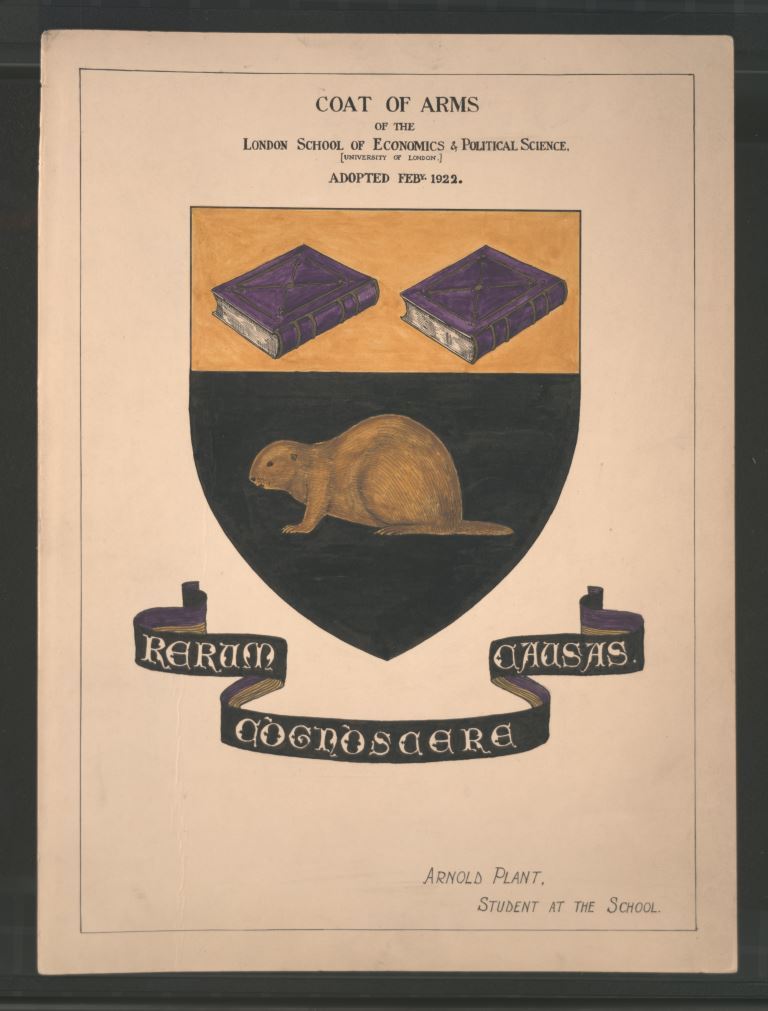
That is to say, it is literally called the London School of Economics and Political Science. And it was created to account for the things that the hard sciences at Oxford and Cambridge schools of thought were loath to acknowledge. Just look at the elephant markers on the old Indian Institute at Oxford, where generations were trained to run Colonialism as if a scientific matter of physics.

India Institute carving of an elephant. “There are still many signs of the original use of the building.” Source: Oxford

Physics is a science discipline that looks for causes that hold everywhere. The causes of fascism do not fit the discipline because they are particular people making particular decisions, and they can be named and tried.

Vanity Fair Taylor Swift Disinformation Expose Misses the Money

Vanity Fair has published a long exposé of Taylor Swift titled The Mastermind. May Jeong built it from more than 100 sources and laid it out in A sides for the fairy tale and B sides for the less flattering version. The fairy tale opens with explaining the meaning behind her name. The A side tells us the Latin root of celebrity, is “celere,” which means swift. And so the fairy tale is about the girl named Swift, a name allegedly born for fame.

Unfortunately, the word celebrity in fact comes from the Latin celebritas. That is to say it is rooted in celeber, meaning crowded, often repeated, and famous. It is not from “celer“, the Latin for swift that is completely separate and has its own stem, which gives English words like “accelerate”.

The exposé meant to separate Swift from her myth added a new myth in its first paragraph. Oh, the irony.

The rest of the piece dwells on the celebrity’s level of temperament. Unnamed sources describe her as controlling and punitive. Swift apparently declined to comment. Temperament seems to me as the smallest part of the Swift story. The larger part is documented in court filings and trademark registrations, and it concerns who made her material and who was paid for it.

That pattern is older than Swift. American popular music has followed it since the 1950s, and its plain name is systemic racism.

In 1952 Big Mama Thornton recorded “Hound Dog,” a song Jerry Leiber and Mike Stoller wrote for her. Her record topped the R&B charts and paid her $500. She is one of the roots of American rock and roll, and the Rock and Roll Hall of Fame inducted her in 2024.

And yet, when Elvis Presley recorded the song in 1956, he used a rewritten version with the cheating man taken out, and it made him a national star. Nothing flowed to her. Thornton put the outcome in one sentence in 1974:

Elvis Presley made a million, a billion, and I made zero.

Pat Boone did the same with Little Richard. His 1956 cover of “Tutti Frutti” reached No. 12 on the pop chart while the original stopped at No. 17. Pop radio favored the white version, and the sales went with it.

Each step was an ordinary business choice. Record companies ran the white singer and pop radio played him. Together those choices redirected Black creativity into white fortunes, which is how systemic racism operates. The “success” of American white celebrity has to be evaluated against a national habit of taking Black work without credit to curate a white master myth.

Swift works this exact system in the age of copyright lawyers.

2001

The R&B trio 3LW released “Playas Gon’ Play,” written by Sean Hall and Nathan Butler. The song peaked at No. 81 on the Billboard chart. Its hook came from hip-hop. The hater began as the “player hater,” a term the hip-hop historian Marcus Reeves ties to the late 1990s and the Notorious B.I.G. When NPR put together a playlist of hater songs, 3LW’s track came first.

2014

Swift released “Shake It Off,” written with Max Martin and Shellback, and built its chorus on the same two lines about players playing and haters hating. Hall and Butler sued in 2017. Swift said she wrote the lyrics alone and had never heard of their song, and her team called the suit a “money grab.”

In the same song, Swift claimed her own words as property. Days before 1989 came out in October 2014, she filed to trademark “this sick beat,” a line from the bridge of “Shake It Off,” for goods from toys to hair accessories. Her lawyers later treated the hip-hop language in her chorus as words that are common, free for the taking. Yet the white girl pop bridge became her exclusive protected property.

The video for “Shake It Off” moved the business choice of borrowing from hip-hop to the screen. Swift imitated hip-hop dance moves and crawled beneath twerking women, and Earl Sweatshirt called it “perpetuating black stereotypes.” A year later her “Wildest Dreams” video set a white romance in colonial Africa, and two African writers at NPR called it “a glamorous version of the white colonial fantasy of Africa.” It was no coincidence. The performance was a tell.

August 2017

Weeks before the 3LW writers sued, Swift notably credited a different source in a very different way. Her single “Look What You Made Me Do” borrowed from Right Said Fred’s 1991 hit “I’m Too Sexy,” and the British trio received writing credits on release. Her team contacted their publisher in advance. Contacted in advance. After the release the band received flowers and a thank-you note from Swift and Jack Antonoff. The 3LW writers who dared to speak up for their rights were called a money grab.

2018

Judge Michael Fitzgerald dismissed the case. He called the lyrics banal and wrote that American popular culture was “heavily steeped in the concepts of players, haters, and player haters.” The culture he described is Black culture, and his ruling made its language free material for a white pop star to appropriate.

The Ninth Circuit reversed him in 2019 and sent the case back. In 2022 the district court ordered a trial, and a month before it opened both sides asked the court to close the case. It ended in a settlement with private terms.

The money went where it went in 1956. We think of that as old racism. Long ago.

October 2023

Bloomberg counted Swift a billionaire, one of the few recording artists to build that fortune almost entirely from music. The next day she released 1989 (Taylor’s Version), with a new recording of “Shake It Off” that she owns, ten months after the 3LW case closed. The case exposed the old redirection method, and the fact that the method hasn’t quit.

Vanity Fair wants us to ask ourselves what kind of person Swift really is, on the evidence of how a celebrity treats people. The court filings answer a more important question, about whose work her hits were built on and who was paid for it.

Big Mama Thornton was paid $500, while Elvis Presley disinformation engines curated millions to the thief of rock and roll. Seventy years later the sums are in the billions, and they still are being directed by American disinformation engines to a white performer whose remakes, remixes and slop avoids giving proper credit, on race lines.

China’s Man Back in Charge of Nvidia

The president of the United States came home from China with the words of Xi Jinping in his mouth. Trump said “You’re UN-FIRED!” Or more likely, “put China’s chief executive back in his seat at an American tech company exporting national security chips”. The next morning the infamously disgraced executive, who slipped China its GPUs through a buyer under criminal investigation, and demonstrated gross infidelity with their suspected agent, had his job back.

Xi wanted Jensen Huang restored to full power, and Donald Trump carried the Chinese government desires to Nvidia’s board. As you would expect, it wasn’t without a price. Nvidia committed at least $26 million to Trump’s projects, $25 million of it for his ballroom. Trump’s investment accounts held Nvidia among their three largest stock positions at the end of 2025 and bought more in September. The shares rose more than 30 percent when the board complied with the Chinese wishes, as relayed by Trump.

Who gains? Not America.

Trump and China. And Huang’s mistress.

Huang resigned from Nvidia on 12 November after admitting an affair with Alice Huang, an executive of the Singapore firm Megaspeed. American intelligence, by published accounts, concluded that China’s Ministry of State Security recruited her to influence Nvidia’s position on chip sales to China. Megaspeed bought more than $4 billion of Nvidia’s advanced chips. The Justice Department is running a criminal investigation of Megaspeed over chip diversion. On 17 November the board chair told investors the board “does not intend to reinstate Jensen as CEO.”

The road to hell, paved with intentions.

Senior officials briefed before the trip that the Chinese spy case at Nvidia would stay off the president’s agenda with Xi. On the flight home Trump told Fox News the subject barely came up. Barely. Opposite of staying off.

The next day at the White House his account exposed the lie. “I did discuss that with President Xi,” he said, and he relayed Xi’s verdict that Huang is brilliant. Brilliant at screwing everything and everyone? Hard to say. Treasury Secretary Scott Bessent wanted us to know Huang was absent from the talks he attended himself. As if that matters.

Trump asked the board to rehire Huang on Sunday night. Semafor reports he dialed into the board’s meeting to argue for Huang himself, and the White House told Semafor he was “totally involved.” By Monday the board voted unanimously to do so and credited “input from senior levels of the United States government.” China wasn’t credited. “I made the deal,” Trump told CNBC, and he added that it was “a lot easier to convince them yesterday than it was a week ago.” Shenzhen fell inside that week. Trump said the government had “no reason to believe” the return of a man implicated in severely compromised positions domestically and internationally carried any security risk.

What Trump and Xi said to each other about Huang is likely to be hard to source without a leak. Trump has said a “very comprehensive” agreement with China is under discussion, and that it covers exports and chips. At least that much of the sequence is public, which brings to mind an American precedent for this President.

1933 to 1942 2026
Texaco’s chairman and a German embassy counsellor Nvidia’s chief executive and a Megaspeed executive tied to Chinese intelligence
Oil, fuel additive, trucks, a bombsight 879,868 advanced chips licensed in six months
Watson decorated in Berlin, Ford’s medal delivered to Dearborn Huang and Musk on Air Force One to Beijing, Xi’s praise relayed by the president
The Bund The affair
The Duquesne ring The chip licences and Megaspeed
Rieber resigned and moved to Barber Oil Huang resigned and returned in eleven days
Justice Department charges in 1942 The president’s call to the board

Torkild Rieber ran Texaco and supplied oil to Franco and to Hitler. In 1940 he looked after Gerhard Westrick, a counsellor at the German embassy who was calling on American businessmen, and Texaco funds paid for Westrick’s car. When the newspapers reported the relationship, Rieber resigned as chairman. His next career was at Barber Oil.

The oil was just one consideration among many. Assistant Attorney General Thurman Arnold told the Truman Committee in March 1942 that Standard Oil of New Jersey had delayed synthetic rubber in America because Hitler wanted it delayed. The Farben trial at Nuremberg heard that German output of tetraethyl lead, the additive in aviation fuel, met peacetime needs and fell short of a war’s. General Motors owned Opel, and in 1938 the German military took 29 percent of Opel’s Blitz trucks. One account of GM’s wartime plants credits its Rüsselsheim works with half the propulsion systems for the Ju 88 bomber.

Berlin cultivated the men who ran these firms. Hitler thanked GM’s James Mooney in the Chancellery in 1934 for 17,000 German jobs. He decorated IBM’s Thomas Watson at the 1937 Berlin congress of the International Chamber of Commerce, a trip covered here before. Watson returned the medal in 1940. Henry Ford’s Grand Cross of the German Eagle came to Dearborn on his seventy-fifth birthday in 1938, carried by two German consuls.

The most known front of Germany’s American effort was the heavily marketed “Bund”. It was so loud, it became useful for Berlin to disown it in February 1938, ordering German citizens out. The actual operation was much quieter, and closer, meaning it could continue while a ceremonial distance was created. The FBI arrested 33 German agents in 1941, and Hoover told Roosevelt that the secrets of the Norden bombsight had been in German hands since 1938.

To this historian, the Huang affair plays the Bund’s role here, as public spectacle.

The movement of chips is the operation.

Commerce Department data released by the House Foreign Affairs Committee show 879,868 advanced chips licensed for Chinese companies in six months, and The Hill describes the buyers as firms the Defense Department lists as Chinese military companies. Commerce Secretary Howard Lutnick tied an earlier chip approval to a rare-earth bargain with Beijing. Nvidia’s Jetson has been found in the Russian Zala drone, the Shahed MS series and the V2U.

Germany needed American oil. China needs American chips. The comparison is to the Germany of 1933 to 1938, the years of rearmament, when American firms supplied the build-up and the war had yet to start. Xi’s China is in those years. Putin’s Russia is already at war and has proven Nvidia chips essential to its “human safari” targeting urban Ukrainian women and children with explosive drones.

Huang is the executive that Beijing wanted in charge of American chip exports. His relationship with Trump turned on access to China, and in July 2025 he announced from Beijing that Nvidia expected to resume chip sales there. The executives of the 1930s travelled on their own. Huang and Elon Musk flew to Beijing with the president in May, and Huang was on the list for Shenzhen until the scandal. Musk made the trip and signed the petition for Huang’s return as an Nvidia shareholder.

Trump very predictably is acting coin-operated, with money in the outcome. CNBC counted at least 103 Nvidia trades in his accounts since January 2025, worth between $27 million and $97.5 million. The stock stood 50 percent below its high when he asked for Huang’s return.

Shenzhen gave the other two leaders text they wanted. The declaration the three signed ranks the immunity of state officials as paramount and tells the International Criminal Court to stay within its jurisdiction. Putin has been under that court’s warrant since 2023. A second point pledges more refined petroleum, six weeks after Trump’s diesel agreement with Putin and his waiver of the Graham Act sanctions. Xinhua’s readout attributes to Trump himself the line that Washington withholds support for Taiwan independence. Trump said he and Xi lead in AI and there is “no third place.”

Washington’s role is the change from the 1930s. Rieber fell to press exposure. Arnold brought his Standard Oil charges three months after Pearl Harbor. Enforcement came late in both cases, and it came from the government. In 2026 the Commerce Department issued the licences and the president himself persuaded the board to restore the executive.

Huang’s own argument is that selling to China keeps its firms dependent on American chips. Trump says only older chips will go. The administration tightened one rule on 16 November, covering overseas data centres that rent computing power to Chinese customers, and Bessent says the proper restrictions are in place. The White House says outside managers make the president’s trades. Megaspeed denies diverting chips. China calls the espionage allegations unsubstantiated. Rieber’s defence of his oil sales was that they were simply good business.

Huang is due before three House committees on 1 December and before Senate Banking in public. Both can ask what the president said to Xi and what the government told the board. You can guess which government I mean.

AI Slop as a Service: Why Microsoft Won But the Soviets Lost

Edward Tufte charged the Challenger engineers with a failure of explanation. In Visual Explanations he argues that they understood how cold weather damaged the O-rings, yet the thirteen charts they carried into the night before the launch never put temperature and failure on the same page. The presidential commission read the fault higher up, placing it in management: the engineers had recommended against flying, their own managers overruled them, and the officials who signed off never heard the objection. Roger Boisjoly, one of those engineers, later answered Tufte that the burden of proof had been quietly reversed, so that the people warning of danger were asked to prove the danger rather than the other way round. Tufte blames the engineers and the commission blames their managers. Both describe a launch that went forward while the people who knew the hardware best were the ones least able to stop it.

We have seen such foolishness before, but the economics of shipping on schedule and leaving the loss to someone else has an even longer history. Soviet factories were paid by the ton and turned out steel no one could use, and the state that ordered it absorbed the waste for decades. Microsoft shipped software riddled with defects and wrote a license that put the loss on the customer.

The AI vendors are the worst of both worlds, paid by the ton to turn out defects and loss the customers pay for. An Anthropic researcher has now sat in front of a camera and described the same arrangement from the inside. He grants that the AI companies are cutting corners under the pressure to ship models quickly, and that his own safety work may be making matters worse by heading off the small incidents that would otherwise warn the public. He expects the technology he helps build to leave nearly every human unemployable. Four days after the video went up, his employer listed its shares on Nasdaq at a valuation near $2 trillion.

Tao Lin works on safeguards for Anthropic’s Claude models. In an hour-long interview with Palisade Research he says it is very likely that nearly every human on Earth will become permanently unemployable and dependent on government welfare. He tells viewers they are right to be angry at the people building AI, and that the companies ought to cut their research pace to a quarter. Then he explains why the anger costs him so little: “we live in a bubble. I won’t meet those people.” Asked whether he is doing something wrong, he says no.

Put those sentences in the mouth of a tobacco chemist, an opioid sales manager or a coal mine superintendent, and they read as the sort of thing a company says in private and regrets in discovery.

A Brown & Williamson lawyer wrote in 1963 that the firm was “in the business of selling nicotine, an addictive drug,” and the memo sat in a file for three decades before it did its damage. In each of those trades the candid internal line eventually became evidence. Judge Gladys Kessler found the cigarette makers liable under the racketeering statute in 2006 on the strength of their own documents. Purdue Pharma pleaded guilty to three federal felonies in 2020. A jury convicted the former chief executive of Massey Energy of conspiring to violate mine safety standards after 29 miners died at Upper Big Branch, and he served a year in federal prison. More than forty years passed between the Brown & Williamson memo and the ruling against the cigarette makers.

Lin Statement Reality
Nearly all humans will become permanently unemployable. Asked whether that arrives within 15 months, he answers no. Asked what his home town looks like in ten years, he says the question is too hard. Across 63 minutes his evidence on jobs is one remark that the labor share is falling.
AI will soon be more capable than you and able to defeat you personally. The NSA’s classified network went down on 17 November. The Director of National Intelligence traced it to a patch and reported no sign of an attack.
Anyone with a frontier AI system can hack anyone’s computer. Seconds later he says ordinary people have seen little effect so far.
Models including Claude Mythos 5 and Claude Opus 5 will violate security constraints to finish a task, even when the user cares more about security. Asked why the companies leave it that way, he says a model that cares too much about security provides no value.
AI companies should slow research to a quarter of the current rate. He is less than fully in favor of a slowdown and defends Anthropic for declining to pause too early. It went public four days after the video went up.
Many people who think AI is likely to kill everyone still work on making it more capable. He says that can be the correct choice.

The many technology outages of the past week show how the harm actually reaches people, and whether to believe the scary hype. On 21 October CISA urged organizations to patch PHP immediately for a pair of flaws that Wiz and OpenAI had billed as among the most serious in recent memory. I argued that week that the risk of attack was low and the fear was high. Four weeks later the NSA’s classified internal network went dark. The NSA called it “scheduled routine maintenance.” Director of National Intelligence Jay Clayton went on Fox Business the same day and tied the outage to the PHP patching, saying that the patched systems failed to restart and that the FBI and NSA had been right to tell operators to take systems down and get the fix in place.

The Washington Sun reported, on three sources, that bank executives and the NSA gave Congress the same account in private: the outages came from fixes for flaws that AI models had found, pushed through in larger volumes than the systems were built to absorb. Clayton reported no sign of a coordinated attack. At the NSA the injury came from the response rather than the threat. The FAA ground stop four days earlier was a failure of change management in the same vein.

The next alarm arrived on 18 November. Xint, a firm that sells AI-powered vulnerability discovery and lists itself in Anthropic’s Cyber Verification Program, published five nginx flaws under the name nginx2root. F5 scores the lead flaw at 9.2 out of 10, though it notes high attack complexity and confines code execution to systems where address randomization is off or already bypassed. The nginx project’s own advisory page is cooler still, rating two of the five major and three medium, and the root access in Xint’s own write-up depends on a separate Linux kernel flaw. Bob Rudis watched a handful of nodes for about 18 hours and saw not a single opportunistic probe. The weakness was real and the attackers were absent.

Severity and likelihood are a fickle headline. PHP is old and everywhere, in everything. A new and relatively unknown vendor isn’t comparable on the face of it. And thus, when I reported an unauthenticated internal API in Qdrant, the vector database, and the vendor published it on 22 October at 9.8 on the CVSS 3.1 scale, with low attack complexity, it drew no coverage at all. PHP2Shell appeared the day before at 9.2 on the CVSS 4.0 scale, with high attack complexity and drew a federal alert and an Atlantic profile.

The danger did not arise with PHP as it had been made out. The people pushing the news are not gating it sufficiently with skeptics and reliable sources of truth. This is not least of all because of AI claiming to be a “domain” shift and “experts” have been escaping proper scrutiny.

Underneath the week is the argument everyone has been having all year. AI is a rapid fire slop generation machine, so it produces alarms faster than people would normally assess them, where each alarm arrives with hyperbolic deadlines. The deadline does the damage, because it suspends the ordinary discipline of change control and takes from the engineers the authority to say wait. The Thiokol engineers lost that authority the same way, to a launch schedule rather than a patch window. AI gains that authority and still fails at the repair. Lin himself describes the most likely road to human disempowerment as a boring one, in which people hand ever more to AI, understand ever less of what is happening, and stop checking the work. The NSA outage is that road travelled a short distance.

Several writers have now mapped the larger landscape this sits in. Naomi Klein and Astra Taylor sketched it in “The rise of end times fascism”, an alliance of the far right and Silicon Valley money that welcomes collapse and expects to be among the saved. Gil Durán follows that alliance from the Valley side in The Nerd Reich. Rainer Mühlhoff, a philosopher at Osnabrück, argues in AI and the New Fascism that the loud talk of salvation or annihilation draws the eye away from the harms already here, and he sets the firing of public employees to build an “AI state” inside the same alliance. Adam Becker, in More Everything Forever, finds thin evidence beneath the futures these men promise and a plain hunger for power underneath that.

Lin belongs to the pattern these writers describe. He supplies the annihilation talk, calls his own expectations wild science fiction, and admits their arrival makes him happy; the bubble he lives in is the bunker Klein and Taylor describe. The present harm is already on the ground in the outages. A chaos machine of this kind spreads fear while it gathers power, and the ordinary structure of accountability comes apart beneath it.

His labor forecast runs the wrong way down the evidence. Replacing intelligence tends to make more work for humans, not less. Lisanne Bainbridge set out the pattern in 1983: automation hands the operator the hardest tasks and the least practice at them. Justin Michael, writing from his years at Stripe, describes the people who keep the ACH payment system alive by patching and hand-working its failures, and what tends to break once a company swaps them for supervisors of language models. Set against all of that, Lin’s case rests on one passing remark that the labor share of the economy is falling. That figure describes who gets paid. The work itself remains, and grows.

The business model accounts for the rest. The vendor is paid by the unit of output whether that output has integrity or not, and the cost of the failures settles on whoever has to clean up after it. In older industries we would call this pollution, and it stays profitable for exactly as long as the liability rests with someone other than the polluter. Surekha Davies, a historian of science, names the people who carry that cost: the data workers, the people who live near the polluting facilities, the writers whose work disappears, the users who grow dependent. Slop, in the sense worth using, is high cost and high output and low integrity, and here it is the product itself.

The attack tooling runs on the same arrangement. AntiFox, an open-source fork of ARTEX, carries a penetration test from reconnaissance through exploitation to a finished client report. It asks for an Anthropic or OpenAI API key, places all legal responsibility on the user, and disclaims liability for any damage it does. Lin describes his own team’s job as blocking the requests to Claude that try to hack things. The seller of the tokens is paid either way, and the target pays for the cleanup.

When I work with lyrik.wirken.ai, built on Wirken, it has found critical and high severity vulnerabilities in authorized testing, at commodity cost (under a dollar). This is the thing Lin gestures at when he says anyone with a frontier model can hack anyone, except that it is no longer a forecast. The capability is here and it is cheap. The probes stay away because the incentive does, which is the very gap Lin draws between what AI can do and what it actually does.

Waste and slop as a business model should raise more alarm bells. The Soviet planners paid their factories for gross output, and the state that placed the orders was also the customer that received the waste. The loss came back to the books that paid for it, and the state eventually fell under it. Microsoft sold Windows NT under the banner of Zero Administration, shipped it under a license that disclaimed liability, and its customers carried the loss. Whoever carries the loss, loses. Microsoft’s customers have been losing for decades, and the losses go uncounted because nobody keeps the books for them. NIST tried once, in 2002, and put the cost of defective software at $59.5 billion a year, with more than half of it borne by the users. Microsoft’s success is a tragedy that goes unmeasured because consumers are poorly represented. Lin assigns the cleanup for his own product to the state.

The value of the interview is that it creates in advance the kind of record, by one of the people building the thing, that will be used against them later.

Tobacco, opioids and coal each reached a courtroom in the end. What moved those industries was the day their own words were read back to them. Public anger had been loud for years and changed little until this kind of documentation changed everything.

The AI companies, as if completely ignorant of the precedent, have put their self-incrimination on YouTube, years early, for anyone to prepare briefs against them. The reality of securing big data is integrity (as I have argued since 2012 is the Loch Ness Monster problem of our industry), and integrity means the maker should be held to account for what the product does. The International Court of Justice found Myanmar responsible for the Rohingya genocide this past week, the first time the court has held a state responsible for committing it. Individual accountability is the next step, and it should reach the executives who ran Facebook while its platform carried the incitement in Myanmar, the chief security officer of that period among them.