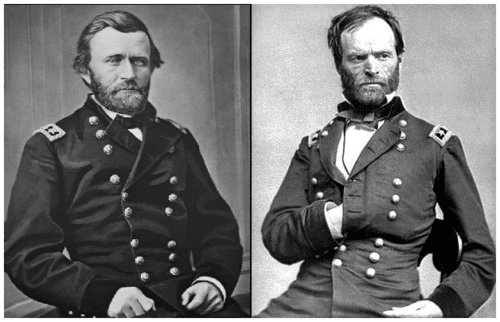
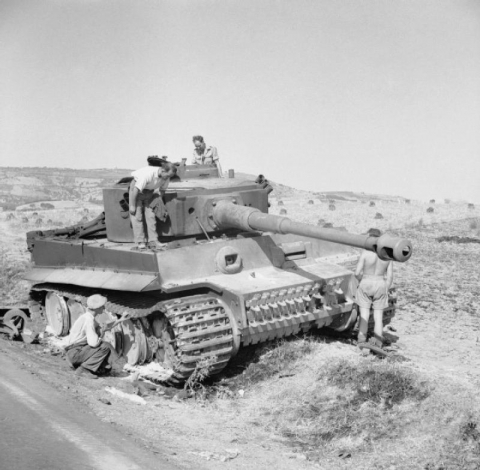
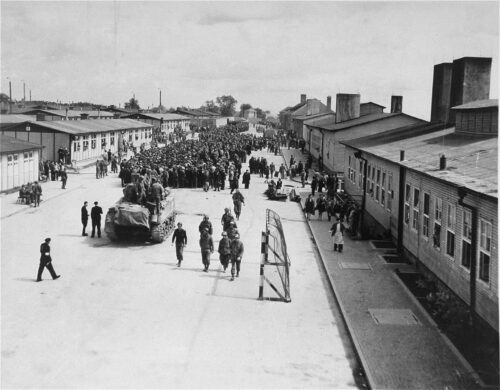
U.S. General Sherman in 1864 famously helped end the Confederate concentration camps, a huge victory for American liberators followed with public campaigns of “do not forget”. Then 80 years later in 1944, 10s of thousands of American-made M4 tanks named after him famously helped end the Nazi concentration camps, followed with public campaigns of “do not forget”….
How did Sherman’s name come to represent an unmistakable force of good in two similar efforts so far apart?
The answer is Winston Churchill.
Way back in 1915 Churchill funded development of a novel giant “landship” concept meant to break through trenches, barbed wire and machine gun nests.
Prime Minister Herbert Asquith received a suggestion from a colleague: “It would be quite easy in a short time to fit up a number of steam tractors with small armoured shelters, in which men and machine guns could be placed, which would be bullet-proof. Used at night, they would not be affected by artillery fire to any extent. The caterpillar system would enable trenches to be crossed quite easily, and the weight of the machine would destroy all barbed-wire entanglements.” The writer was Winston Churchill. His letter marked the first step toward the practical evolution of the tank in World War I.
Initial engineering, of what essentially was an armored Ford tractor, impressed the British War Office so much by February 1916 they ordered hundreds built under the strictest secrecy.
In other words the “landship” concept was prohibited from being called that in order to deny German spies any insight. A “Landships Committee” had been flagged by late 1915 as a risk — requiring rename. A senior officer (likely Major General Ernest Swinton) then proposed documents and designs use instead the phrase Water Carriers (WC).
Churchill (and others) supposedly reacted to this with such laughs, given the idea of government committees and departments using the comical initials WC (toilet), that a synonym was immediately injected — the result was “water tanks”. A Tank Supply (TS) Committee was deemed acceptable as cover for quickly increasing “landship” production.
An alternative story (always possible given such secretive history) is that shop orders managed by Sir William Tritton (landship designer and builder) used the phrase “water carrier for Mesopotamia” while managing hull production (developed in secrecy and only later to be mounted).
Either way the super secret project went from WC to WT. And that’s how the codename was born and continued onward… water obviously had to be dropped once people realized what was being built, and to this day we still say tanks.
Fast forward to WWII and Prime Minister Churchill told the Americans shipping tanks to Britain that they needed to use a simple name convention.
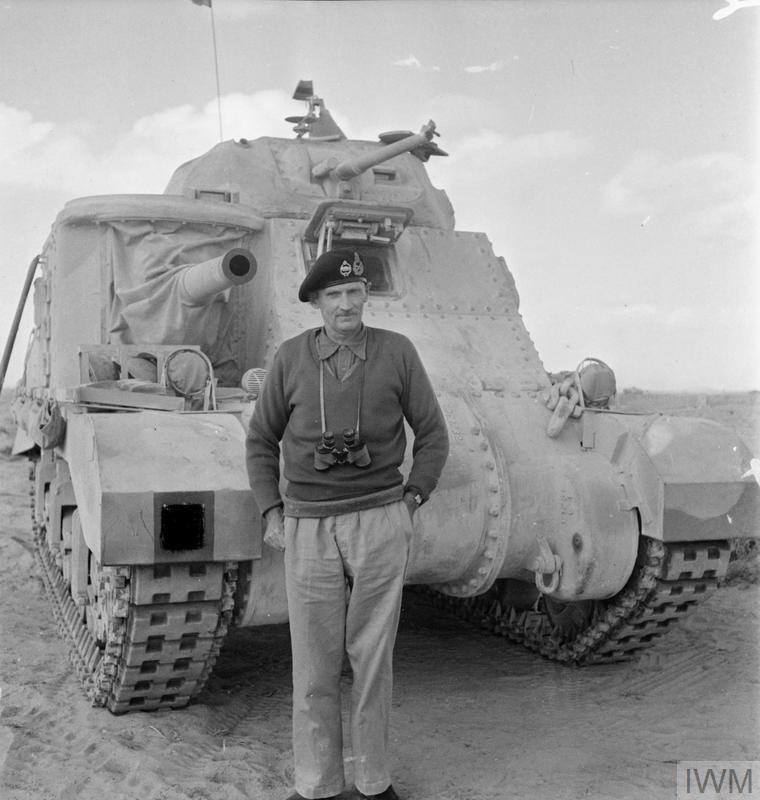
The British took the American M3, for example, and named it a General Grant. An American configuration of the M3 was named the General Lee. There’s a lack of documentation for how and why Lee’s name was brought in *cough* to honor segregation/racism *cough*.
Several of [America’s] most prestigious army posts honor the enemy. The War Department named them during WWI and WWII when the army was a segregationist institution, and the South was a racial police state. Black people did protest these names, but they had been violently excluded from voting and could not change it. But to me it’s outrageous that the US Army, the most diverse workforce in the country, honors the enemy. An enemy who fought for slavery and killed US Army soldiers. […] Lee served in US Army for over 30 years before choosing treason to preserve slavery.
Because the M3 configuration assigned to Americans (a turret change obvious to any onlooker) was called the Lee, it meant British associated Grant’s name to their own deployments, which seems exactly backwards except for the part about winning battles. Grant was one of the best generals in history. Lee was one of the worst.
You have to wonder why any American even at this time would agree to serve in a tank named for their historic enemy, the awful and traitorous General Lee. Even if very overtly racist British military officers had named it as such, who enabled them? Lee was undeniably racist and pro-slavery, a ruthless butcher who tortured and killed American soldiers, even murdering POW, earning a record that should have made him unsuitable for any recognition.
Historian protip: Churchill was an opportunist racist. His opinions of Lee not only were wrong, but also reinforced Churchill’s own worst facets. For example when Churchill proclaimed he “did not really think that black people were as capable or as efficient as white people” his views of Lee gained important context.
Or who can forget Churchill’s War Cabinet decision of 13 October 1942?
…we need not, and should not, object to the Americans [segregating] their coloured troops.
Did anyone feel a need to object to Americans being put in a tank named after their enemy? Perhaps the U.S. Army should have instructed the War Office to name their M3 the Napoleon.
Churchill also is said to have removed “General” from names of tanks as he believed it a source of confusion in discussing military events.
After the M3 Grant, came the M4 and Churchill simply declared in early August 1942, as it arrived into Egypt (codename “Swallow”), that the new tank would be named for General Sherman. He had said he would not use what he called “gibberish” of American tank designations (e.g. the American Medium Tank M4 to M4A4 variants were renamed the Sherman I to V).
General Sherman was one of the best military leaders in American history, and served under the best (Grant), so such a name transition makes sense from that perspective. In addition Sherman had a rather important ethical advantage over the enemy, which would serve the British well in the years ahead.
His logic was indefatigable — bring peace quickly that would quell the heart of pro-slavery militias, end their domestic terrorism that had plagued America for decades.
Now, my friends, I know there are parties who denounce me as inhuman. I appeal to you if I have not always been kind and considerate to you. [Cheers.] I care not what they say. [Bully for you and cheers.] I say that it ceased to be our duty to guard their cities any longer, and had I gone on stringing out my column, little by little, some of your Illinois regiments would not have come home, but would have been crushed. Therefore I determined to go through their country, and so I took one army myself and gave my friend George Thomas the other, and we whaled away with both. [Loud cheers.] Therefore we destroyed Atlanta, and if we had destroyed all the cities of the South in order to bring about the result in view it would have been right. [Loud cheers…] Now I can go, and anybody can go with a single horse a way out to the limits of Kansas, or even to Colorado, without an escort, and that too at the close of a long and terrible war.
The considered thought about stability, prosperity and preservation of life comes through from Sherman as fundamentally opposite to the disloyalty and barbarity of Lee.
Sherman’s ethical foundations in war were to engage in the destruction of enemy infrastructure (constraining enemy ability to produce war) as far better than any loss of human life.
He endeavored to quickly end what he cited as inherent cruelty of war through decisive force as quickly as possible, focusing on what really mattered.
Union military strategy thus emerged not only victorious but also morally superior to the infamously selfish and corrupt Confederate Generals: in Sherman’s view the southerners should have been far less “outraged” when their “property” was seized or destroyed and far more concerned about the human beings they enslaved, murdered and sacrificed needlessly.
It’s not just history though. An important dichotomy highlighted by Sherman still is found in America even to this day. When “Black Lives Matter” (BLM) groups protest loss of human life they run into resistance from groups that are concerned primarily about streets being blocked or damage done to a car or building. Sherman would have no time for the latter, which is why so long ago he powerfully defeated racist expansionist reactionary forces to save lives and restore freedom.
With that in mind…
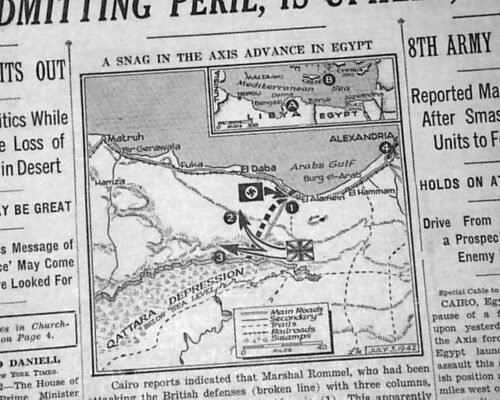
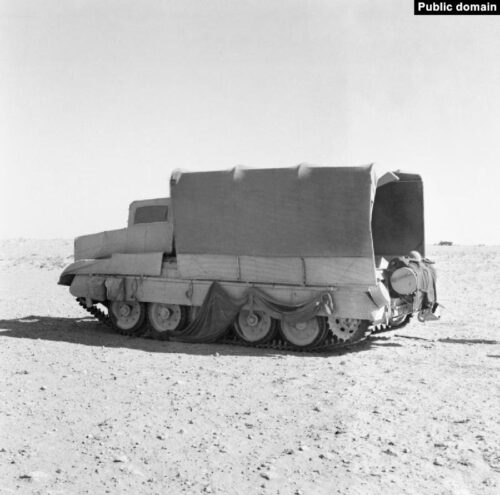
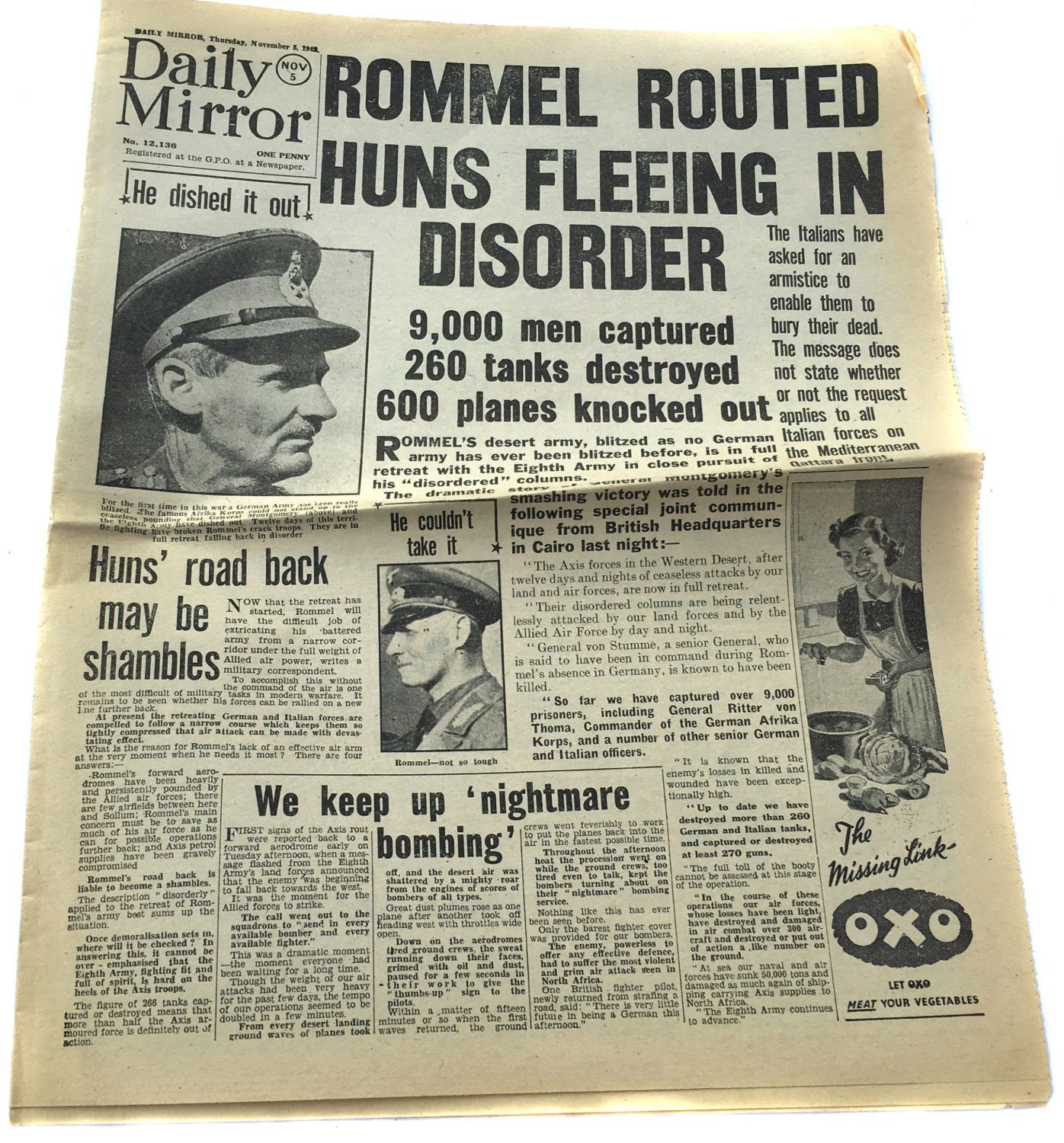
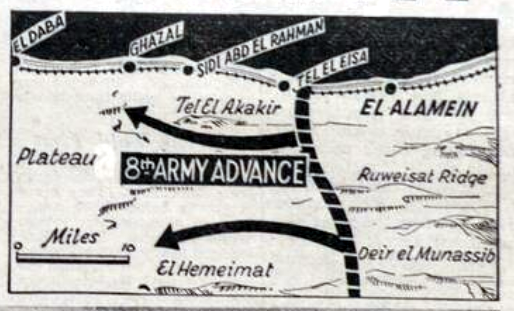
On the eve of the battle of El Alamein, Egypt in October 1942 over 250 American M4 Sherman tanks made their combat debut in the forward elements of the British Eighth Army. It was a very notable victory and a significant turning point of WWII — perhaps it even was the realization of British tank dominance over Germany that Churchill had dreamed about in 1915.
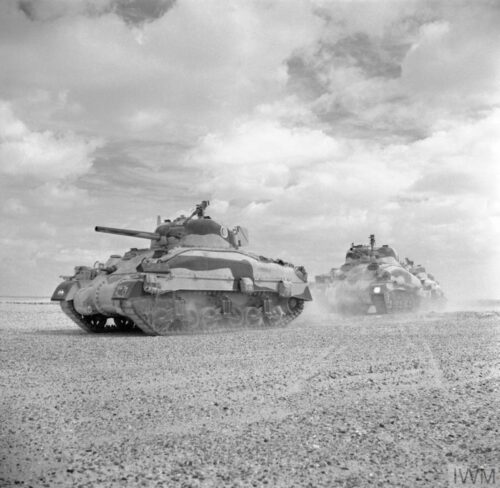
Sherman II tanks of the Queen’s Bays (2nd Dragoon Guards), 2nd Armoured Brigade, moving up to the Alamein line, 24 October 1942. More than 15,000 75mm armed Sherman tanks had been supplied to Britain by 1944. Source: IWM photo E18380.
After their dominant start the Shermans continued to deliver huge contributions to Allied campaigns, driving the Nazis completely out of Africa before rolling across the world as one of the best tank designs.
The Sherman tank, like General Sherman himself, became highly symbolic of the kind of fortitude in war that could liberate the oppressed from tyrannical regimes.