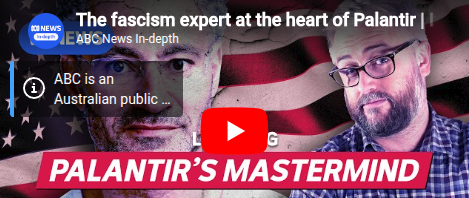
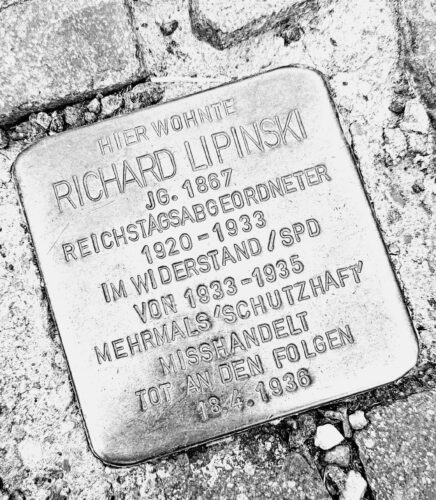
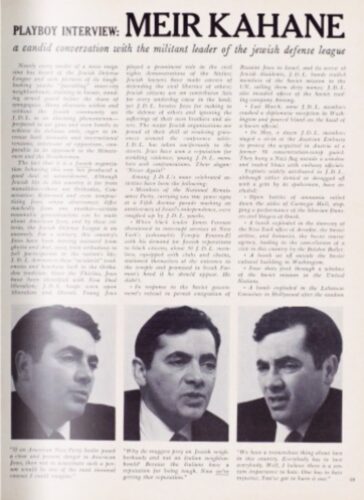
Peter Thiel started Palantir, which has become known as the private company that decides who the American state sends to prison or deports, based on their race. Thiel chairs the board. His husband is the principal shareholder.
Under Trump in April 2025 ICE handed Palantir a sole-source contract to build ImmigrationOS, to pool records from the IRS, Social Security, passport files, and license-plate readers. It assembles deportation profiles for targets. The funding came through an existing sole-source deal that has since passed one hundred forty-five million dollars. Palantir runs inside the tracking and targeting architecture behind the more than four hundred forty thousand deportations ICE rushed in 2025.
One result is an us-vs-them moral contrast common in populism. Palantir and ICE discourse constructs “the real people” (Americans) as victims, and immigrants as villains. Enforcement is portrayed as a duty to protect ordinary citizens. Fairclough (1992) notes that populist discourse often frames “the people” against a demonized Other. Here, algorithmic processing provides the “populist proof” by producing charts of criminal aliens and lists of targeted individuals, effectively fabricating statistical justification for the narrative. As an ICE document puts it, we now have a dashboard showing which migrants to remove “first,” making the abstract populist promise (big deportations for security) concrete and data-driven.
This is the context that matters most for why in April 2026 Thiel bought a house in Buenos Aires. But it also rings a bell for historians, because this has happened before, with a different company selling the same kind of machine.
The technology used by Nazi Germany to sort its population by race was from IBM. Herman Hollerith built the punch-card tabulator for the United States Census Bureau, and IBM sold it to Germany. Within months of Hitler taking power in 1933, IBM’s German subsidiary Dehomag won the contract to run the census that registered every German by age, sex, occupation, religion, and race.

Yup, the first German census to carry a race field was made possible by IBM.
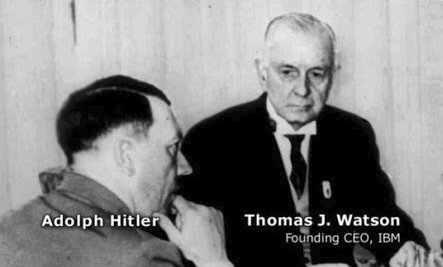
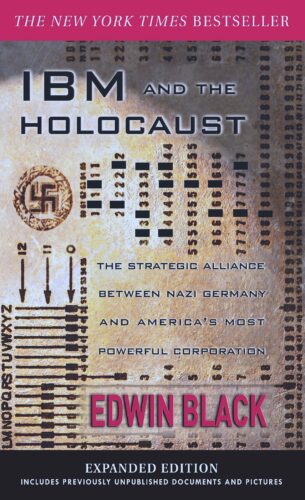
These machines were never actually purchased by Hitler. He got them from Watson as a lease, with monthly payments, serviced on-site twice a month during the Holocaust. They could not run without a continuous supply of custom punch cards that only IBM produced and delivered while the bodies piled up by the millions. The cards followed prisoners across the camp system. The revenue from the machines leased in occupied Poland was routed by Geneva to IBM in New York.
In December 1943 the United States government decided to preserve the IBM infrastructure of genocide, because it wanted the population data for the coming occupation. The Allied powers used Dehomag for their own censuses and surveys. When the war ended, IBM was called in to recover the genocidal subsidiary and the genocide machines, and perhaps most notable of all.. IBM absorbed the profits of the Holocaust. The state had a mechanism that could have dismantled all of this, but instead it put the machines to use. And even if you want to say the machine is just a tool, you can’t look away from the fact that IBM collected the money for Hitler operating the machines for race-based mass murder.
American sorting technology, leased to a regime that used it to find the people it intended to destroy, preserved after the war by a government that wanted the same capability, harvested by the vendor because the infrastructure survived. The American machine was on lease to Hitler in a way that we now need to consider in terms of Palantir.
Thiel is in the news this week because he bought a mansion in the Barrio Parque enclave, across the street from Susana Gimenez, for around twelve million dollars. The seller was Juan Ball, an Argentine financier who lives most of the year in the United States. The celebrity press covered it as if Thiel was leaving America. The real story is very different
Thiel arrived in Argentina more than a week before the meeting that mattered, met Santiago Caputo who runs the state intelligence secretariat from the shadows, dined at the home of the deregulation minister, and sat with Milei in the Casa Rosada.
He was not shopping for an exit from America, or a new home. He was shopping for a jurisdiction to expand the influence of his human sorting machines. The thing he wants to sell there tells you what kind of jurisdiction he needs.
ImmigrationOS decides who the state removes, and the input that feeds it is now lawful in America because of a poisoned justice system. In September 2025 the Supreme Court voted six to three on the shadow docket, in a single unsigned sentence, to let immigration agents resume roving patrols in Los Angeles. I’ll say it again. Single unsigned sentence to enable Palantir to target people in America by race.
The order lifted a lower-court finding that ICE had been seizing people based on four things alone: apparent race or ethnicity, speaking Spanish or accented English, presence at a bus stop or a day-laborer site, and the kind of manual work a person appeared to do. A federal judge had called that what it is and ruled the seizures unconstitutional. The Court with a non-decision decision removed the protection. The trigger for state seizure is now officially appearance, language, and labor.
The output is exactly what was expected. At Delaney Hall, the largest ICE detention facility on the East Coast, the agency claims falsely that it holds murderers and rapists. The data proves otherwise. In the most recent population, more than eighty-eight percent had no conviction and more than seventy percent had no criminal history of any kind.
Nearly ninety percent without a conviction, and over 70 percent without any crime at all. In prison, without representation or rights. Because a single unsigned sentence unleashed Palantir on the public.
Across all ten thousand three hundred people processed through the facility since it reopened, only two had a homicide conviction. As of mid-March more than eighty-four percent had no final removal order, which means they were being held while the state had no legal basis to remove them.
No legal basis, only a Palantir basis.
Thiel has built and deployed the machinery to detain a population defined by how it looks and what language it speaks. That is what the September ruling licensed, and that is what Palantir software organizes.
Palantir published its ideology, just so we’re being clear here that they openly self-identify as the losing side of WWII. The 22-point summary of Alex Karp and Nicholas Zamiska’s book, which the company calls the thinking behind its work, states at point fifteen that the postwar neutering of Germany must be undone.
Read that again.
The defeat of Nazism is claimed to be a bad thing, a defeat to be reversed. That claim has a single home on the political map. It belongs to the German AfD platform, to the Identitarian movement, to de Benoist’s Nouvelle Droite, to the Nolte and Hillgruber revisionism of the 1986 Historikerstreit. A global American surveillance contractor with “pooled” national-level data access has now published Nazism as corporate doctrine.
The biography behind this Nazi doctrine is consistent with it. Thiel’s father fled denazification, and so he spent early formative years in the Nazi enclave of Swakopmund, a town in occupied Namibia that kept celebrating Hitler’s birthday into living memory. His father managed construction of the Rossing uranium mine feeding apartheid South Africa’s nuclear program in violation of the UN.

That area of German South West Africa wasn’t random. It was the site of the first genocide of the twentieth century, and Eugen Fischer ran his racial experiments on Herero and Nama prisoners there before carrying the science into the institute where Josef Mengele trained. The sorting of human beings by category for the convenience of the state, which was being engineered in the long American nineteenth century, was being refined in this German colony, and then codified in Nazi Germany, before landing back in apartheid South Africa. Thiel was raised inside an ongoing enclave of the genocidal system. It is no stretch to see why he chairs a company selling its current form.
The manifesto and the machine are setup by design to operate together. Palantir is built to own the queries the state uses to decide who to deport and who to detain. The doctrine pushes the buyer into what the company believes the end state should be. The reversal of denazification manifesto is just the latest in a long line of reveals about what ImmigrationOS was made to do (e.g. repeat the worst chapters in history).
None of this should surprise anyone. And some countries are already pushing back. Switzerland looked at Palantir and walked. Military auditors concluded there was a significant likelihood that United States authorities could reach confidential Swiss data through the architecture, and the country set a direction toward its own servers, its own cloud, its own encryption. The Canton of Zurich banned American cloud services for government use outright. An auditor stated the risk, the state acted on the statement, the contract ended.
Britain has been far slower to understand the threat. Integrity there is partial and you can see exactly where it holds and where it fails. Palantir entered the NHS during the pandemic on a “free” six-month deal, expanded through a run of no-competition contracts worth around sixty million pounds, and won the three hundred thirty million pound Federated Data Platform. Then NHS England granted Palantir staff an admin role reaching the identifiable records of roughly fifty million people, and officials wrote into the briefing that this could risk loss of public confidence.
The British wrote down that the public would object if the public knew, and authorized it anyway. That is integrity breached in the open, with the record of the breach filed next to the breach. It is the 1943 IBM decision written again. A state with a mechanism that could have refused looked at the apparatus, saw that it was useful, and signed. And yet, in the same country, the Ministry of Housing pulled Palantir out of the Homes for Ukraine refugee-matching system, replaced it with a build of its own by September 2025, and saved millions a year.
The National Audit Office had flagged that the free-then-billed deployment skipped normal procedures and would probably have failed if tested. A former government technology adviser said the civil service, properly resourced, outperforms the vendor. One refugee system extracted, the bill examined, the failure recorded and acted on. Integrity worked only within one area of British public technology.
Germany is where the doctrine and the country meet head on. Germany is the nation whose denazification Palantir’s own manifesto names for reversal. In 2023 the Federal Constitutional Court ruled the police laws in Hesse and Hamburg authorizing Palantir unconstitutional, finding that dragnet analysis by association violated the right to informational self-determination. The federal army cut ties with the company. And then the Police forces across sixteen states, notorious for their ties to Nazi history, adopted it anyway. The fight is unresolved, and it is a real fight, conducted through courts and audits and public argument, against a firm that has published in corporate voice that the country’s liberation from Nazism was wrong and should be reversed.
France renewed its domestic intelligence contract in December 2025, extending it pending the deployment of a sovereign tool that does not yet exist. France is Palantir’s second-largest market after Britain. The objection is loud and the dependency holds anyway.
Add these up and the pattern is not that Europe blocked Thiel from bringing Nazism back through technology procurement processes. The pattern is that every jurisdiction with a functioning integrity mechanism, an auditor who can state a risk, a court that can void a law, a press that can read the manifesto out loud, a department that can do the math and walk, generates friction against the product and the Nazi doctrine behind it. The machine grows a documented trail of objections at every step, because the systems it moves through are built to register the failures and warn of the threat to humanity. And then?
Argentina under Milei is the place engineered to remove all friction for Thiel. The open door already exists. When Patricia Bullrich was security minister she prepared what insiders called an extra-large contract to bring Palantir into the country through a new Migration Security Agency, an apparatus whose function maps directly onto ImmigrationOS, the correlation of records into a screen for mass data collection.
But then the contract stalled. It stalled because of Karina Milei, the president’s sister, in a fight with Bullrich over who would control the business. The dispute was over who should get all the money from sorting the population with Thiel’s machines.
That is the Argentina house purchase context.
Switzerland asked whether the thing should run, and it answered no. Britain sometimes asks and sometimes is overridden, and you can read both while they try to remember which side of WWII they were on.
Argentina asks only who gets paid by a system designed to put Nazis in power. This is the same service Argentina has sold before. The men who ran the ratlines did not improvise a haven in 1948. The ground was prepared in the 1930s, when the country hosted the largest or second largest pro-Nazi rally ever held outside Germany and a state that practiced tolerance of the movement. The Nazis avoiding capture found terrain prepared for them.
The country’s nuclear program, familiar to Thiel’s father, was built on German scientists of the Nazi regime. Argentina’s function across eighty years has been a jurisdiction that sells Nazi families a way to operate beyond the reach of the people they operate on, and calls it something respectable. Before it was called anti-communism, now it’s deregulation.
Thiel is not fleeing America in fear. That’s a lie, and he tells it to scare people because his profit depends on fear. He is making a business move into a country whose eagerness for his machine is related to his and their shared history of avoiding denazification. He chairs a company that published the reversal of denazification as doctrine and sells the engine that sorts populations for removal. He bought a house in the country that drafted the contract before he landed, where he needs to be present to help sort out who banks the proceeds from Nazism.
The mansion is where the chairman of the sorting machine company lives now while they install software to remove huge portions of populations based on race. The question is not whether anyone can stop him. The question is which jurisdictions even try, because the answer tells you where he and his machines will live.