
The Observatory Function of the Europol Innovation Lab has published a new report on Metaverse crimes.
Elon Musk Shuts Down Twitter Offices After Demanding Staff Return to Them
Twitter is operating like the Titanic, except its new captain is suicidally pushing to sail faster into every iceberg as he pushes his own crew overboard.
The chaotic flip flopping of a CEO issuing self contradictory orders gives new meaning to “fail whale”.
In the latest dumb twist the company told all its staff to return to the office right before it locked the doors so they couldn’t return.
CEO Elon Musk and others were afraid employees would “sabotage the company” … just over one week after Musk put an end to remote work at Twitter. In his first company-wide email since taking over, Musk told employees they would no longer be allowed to work remotely and needed to return to the office within days. Musk clarified Thursday that employees could still work remote…
Afraid of sabotage? Oh the irony. I can’t emphasize enough how dangerous it is for Musk to normalize anti-safety and attack everyone. His “fears” are in reality toxic to safety.
Hundreds upon hundreds of Twitter employees have technically resigned but still have access to Twitter’s internal systems, with some speculating it is because the employees tasked with managing that access also resigned.
The joke in security circles is that the dumb billionaire has been demanding someone install badge verification readers for an eight dollar bill.
Unforced errors are piling up by a CEO who likes to steer erratically and floor the accelerator without looking where he’s going.
Here’s another critical Musk flip flop to watch. In his bid to buy Twitter he constantly lied about being an anti-regulation extremist who welcomed any speech.
Earlier this month he defended carrying Russian propaganda on his internet system Starlink, saying, “Sorry to be a free speech absolutist.” […] It’s a curious kind of “free speech absolutist” that defends carrying Russian propaganda but tries to silence American newspapers.
After making himself CEO Musk viciously set about censoring Americans and abruptly firing anyone critical of him even in private… while he still criticizes them.
Some reports say Musk has been spending his time hunting down critics just to silence them.
Staff choosing to remain at work were told this week that they should not be speaking at all anymore as they couldn’t be trusted.
After the CEO tweeted strange misinformation about an operational error, anyone caught correcting him even in internal channels was terminated without notice.
Demanding in person meetings at the office were thus said to be little more than screening and loyalty tests to him personally. Musk allegedly wants to personally rid his staff of anyone who would dare to report him for breaking laws.
If nothing else all this exposure about his compete lack of spine and fragility laced with impatient gross incompetence proves the long standing point that Tesla engineering is worthless. It’s just a box of lies based on censorship (a new “cult Trabi“).
Nobody who values human life, including their own, should be driving or riding in the Titanic of the roads known as Tesla.
How Ukraine Quickly Achieved Air Superiority Against Russia
The definitive study so far of Ukraine air tactics in 2022 against Russia offers many insights.
Kudos to Justin Bronk (LSE alum), Nick Reynolds and Jack Watling from the Royal United Services Institute in London.
In a nutshell (and with a nod to what to expect in future “robot” wars) humans using creative mobility can completely eliminate technological “superiority”.
Russia rapidly deployed three times as many “modern” aircraft than the Ukrainian air force had in its entire badly aged inventory. And then it flopped.
I’m resisting the urge to yell “wolverines 1984” now, or drag you dear reader back into lectures about Korea, Vietnam, Afghanistan, Chad… even 2003 Baghdad, but there’s lots of history here for anyone curious.
LSE Professor John Kent points out that Cold War money poured by the US government into “propaganda” (not so much to influence the communist world but US domestic opinion) has never been properly covered except by a few non-main stream authors. But I digress…
The Russians in charge today apparently weren’t curious enough, or maybe even believed some of the Reagan-era nonsense about themselves.
Here’s the kind of report paragraph that brings it all home, and really stands out.
From early March, the VKS lost the ability to operate in Ukrainian-controlled airspace except at very low altitudes due to its inability to reliably suppress or destroy increasingly effective, well-dispersed and mobile Ukrainian surface-to-air missile (SAM) systems
Ukrainian distributed mobile defense measures forced the expensive Russian flying machinery into a choice between two bad options.
In fact, it’s worse: Russia flew into checkmate, which meant no good choices at all.
Ukrainian fighter pilots jumped into action to give cover for ground radar and missile teams that needed time to adjust and disperse. Russian ground troops meanwhile (as if emulating a dim Nazi General Rommel) overextended themselves in an unforced race to occupy Kyiv. The ground troops were taking heat so Russia’s air force stupidly diverted itself from air-defense targets into to cover their own ground forces.
Boom.
Ukrainian mobile missiles (Buk) came online to seal the door above and drive Russian aircraft into low-altitude, which was basically a trap. Even Putin’s alleged best regiments fell into it and ended up devastated.
Further analysis in the report:
Numerous MANPADS provided to Ukrainian troops and later mobile air-defence teams meant that low-altitude Russian fixed-wing and rotary penetrating sorties beyond the frontlines proved to be prohibitively costly during March, and ceased by April 2022.
High altitude access was suppressed by Ukraine’s early efforts so that its low altitudes became a fish-in-barrel killing exercise.
Insert picture of Rambo in 1988 Afghanistan here.
But seriously, this shouldn’t have been much surprise. Operative words for Russian military performance? Corrupt, rushed and blind. Putin now looks like the Elon Musk of military strategy.
After Russia lost control of airspace in April, suffering extremely expensive attack losses against the inexpensive mobile Ukrainian defenses, a war tone was set meaning dominoes started to fall one direction.
Russia had lazily expected large numbers of “smart” or “advanced” machines to bring it a “technological advantage”. Instead Ukrainian human ingenuity and hard work (augmentation instead of automation) flipped technologists on their head, literally.
Insert image of 1987 tank in Chad with a popped turret.
Again analysis from the report paints what Russia saw next, begging whether it was a predictable picture.
Without air superiority, Russia’s attempts at strategic air attack have been limited to expensive cruise and ballistic missile barrages at a much more limited scale. These failed to achieve strategically decisive damage during the first seven months of the invasion. However, the latest iteration is a more focused and sustainable bombardment of the Ukrainian electricity grid, blending hundreds of cheap Iranian-supplied Shahed-136 loitering munitions against substations with continued use of cruise and ballistic missiles against larger targets.
Russia’s overconfident technologists lost control of battlespace, walked into lose-lose choices, and ended up desperately trying to throw lightweight punches down at anything they could still find. Sound like they’re building a resume to be the next CEO of Tesla.
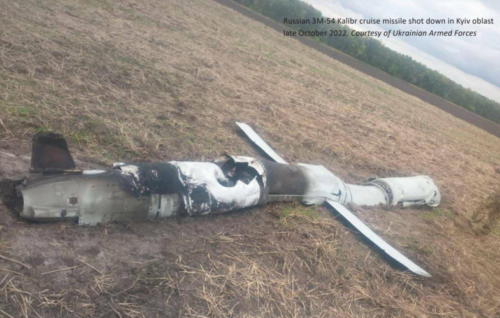
Drones? From Iran?
Bringing big bombastic Russian bears down to deploying discounted delicate drones shows Ukraine correctly and cleverly controlled the combat chessboard.
From airplanes to tanks, strategy to tactics, Russia has been looking desperate (firing Generals) trying to find someone to tell them how and what to think about choices handed to them — looking for someone who can’t possibly exist in Putin’s coin operated dictatorship, an independent or creative thinker.
For this big Russian invasion airforce to basically immediately find themselves in a dead end and unable to defend (go up and lose down, go down and lose up) is symptomatic of far bigger problems of leadership. The war has a very 1980s feel to it now as parades of suicidal machines quickly get themselves blown up.
Russia lost two attack helicopters in three minutes Monday, picked off in rapid succession by Ukraine’s air defenses, Kyiv’s military authorities said.
Inability to learn, assess, analyze and adapt meant Russian strategy looked dumber by the month, as I had predicted here before. Ukraine leaders by comparison have been demonstrating thoughtful and even humanitarian adaptation.
It’s like watching a Ukrainian queen of the chessboard make quick wins against Russian pawns as they foolishly attempt to surround her.
Perhaps next I’ll write about how Putin’s favorite bridge was cleverly blown up. I see a small detail that nobody has been talking about.
WWII British Soldiers Successfully Deployed God and Sugar to Defeat Nazi Disinformation
It’s really a footnote to stories about Nazi Germany losing the war in 1942, yet refusing for years to quit… by brainwashing their youth into suicide missions.
Basically the Nazi children (Hitler jugend) were indoctrinated with fear and hate. Then they were forced into the unjust war their fathers already had lost, told they would be killed if they refused or surrendered.
A British soldier recounts what that looked like:
Sandy also spoke about encountering Germany’s child soldiers. He explained: “The other thing that we experienced at that time were the soldiers – German soldiers. They were 12 and 14-year-olds because everyone else was up on the Russian front. Some of them used to start crying because again they had been told that they would not be taken prisoner, that they would be killed.”
The tactics used then were oriented around establishing trust through two methods. British soldiers began feeding both a hunger for foundation/faith and for food:
“Women and kids were down in the air raid shelters. Hitler had already indoctrinated them and told them they would never be taken prisoner – that British troops would kill them. They wouldn’t come out of the air raid shelters. We used to shout down but they still wouldn’t come out.” However, their breakthrough came when the unit’s Roman Catholic padre, a Fr Costello who could speak several languages, persuaded the children and their mothers into the open. “You put a bar of chocolate in their hands and it alters the whole war – as far as the children are concerned,” he said.
As William Wordsworth wrote in his poem The Rainbow: “the Child is Father of the Man”.
My heart leaps up when I behold
A rainbow in the sky:
So was it when my life began;
So is it now I am a man;
So be it when I shall grow old,
Or let me die!
The Child is father of the Man;
I could wish my days to be
Bound each to each by natural piety.