Why are some fakes seen as ok and others are “scary”? Hint: agency and power in voice.
How a movie character is written or portrayed influences a viewer’s impression, which can in turn influence people’s stereotypes on gender norms.
More to the point:
White men tend to only listen to other white men. They will occasionally listen to a white woman.
Something I’ve always known about Tom Cruise is that he is a rich white man who made his fortunes by becoming “fake” and assuming the identity of others. Literally. He is a paid actor, who makes a living from impersonation so it should be fair to say he is a highly celebrated faker.
Here’s a helpful chart of privilege suggested by Eugenia Cheng in her tool talk about “understanding inequality”.
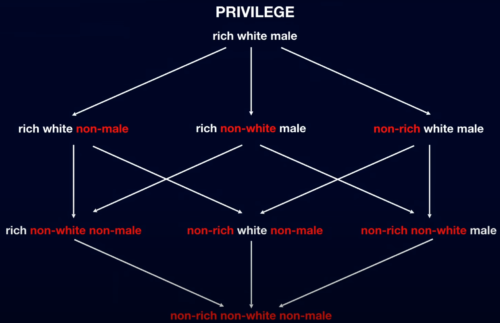
Perhaps we could adapt that chart to one of trust, particularly as it applies to someone presenting themselves with attributes (rich-white-male) that supposedly project integrity in their message delivery.
Tom Cruise is so highly paid since his fakes are received as valued (e.g. entertaining, informative) instead of threatening, and also because of an odd form of acceptance of his reality. People in fact think he’s both tall and well dressed (expected of rich white men yet neither are true — sophisticated teams give him that appearance).
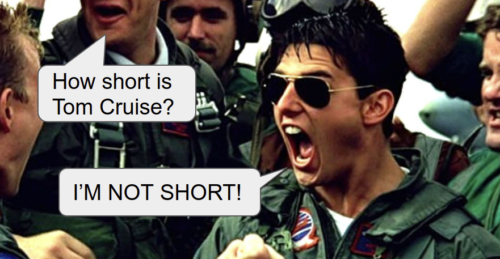
Now comes an article with a stark warning that evidence has been found of Tom Cruise, the fake, being faked.
Deepfake videos of Tom Cruise show the technology’s threat to society is very real: We’re entering scary times.
Scary? Entering scary times? Have you seen this from 1986, the true hey-day of cyber hacking?
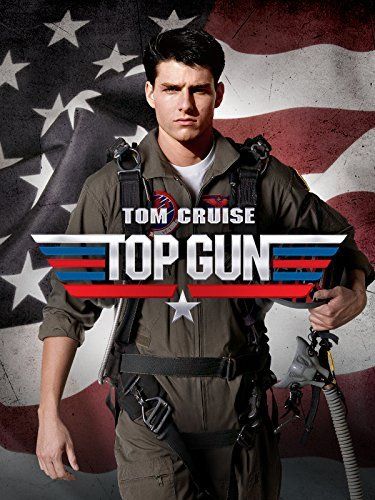
Videos of Tom Cruise have showed since at least the 1980s technology’s threat to society by allowing Tom Cruise to be a fake.
Everyone needs to ask themselves whether Tom Cruise is a threat to society since he is an actor, makes a living being a fake? Think about it. How often have you really seen a real Tom Cruise? Ever?
Incidentally, here was my take several years ago on that movie poster of Tom Cruise showing that anyone these days can make a fake of anything using technology. Admittedly it DID NOT age well.
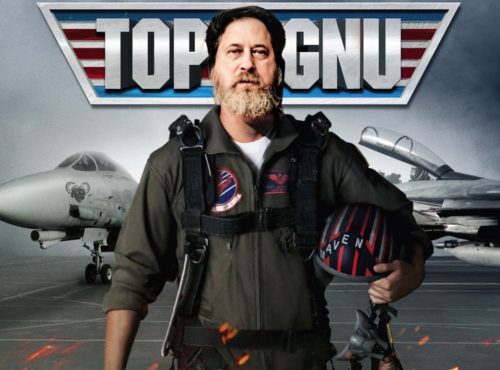
And if you are wondering how you can reliably detect that my image is a fake, unlike the original image of Tom Cruise (also a fake), then just look very, very closely at the eyes.
In a real photo or video, the reflections on the eyes would generally appear to be the same shape and color. However, most images generated by artificial intelligence — including generative adversary network (GAN) images — fail to accurately or consistently do this, possibly due to many photos combined to generate the fake image.
I mean how to tell aside from the fact that RMS is the known founder of Free Software Foundation (FSF) and GNU is Not Unix (GNU) and obviously would never fit into a flight suit.
We dispense shame and hate on all the “paparazzi” who violate his privacy and dare to expose a real Tom Cruise (e.g. how short and badly dressed he is), yet laud all his fakery that he thrives from.
The alarmist article doesn’t bother to address such a very important and simple problem with its analysis.
It all begs the question of why should we be comfortable and trust a fake like Tom Cruise up until now, but then worry about someone else making a fake of his fakes?
In other words, why should we trust Tom Cruise being the only responsible fake, more than someone who is faking Tom Cruise being a fake?
If we could achieve trust of one fake (a Scientologist of all things, who peddles in fake beliefs), why not achieve trust in the fake of that fake? Or maybe another way of asking it is who really is scared by a world where a Tom Cruise fakes being tall, or fakes being a Navy pilot?
Some may claim to be “scared” by the idea of agency and voice being held by those not in power. That is what this really is about.
Someone who doesn’t appear physically to be Tom Cruise (a non-white, non-male) now may be able to attain the same power of influence that used to be reserved only for Tom Cruise (thanks to technology, just like the technology Tom Cruise used to appear taller than he is).
Imagine a black woman putting her words into the mouth of Tom Cruise and nobody detecting that it really is a black woman’s ideas. SO SCARY!
It’s about power. Why is power scary?
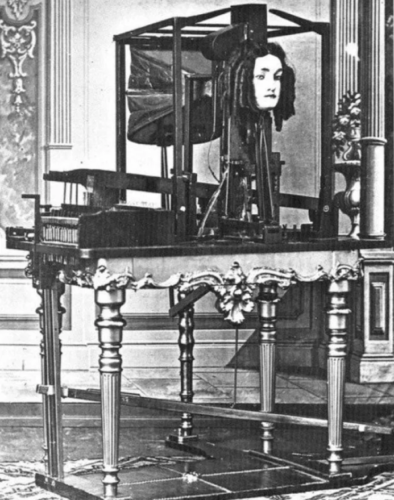
In reality, this kind of fear mongering with technology goes back to the turn of the century when machines put human faces on and people started experimenting with the idea of robots and inauthentic presence enabled by machines.
And even more importantly it takes us back to the first publication by Wollstonecraft (1790 Vindication of the Rights of Men) being extremely popular while she remained anonymous, yet her second publication under her real name was shunned because… the author admitted to being a woman. If only she could have published her brilliant works as a Tom Cruise video, right?
Also, to be fair, Tom Cruise is someone who battled with perception his whole life and made a career out of presenting a different vision than others were assigning to him.
He overcame obstacles and transformed his own physical appearance from something that he was ashamed of into an unbelievable physical representation, thus mastering the art of a fake.
People celebrate his achievement of fake Tom Cruise, so perhaps we should do the same celebrations for achievement of fake fake Tom Cruise.
I’ve written about all this security theater before, with regard to people faking the Queen of England. I write about it because I continue to find it amusing how it is a security topic that is literally about theater, yet nobody seems to admit the huge irony.
Additional food for thought: Americans have been spreading loads of fake traitor General Lee art after the Civil War (back to my point about industrialization-era fakes), not to mention American image manipulation going back to President Lincoln’s time (his portrait was a politicized fake — his head mounted on the body of someone opposed to freedom).
Putting up a statue of Lee is about the same thing as if Americans went about erecting monuments to Osama bin Laden after 9/11. Show me the outrage about statues of Lee before we think someone faking the fake Tom Cruise is a top concern. In fact, for all the deepfake art being generated using old photographs, it’s about time someone animated Lee’s statues with his own authentic words asking his followers to never put up statues of him.
Talk about scary fakes.
If anyone thinks it is “scary” now that Americans believe something is real that instead has been entirely faked… have I got some very real news about frightening times we’ve been in for over 100 years!
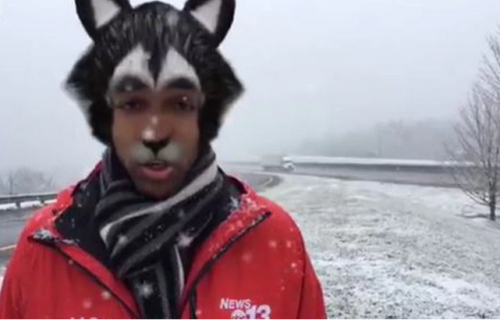
And on that note, who wouldn’t rather hear the weather report from a cat?
Update March 5: Vice has investigated the source of fakes of the fake Tom Cruise, and found it’s a sophisticated operation using professional actors!
The Tom Cruise TikTok videos required not only the expertise of Ume and his team but also the cooperation of Miles Fisher, a well-known Tom Cruise impersonator who was behind a viral video in 2019 that purported to show Cruise announcing his candidacy for the 2020 election. […] Ume has even detailed some of the highly complex and involved technical processes he had to go through to produce previous deepfakes. So, while the Tom Cruise TikTok videos that went viral last week may look like they were created in minutes, the reality is that they took a lot of time, technical expertise, and the skilled performance of a real actor.
If this is good news for anyone, that it takes a huge professional team including an actor to fake another actor, then the fears are being validated as about power and barrier of entry being lowered by technology.
And I would argue that the economics of a lower barrier to entry means regulation, let alone social norms of use, should kick in the same way as ever because artistic fakes are nothing new. Even the media hasn’t changed here so there’s literally nothing new except the idea that more people can do what already has been done for centuries if not longer.